Ryan Gray’s Beneath The Skin Travels a Dark, Compelling Path

How far would you go in search of the truth? How well do we know our limits, our boundaries that keep us from being consumed by a hungry darkness? Ryan Gray explores these questions in Beneath The Skin, a thriller/mystery that boldly ventures into the abyss.

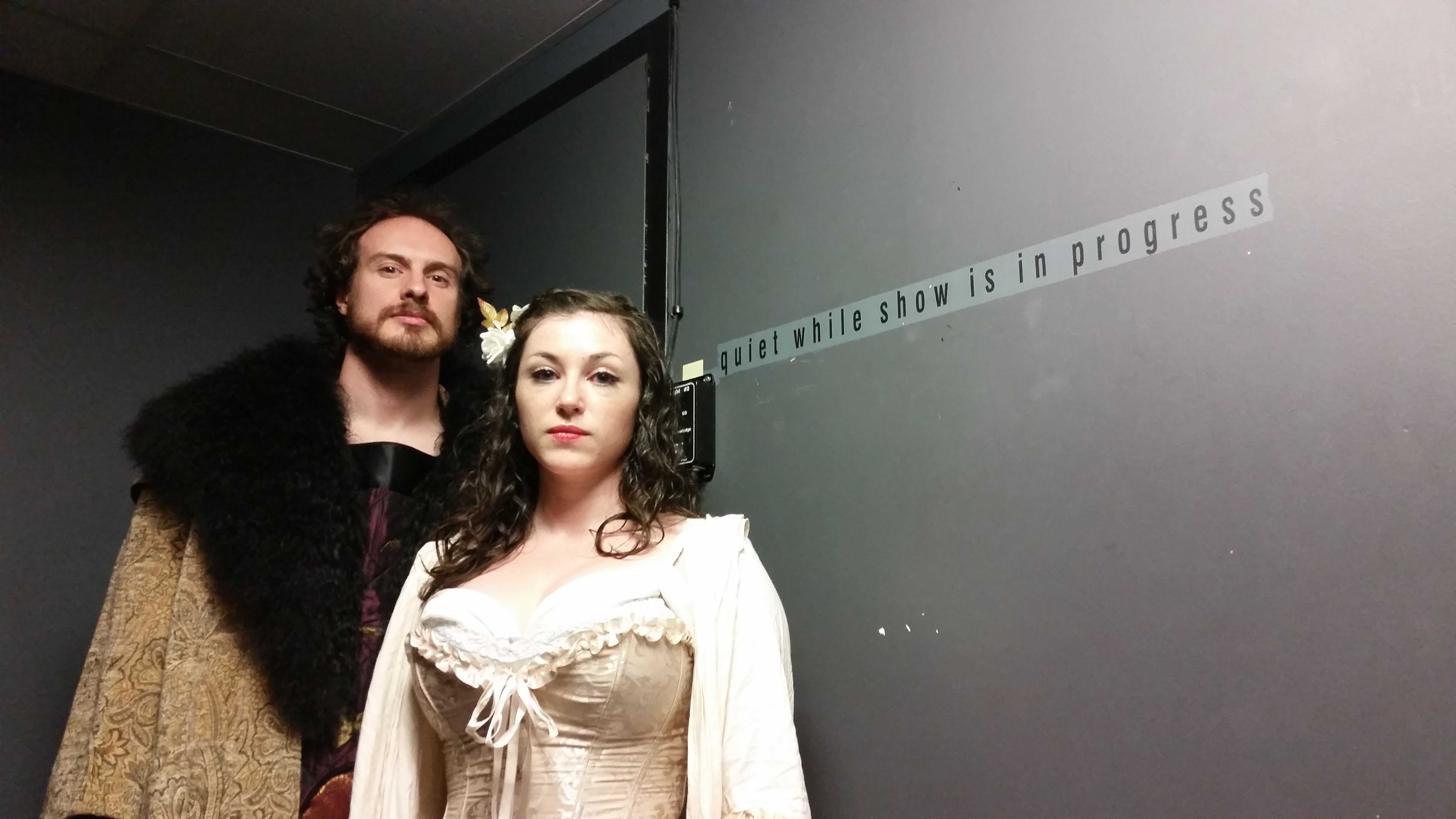
Directed by Jenna Rodgers, Gray’s Beneath The Skin stages reporter Carmin Morgan’s (Justine Westby) exclusive interview with convicted murderer Colton Cassio (Justin Michael Carriere), better known as the Portrait Killer. Colton’s long violent history – a history that started at a young age – fascinates Carmin who will stop at nothing to learn as much as she can about him and his victims. Carmin quickly learns, however, that is just not Colton’s crimes that make him a dangerous man, but also his charisma which threatens to take her down a path she never intended to travel.

The focus of Carmin’s interview is centered around Erin (Claire Bolton), Colton’s first victim whom he fell deeply in love with. Via flashbacks, the audience sees how an awkward 20-year-old Colton (Jacob Lesiuk) eventually came to befriend and then murder Erin while away at university.

Gray skillfully creates tension between Colton and Carmin by rarely letting one person hold power too long between them. While Carmin sees herself locked in a game of wits against Colton, Colton sees the two engaged in a more emotional game, a game of wills. And that is what makes Colton so dangerous, he has nothing to lose; he has given himself over to the darkness that calls him inside. Yet, victory is not so assured, Colton comes to realize, as Carmin’s determination for the truth reveals itself to be something more than a professional obligation.

Colton and Erin’s young love, though sometimes a bit too sweet, is crafted very well by Gray. There is a certain sadness in knowing Erin’s eventual fate, but never dulled anticipation. The interplay between the past and present delivers just enough information to maintain our attention. And then, Gray hits the audience with the inevitable which is both very creative and disturbing. (The audience gasps in horror as the scene becomes obvious).

Where the production fails the script is in its blocking. Noticeably challenged by the limited space available inside the Motel Theatre, the rising tension of the play breaks periodically when Carriere and Westby have to stand and carry the table and their seats to the side in order to make way for a flashback scene, sometimes while fully lit. The whole business seriously throws off the established atmosphere.

Despite the proximity of the audience to the actors (the Motel Theatre has a 50 seat capacity), there is no warning for the audience about the use of live smoke. The sudden inhalation of cigarette smoke distracts from the play’s dramatic conclusion.

Carriere and Westby are truly a force together. Carriere displays an unsettling, yet alluring confidence that make very real the presence of danger, to which Westby responds to with an exhilarating tenacity. Westby is truly firm in her character’s resolve, and that makes her performance all the more exciting to watch.

Bolton and Lesiuk share a pleasant chemistry on stage. Bolton is very easy to like as the cheery, good-natured Claire. Lesiuk plays the young, unassuming Colton with ease. There is a bit of a strain, though, when Lesiuk’s character begins to embrace his more sinister side, but the script is more at fault here than Lesiuk. Lesiuk’s performance during his final scene will have audience members abuzz in the lobby afterwards.

Ryan Gray’s Beneath The Skin is a thrilling piece of work that leaves an impression on any who dare step into the darkness.


Ryan Gray’s Beneath The Skin runs July 22 – July 28 at the Motel Theatre as part of the Common Ground Festival. The full festival runs until Aug 1st.

For more information about the Common Ground Festival, visit: http://www.commongroundyyc.com/

Radioheaded Three Rocks The Big Secret Theatre

Radioheaded 3

The Authorities (Doug MacLean, Kirk Miles, Bradley Struble) watch carefully over Denise Clarke’s beautifulyoungartists. Photo credit: Diane + Mike Photography.

Created and directed by Denise Clarke, Radioheaded 3: A Listening Party to Watch stages a vivid, politically charged interpretation of Radiohead’s 2003 album Hail to The Thief.

In its first few minutes, the show makes clear who its opponents are. Its opponents are the Authorities (Doug MacLean, Kirk Miles, Bradley Struble) – a trio of “capitalist assholes” in suits. Before he takes his seat, the group’s leader calls the audience a bunch of hippies “who probably voted for the NDP.” Yes, the three men are not far removed from the current political landscape.

A mad frenzy ensues as Clarke’s beautifulyoungartists enter the theatre. Almost immediately, the artists rush the audience in an effort to sell Happiness. “I need to fill my quota,” says one of the desperate artists in her sales pitch.

Corporate greed, social injustices, they are all fuel for rebellion, but no such uprising takes place here. Worked to the bone, the artists have no energy to revolt. Control and routine have subdued their anger, a fact the Authorities cherish.

Although, one man (Thomas Poulsen) holds out hope that change is possible. Trying to revive their spirits, he asks the artists not to give up and give in to the powers at hand. His efforts, however, are in vain. The one artist who rises up (Pamela Tzeng) is swiftly hammered down.

As the full album plays, the lyrics to every song are typed out on a large projection screen. Designed by Wil Knoll, the projected transcriptions feature typos, corrections, and other imperfections which complement the production’s overall raw qualities.

Though raw, the production never feels too loose, or out of control. Clarke’s beautifulyoungartists are a tight ensemble who demonstrate fearless commitment to the movement. (At one point, Poulsen’s bed spins wildly in circles centre stage with Tzeng hanging on one of its sides).

Where the production is weak is in its neon/glow-in-the-dark effects. The tape used to illuminate/outline the artists and props during one particular scene works only for a few, leaving some artists in the dark entirely. (Think of a series of bulbs where a handful are burnt out). So, while the idea is interesting, its execution leaves something to be desired.

Nonetheless, Radioheaded 3 is a visually exciting show that explores Hail to The Thief’s dread towards the future. Clarke holds a mirror to the audience and asks us to reflect on the conditions that make young people today feel so apprehensive about their futures.

Clarke’s Radioheaded 3 holds a tight grip on its audience from start-to-finish with its inspired movement that calls for action.


Produced by One Yellow Rabbit as part of Sled Island 2015, Denise Clarke’s Radioheaded Three: A Listening Party to Watch runs June 24 – 27 at the Big Secret Theatre (Arts Commons).

For more information about the show, visit: http://oyr.org/

MacAlpine’s Polonius and His Children Delivers Intense Family Drama

Anna MacAlpine's Polonius and Children ran as part of Sage Theatre's 2015 Ignite! Festival. Pictured: John McIver (Polonius) and Brianna Johnston (Ophelia). Imaged provided by Sage Theatre.

Anna MacAlpine’s Polonius and Children ran as part of Sage Theatre’s 2015 Ignite! Festival. Pictured: John McIver (Polonius) and Brianna Johnston (Ophelia). Imaged provided by Sage Theatre.

One hopes that the dead find peace in the afterlife; some respite from their mortal pains. That is, after all, the promise of death: an ultimate end. But what if, what if the dead are no different than those who roam the earth, burdened by secrets and regret?

Anna MacAlpine’s Polonius and His Children imagines a reunion between the titular character (John McIver) and his children – Ophelia (Brianna Johnston) and Laertes (Greg Wilson) – in the afterlife. The reunion is, unfortunately, not a happy one as the characters, the very same from William Shakespeare’s Hamlet, meet only to confront each other on unresolved issues. Among them is an unseen, mischievous spirit of the void (Amy Sawka) who narrates the drama.

Ophelia is the first to meet Polonius. Upon seeing her soaked dress, Polonius, whose stab wounds have not healed, asks who drowned her. Ophelia’s response is, very fortunately, interrupted by Laertes’ entrance into the void. Quickly, Ophelia and Laertes find that their father, despite an eternity for reflection, is the same old fool he was when they were alive.

While Polonius’ children both assert themselves against their father, it is Ophelia who struggles most to have her independence recognized. Even in this hellish landscape, Polonius and Laertes continue to dominate Ophelia’s life. They speak so much over Ophelia that she is never given the chance to explain herself. In fact, MacAlpine argues, Ophelia has never been allowed to explain herself.

Here, MacAlpine examines through a feminist lens the works of art inspired by Ophelia’s death. MacAlpine does so by envisioning what Ophelia would say about the artists who, over the years, have portrayed her as a virginal beauty who died a ‘beautiful death’. It was not beautiful, Ophelia says, it was painful. And why is there, she asks, such importance placed on virginity? How does that make a death beautiful in any way? Ophelia’s soliloquy is replete with anger, frustration at the narratives imposed upon her exploited body.

Along the way, MacAlpine infuses humour into the play in the way of clever references to the source material. The playwright, too, has fun with the characters whom she has written with her own flavour. Although, while the humour works in some areas, the humour feels out of place and at odds with the play’s overall brooding tone.

In terms of performances, the ensemble is strong. Sawka is very physical and light on her feet. Her playfulness never upstages the main action. McIver plays Polonius brilliantly. McIver’s mannerisms signal a Polonius who has lived one life too many; an old man unable to find rest. Johnston and Wilson do well as Ophelia and Laertes. Wilson’s casual demeanor mixed with his solid delivery attracts big laughs from the audience. Johnston nails the soliloquy given to her, she is truly in synch with her character.

MacAlpine’s Polonius and His Children is a smart, poignant drama that intrigues with its troubled characters and urgent themes.


Anna MacAlpine’s Polonius and His Children was presented by Sage Theatre’s 2015 Ignite! Festival. The festival ran June 18-20 at The Studio inside Vertigo Theatre.

Urban Curvz Theatre Takes A Trip Across Legoland

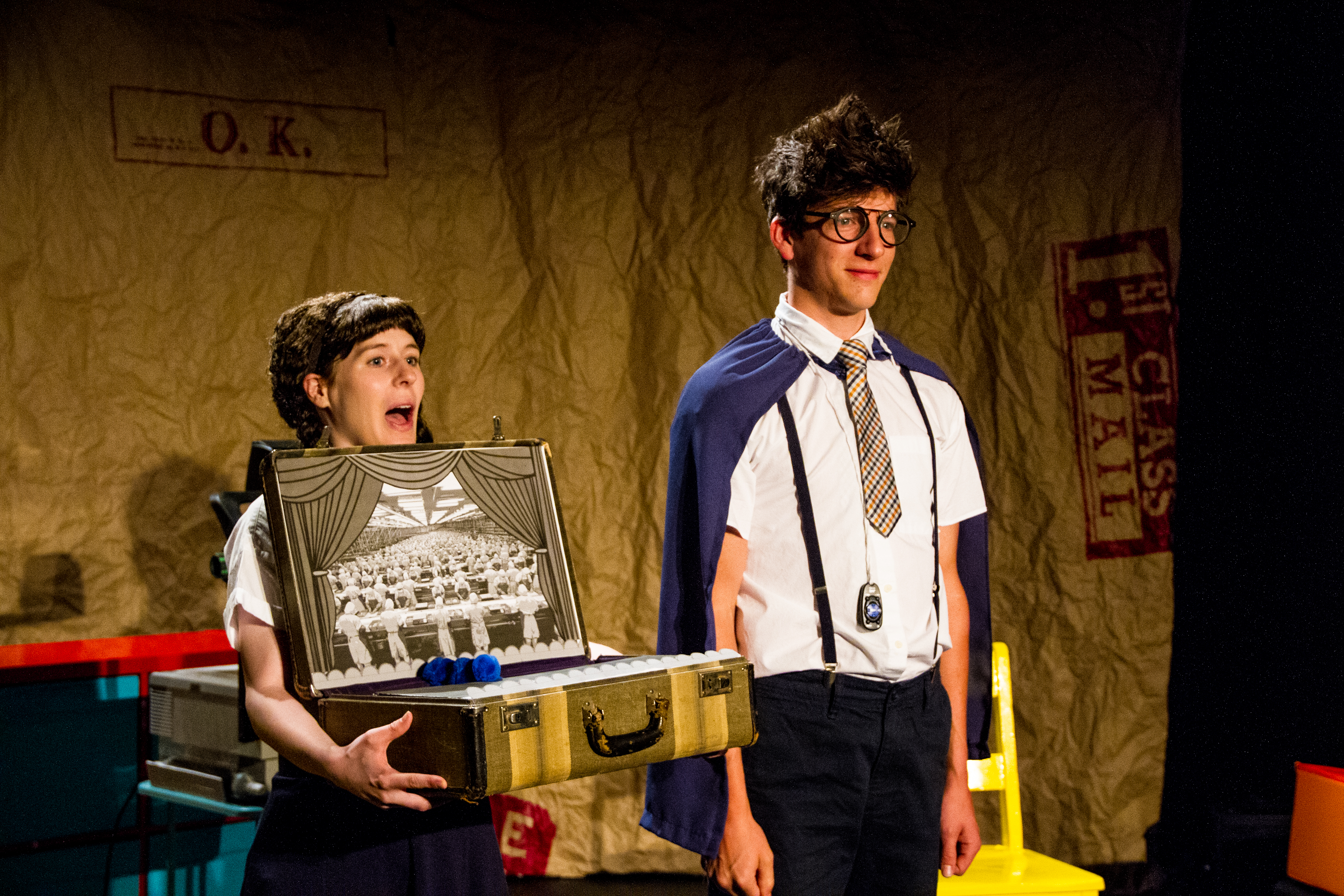
Penny Lamb (Kelly Malcolm) and her younger brother Ezra (Matt McKinney). Photo Credit: Aldona B Photography.

Penny Lamb (Kelly Malcolm) and her younger brother Ezra (Matt McKinney). Photo Credit: Aldona B Photography.

Being a teenager can be hard. Everyone wants to be an individual, but no one wants to stick out. No matter what you do it seems like teachers are always out to get you. And your hormones are everywhere, so you really never know how you feel.

And yet, despite everything, being a teenager can also be pretty awesome.

Presented by Urban Curvz Theatre, Jacob Richmond’s Legoland is a fun, spirited celebration of youth. A vaudeville-inspired comedy, Richmond’s play looks at our crazy world through the bright eyes of a teenage girl ready to leave her mark.

Sixteen-year-old Penny Lamb (Kelly Malcolm) and her younger brother Ezra (Matt McKinney) are not your typical teenagers. Penny and Ezra were raised on a hippie commune outside Uranium City, Saskatchewan. For years, the outside world, dismissively referred to as “Legoland” by the commune’s elders, fascinated the Lamb siblings. One day, the commune is busted by police for being Saskatchewan’s largest grow-op. With their parents imprisoned, Penny and Ezra are enrolled into a private Catholic school where they quickly learn that Legoland is as bizarre as it is unwelcoming.

In Legoland, commercial music lacks originality as reflected in the use of recycled personality types – the bad boy, the cute one, the sporty one, etc. People are unkind and distant. The status quo is maintained through prescription pills, which are seen as easy fixes to all life’s problems. Yes, Legoland is a rather plain, material place that is as rigid as a plastic toy brick.

As one might guess, Penny and Ezra’s unconventional upbringing makes them total outcasts in Legoland. Penny is rejected by the popular girls at school for being a “lesbian,” while Ezra is prescribed Ritalin to keep his behaviour in check.

It is this rejection by their peers that ultimately bring Penny and Ezra to us, or rather the assembly of high school students whom they present their story to as part of their community service.

When introduced to the boy band Seven-Up as a way to help fit in with the other girls, Penny develops a major crush on the lead singer Johnny Moon. She follows Johnny’s career long after Seven-Up breaks up, eventually becoming determined to meet him in person. Meeting Johnny, however, means crossing the border and traveling cross-country to Orlando. Thankfully for Penny, Ezra’s medication can easily fetch the necessary funds for such a trip.

What Richmond does with Penny is provide teenagers with a positive, albeit imperfect, role model. For one, Penny stands up for her values, despite the constant pressure from her peers to abandon what she believes in. And secondly, Penny sees no limits to her potential; her potential is limitless. She is abound with the sort of youthful enthusiasm that springs creativity  – and sometimes trouble! But that is okay, we learn, because it is all a part of being young and inexperienced. Everyone starts somewhere.

Penny’s mistakes – which are her’s and her’s alone to make – encapsulate the excitement of being a teenager, of growing up and discovering yourself as a young person. Penny is the kind of person that Legoland needs, flaws and all.

Where Richmond’s play falls flat is in its cross-country scenes which feel unnecessarily drawn out. The audience, in fact, may feel like they too are on board a greyhound bound for Orlando with the way Richmond stretches the play’s conclusion with the same repeating bits.

Otherwise, the play is a wildly energetic blend of puppetry (puppet design by Lindsey Zess Funk), song, and dance; a real vaudevillian treat. Director Jacqueline Russell’s creative staging sees the actors transform the stage into a dynamic space from which the story unfolds from, corner-to-corner.

Malcolm throws herself into every scene like it is, at the moment, the most important part of Penny’s life. Malcolm brings an infectious charm to the character who in other hands might be too much for the audience. Here, thanks to Malcolm’s take on the plucky teenage girl, Penny is almost impossible not to like. And despite Ezra not saying very much, McKinney is successful, too, in drawing us into his character. McKinney’s often deadpan look sells the character’s dark, bizarre humour. Together, Malcolm and McKinney are a lot of fun to watch on stage.

Optimistic, vibrant, and certainly unique, Richmond’s Legoland is one not to miss.


Urban Curvz Theatre’s production of Jacob Richmond’s Legoland runs June 11-20 at Motel Theatre.

For information about the show and how to purchase tickets, visit: http://urbancurvz.com/current-season/legoland/

Theatre and Biography Meet In Mike, Karen, Karen, Mike

Mike Keir and Karen Johnson-Diamon. Imaged supplied by Verb Theatre.

Mike Keir and Karen Johnson-Diamond. Imaged supplied by Verb Theatre.

Mike Keir has a story to tell. Actually, he has many stories to tell.

A co-production between Verb Theatre and Inside Out Theatre, Mike, Karen, Karen, Mike: A Soap Opera is, at its core, a compelling blend of theatre and biography.

Inside Motel Theatre, Keir is joined by director Col Cseke and Karen Johnson-Diamond (co-artistic director of Dirty Laundry). Cseke sits beside Keir, interviewing him about his past. Meanwhile, Johnson-Diamond waits on the side to improvise scenes with Keir  – a long-time fan of Dirty Laundry.

Keir, who has cerebral palsy, starts his story with an incident that happened between him and a counselor at a camp for youth with disabilities. From this incident, a larger story of abuse, sexuality, and fear unfolds.

Keir’s story, however, is not one that can be told in ordinary linear fashion because, unlike stage dramas, real life events cannot be so easily isolated in time and place. There are many ‘characters’ that need to be introduced; relationships that have to be defined; histories that need to be explained. That is why Keir is adamant on backtracking, so that he can give proper context to the events that follow.

And as Keir’s story grows larger in its scope, so too does the connection between audience and storyteller. We become involved in this story that is, at times, difficult, but nonetheless engrossing. Keir captures our attention with his frankness, along with his sense of humour. And that humour is a reflection of Keir’s belief that telling a story enough times weakens it. In other words, telling these stories is Keir’s way of overcoming the experiences that have had far-reaching effects on his life.

And so, we remember that the stage can mean many different things to many different people. Here, Keir’s stage is one of healing, transformation – moving on. Mike, Karen, Karen, Mike: A Soap Opera is theatre for the soul.


Mike, Karen, Karen, Mike: A Soap Opera runs May 13 – 16 at Motel Theatre.

For information about the show, visit:
http://www.verbtheatre.com/season/
http://insideouttheatre.com/in-performance/

Dads in Bondage Breathes Enthusiasm, Delights

Left to Right: Kirk (Eric Wigston), Charles (Doug McKeag), and Joey (JP Thibodeau),

Left to Right: Kirk (Eric Wigston), Charles (Doug McKeag), and Joey (JP Thibodeau), “A Fistful of Pampers.” Photo Credit: Nicole Zylstra.

Robert More’s Dads in Bondage, with music by Tom Doyle, returns to Lunchbox Theatre where it was first produced in 1988. Relevant, hilarious, and heartwarming, Dads in Bondage will make audiences smile from ear-to-ear.

For Charles (Doug McKeag), Joey (JP Thibodeau), and Kirk (Eric Wigston), staying at home with the kids will be a piece of cake. Why? Because they’re ‘millennium men’ who know what they’re doing! Well, that’s what the men tell themselves, anyway. Little do they know that bravado alone is no match for stinky diapers and baby colic.

Directed by Glenda Stirling, Dads in Bondage is a ‘fish out of water’ story about three new fathers turned stay-at-home dads when they find themselves suddenly unemployed. Charles and Kirk, an oil executive and construction worker respectively, have been laid off as a result of sinking oil prices. Joey, a nervous Latin teacher, is placed on stress leave to remedy his burn out. Quickly, dreams of ‘having it all’ fill their heads as they take on their new roles. But it is not too long afterwards that Charles, Joey, and Kirk realize what a task it is to raise children.

The men navigate through fatherhood by themselves, then together as they join in their common cause. Knowing murmurs and outbursts of laughter are heard as More presents experiences that parents in the audience may have encountered at some point themselves. Of course, the story More tells is one with a twist, a play on traditional roles.

Much of the show’s humour grows out of the masculine pride that begins so strongly, then falls apart as the stress of parenthood piles on. The men try their best to fool their wives into thinking that nothing is wrong when in fact everything is a disaster. Charles, for example, is completely sleep deprived, while Joey is at his wit’s end trying to handle twins. But for their wives’ sake, and to save face, the men keep silent about their difficulties.

To great effect, More turns antiquated notions of masculinity into something more human. The men eventually get a hold on fatherhood. What was once strenuous and taxing becomes a privilege, a source of joy. The ultimate lesson More leaves the audience with is that being a ‘successful man’ is not what’s important, it’s being a loving parent that is.

McKeag, Thibodeau, and Wigston are a whole lot of fun to watch on stage. There is a lot of great character work by the actors who dive into infectious musical numbers like “A Fistful of Pampers” with gusto. Each contributes significantly to the upbeat, zany nature of the show. Vanessa Sabourin, who plays the men’s three wives and other characters, is a fun addition to the show as well. Although she does not share the stage as much, Sabourin brings plenty of laughs with each appearance.

(And the puppets – they’re something too!)

An enthusiastic musical comedy about stay-at-home dads, Dads in Bondage is sure to delight and entertain audiences.


Robert More’s Dads in Bondage, with music by Tom Doyle, runs at Lunchbox Theatre, May 4 – 23.

For more information about the show, visit: http://www.lunchboxtheatre.com/calendar/2015/4/27/dads-in-bondage-by-robert-more-with-music-by-tom-doyle?view=calendar

Before The Night Takes Us Lurks, Bumps

Kas Nixon as Alison in Ryan Reese's Before The Night Takes Us. Photo Credit: Colton Holmes.

Kas Nixon as Alison in Ryan Reese’s Before The Night Takes Us. Photo Credit: Colton Holmes.

Alison (Kas Nixon) hasn’t been sleeping well lately. Nightmares of grisly murders torment the frustrated clarinetist who has all but lost her ability to play. When Ray (Joel David Taylor), a telepathic pianist, walks into Alison’s life, she is soon thrown into something more sinister than she could ever expect.  For Alison, things are only going to get worse (and weirder) before they get better.

Presented by Theatre BSMT, Ryan Reese’s Before The Night Takes Us is a suspense-filled drama that trips over its paranormal premise.

For a character whose abilities are even a mystery to him, Ray sure seems to have a lot of answers, or a lot of good guesses. Part of that is due to Reese being quick to change/expand the rules of Ray and Alison’s telepathy when convenient. Of course, Reese is faced with the challenge of both establishing ground rules to adhere by and fleshing out a whole story within 120min, so wild assumptions by the characters are to be expected. Still, one cannot help but feel that the drama is undermined by fluctuations in the play’s logic.

Thankfully, Amy (Samantha Duff), a no-nonsense detective, gives the play immediacy, a sense of danger. While Amy trusts Ray’s abilities, Amy also needs answers now. She can’t wait on Ray to unlock the secrets of Alison’s dreams, especially not when there is a serial killer loose in the city. For Amy, the clock is ticking, and every minute that goes by is another minute where someone’s life is in danger.

But again, there are some problems with the play’s logic that are hard to ignore. The truth about Alison’s dreams raise questions about what kind of office Amy is working in that none of her colleagues or superiors would notice something off about one of their top detectives. And despite having access to her case files, in addition to her mind, Ray fails to recognize any inconsistencies with the investigation.

These issues aside, Reese intrigues with the general greyness of the characters – greyness in terms of his characters’ true motives, their murky pasts, and their relationships with one another. As we become more acquainted with Alison, Ray, and Amy, the loneliness of these characters become more apparent; the search for a connection more potent. And that is mainly what carries our interest through to the end: the fate of these characters thrown together against strange circumstances.

Unfortunately, the play proceeds at a choppy pace, mainly due to its scenes of varying lengths and their hard transitions. When the lights come down, so too does the energy. The dip in pace is partly due to the odd configuration of just one entrance/exit. Director Kyle Schulte might have opted for a set-up that allows better flow between scenes, rather than one where there is a good amount of unused physical space (which would feel emptier if it were not for some instruments laying around).

Taylor rises to the task of playing the piano live on stage. He and Nixon share good energy together on stage. Though Duff is who most catches our eye with her menacing presence. Fortunately, Nixon holds her own in her clashes with Duff. The two are a sharp pair that respond to each other effectively.

A murdery mystery with a paranormal twist, Reese’s Before The Night Takes Us catches our attention with its grey characters, but then loses us with its thin logic.


Theatre BSMT’s Before The Night Takes Us runs May 6 – 9 at Motel Theatre (Arts Commons).

For more information about the show, visit: http://www.theatrebsmt.ca/Theatre_BSMT/Whats_On.html

World Premiere: Meg Braem’s A Worthy Opponent Delivers Big Laughs

An abandoned drug den turned trendy street-themed restaurant. Maybe not the best place to bring your fiance’s mother…and maybe not the best place to break the news that you’re marrying her only son.

Enjoying its world premiere at Lunchbox Theatre, Meg Braem’s A Worthy Opponent is a delightful new comedy that is as smart as it is hilarious.

Ivy (Allison Lynch) loves Nathan and wants to marry him, that she knows for sure. But then again, Ivy’s never really stuck to anything, like acting school or even her own name. And that for Helen (Elinor Holt) is cause for concern. An accomplished entomologist, Helen is not so sure about her son Nathan, a grad student, marrying Ivy who works at a hair salon.

It’s not that Helen hates Ivy, despite Ivy thinking so, or that she is completely opposed to their union, it’s just that she’s worried. And it’s not just Nathan that she’s worried about, it’s Ivy too. Of course, the truth only comes out after the two women have had a ‘couple’ drinks and traded barbs with one another.

Ivy and Helen’s all-out battle of wits sees lots of potent insults, some more subtle than others, that one can feel from their seat. Accordingly, their waiter Eric (Brett Dahl) makes sure to quickly disappear after serving them their drinks. And yes, there are plenty of drinks served.

Braem’s lively, sharp tongued characters breathe wit and fresh air into the ‘horrible mother-in-law’ trope so often repeated across various media. But it is not just their ability to ‘dish it out’ that makes this work feel refreshing, it is also their dimensions which Braem explores to the fullest.

Contrary to what Ivy thinks, Helen is not just a cold, unfeeling academic. No, she is also a mother, as Helen reminds Ivy, a mother who raised her son alone. And the thought of Nathan marrying and leaving her behind is not one Helen is so ready to accept. So, Nathan cannot just marry anyone, let alone someone who is not so sure about where their own life is headed.

And so, after all the drinks and hostility, Braem brings the play to a heartfelt moment where the two women reconcile their differences and finally see eye-to-eye. So moving are the play’s final moments, in fact, that quiet sobs can be heard from the audience.

Holt and Lynch meet what the other brings to the table in terms of impeccable comedic timing and energy. Although, Holt noticeably trips over several lines of dialogue during the course of the show. Though easy to overlook the first time, Holt’s line flubs occur just enough that the steadfast pace of her and Lynch’s exchanges dip as a result. Otherwise though, Holt is a great opposite to the sweet, but fiery Lynch.

Sharp and refreshing, Meg Braem’s A Worthy Opponent delivers big laughs while celebrating mother-in-laws everywhere.


Meg Braem’s A Worthy Opponent runs at Lunchbox Theatre April 6 – 25, 2015.

For more information about the show, visit: http://www.lunchboxtheatre.com/calendar/2015/3/30/a-worthy-opponent-by-governor-general-award-nominee-meg-braem?view=calendar

U of C Grad Student Working to Bring The Arts & Social Sciences Together

Playwright Sherryl Melnyk after the staged reading of her new play Can't Cross a Bridge.

Playwright Sherryl Melnyk after the staged reading of her new play Can’t Cross a Bridge.

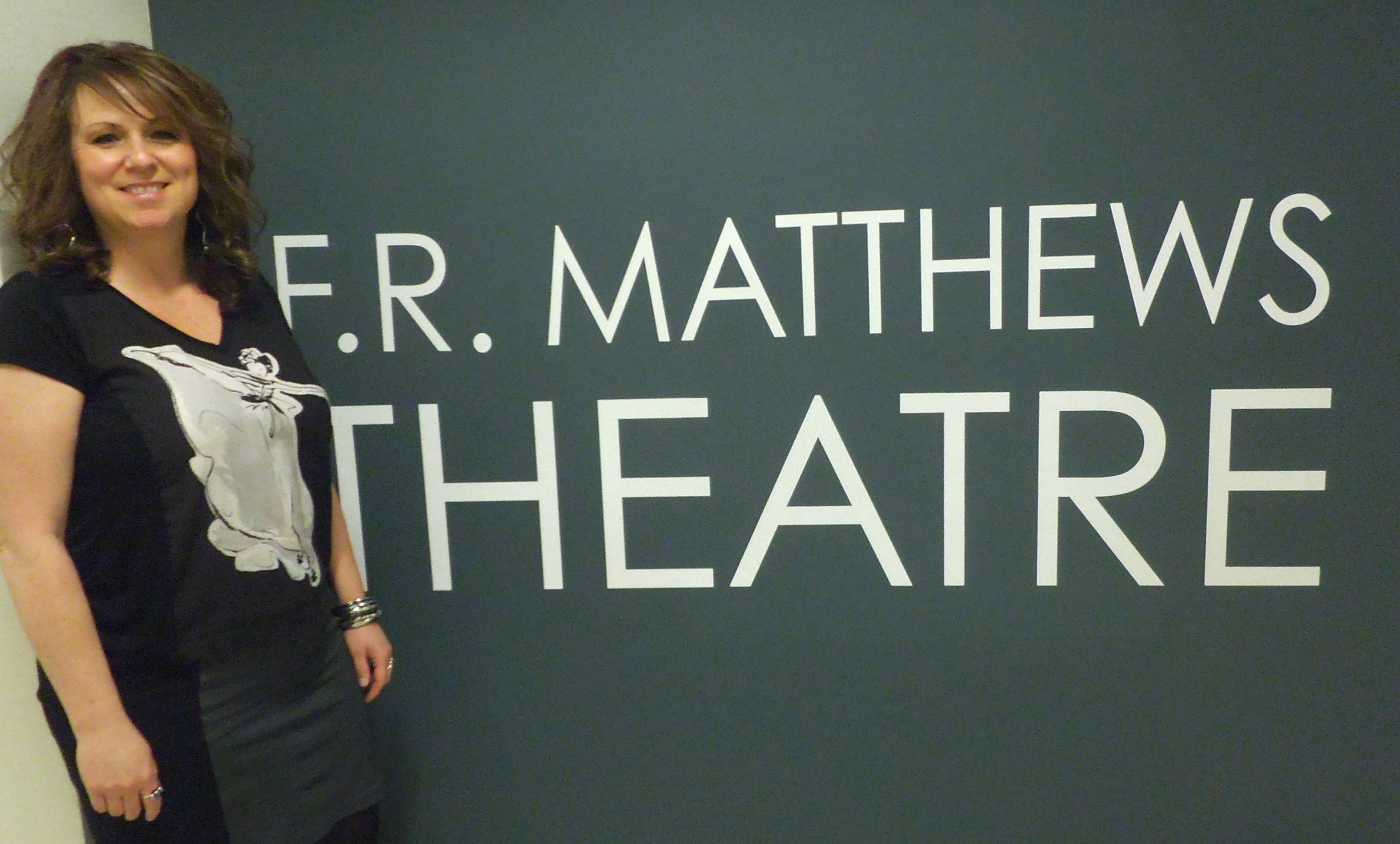
Sherryl Melnyk’s new play Can’t Cross a Bridge was read aloud publicly for the first time this Monday night at the University of Calgary’s F.R Matthews Theatre. The staged reading was presented by the School of Creative and Performing Arts’ Taking Flight: Festival of Student Work.

But whereas much of the work in the annual student festival has been largely fictional, Melnyk’s play differs in that it is rooted in real women’s stories of abuse.

Can’t Cross a Bridge tells the story of Velma and Lizzy, a mother and daughter estranged for 16 years. One day, a surprise call from the RCMP informs Velma that her daughter has returned. But hanging over their reunion are secrets from the past, painful secrets that Lizzy can no longer keep inside.

Melnyk is completing her PhD in the Interdisciplinary Studies program, combining studies in English, Drama, and Women’s Studies/Sociology. Can’t Cross a Bridge is one component of her PhD dissertation.

The first component, the social science component, saw Melnyk interviewing 21 women about their sexual histories. From that research, Melnyk chose three of the stories that she thought fit together the best, then synthesized them for the play. The last component comprised of theory, discussions around the creation of the work.

Melnyk says her work is focused on bringing the arts and social sciences together, disseminating research through the arts as a means of creating meaningful dialogue surrounding social issues.

“I think what happens to a lot of research is that it’s wonderful research, but it’s lost in journals,” said Melnyk. “No one really reads it but other academics. I think a better combination of the arts and social sciences working together is going to make it more accessible to the public at large.”

And of course, her research could not have been possible without participants willing to share their lives openly with Melnyk.

“I started out my research trying to understand if women are kind of moving beyond the traditional view of women in sexuality; Woman as part of the male gaze, woman in pornography, woman as victim…How have women’s stories changed, that’s how I started my interview with all the people that participated.”

“I think what was really interesting about all of the women I interviewed was the fact that they wanted to tell their story. They want people to hear it. They want women to be empowered through their stories. All different ages sat down with me and spoke. Some of them were an hour, and some were two and half hours about their life history.”

For Melnyk, the intimacy theatre grants between audiences and ideas is necessary for not only bridging the arts and social sciences, but also bringing these women’s stories to the community.

“I think you could see it tonight in the gasps and the reactions of the audience. The sadness, the laughter, the drama that is created through theatre. I think it speaks more to our heart and soul than reading an article.”

Melnyk hands in her dissertation on April 24th, then defends it later next month.


The staged reading of Sherryl Melnyk’s Can’t Cross a Bridge was presented by the School of Creative and Performing Arts’ Taking Flight: Festival of Student Work. The festival runs Mar 31 – Apr 11th, 2015.

For more information about the festival, visit: http://scpa.ucalgary.ca/events/taking-flight-festival-student-work

Cast

Lizzy – Jacqueline Dyment
Velma – Val Campbell
Lester – Brian Smith
Andrea – Courtney Charnock

Company

Director – Dawn Mari McCaugherty
Stage Directions – Siobhan Cooney

World Premiere: Ambition Leads to Rough Waters in The Last Voyage of Donald Crowhurst

In 1969, nine men set off on what was at the time the first round-the-world yacht race. A widely covered event, the Sunday Times Golden Globe Race excited the public at large. And Donald Crowhurst was among those caught up in the excitement. Crowhurst, an amateur sailor, sought to defy the odds and capture victory against well-seasoned competitors. The Teignmouth Electron, a boat of Crowhurst’s own design, would be the vessel to deliver Crowhurst to the finish line.

Crowhurst did not return home.

It is this story of ambition, the pursuit of greatness, that Alberta Theatre Projects, in association with Ghost River Theatre, stages in The Last Voyage of Donald Crowhurst.

Written by David van Belle & Eric Rose, with Rose directing, The Last Voyage of Donald Crowhurst is concerned with the fine line between ambition and obsession. There is nothing particularly special about Crowhurst (Braden Griffiths). He is a husband and father of four who runs a small, failing business. What sets Crowhurst apart is his astounding confidence in that he is destined for greatness. And he makes us believe it too with his grandiose speeches.

But failure looms on the horizon when Crowhurst’s boat experiences serious issues during the race, and an unexpected storm wreaks havoc on the vessel. Failure, though, does not mean simple defeat. In exchange for the necessary funds to construct his boat, Crowhurst signed a deal with the condition that should he lose the race he will have to pay everything back in full. For Crowhurst, failure means the total loss of everything he and his family owns.

And that is why Crowhurst sees no other option than to cheat by falsifying his race progress.

The presentation of Crowhurst’s story is fascinating with its use of video projection and live effects. The production features creative techniques like filming Crowhurst and his wife Clare (Vanessa Sabourin) standing against two separate ‘beds’, then joining the images together on-screen to show them lying in the same bed. As well, documentary footage of the real-life Crowhurst overlaps on-screen with Griffiths’ portrayal. And, the play’s first act ends with a violent storm on stage where large sheets simulate waves and buckets of water drench Griffiths.

Unfortunately, the first act is where the excitement ends. The production runs dry in its second act where an otherwise compelling human drama becomes a disjointed bore.

One specific offense is the scene where Crowhurst meets an Argentinian couple who he asks to help him in the way of supplies. The humour attempted here falls flat, and little happens to justify the scene’s inclusion. The scene stalls the pace of the play.

From where the play starts to where it ends is a significant distance. After the initial awe produced by the first act’s visual feats, one realizes there is not much else carrying the show. And certainly a part of that is the challenge of what do you do when your main character is stranded miles away from human contact? Van Belle and Rose do their best to make the journey to Crowhurst’s final moments interesting, but the path there is one that not even the biggest smoke and mirrors could disguise what it really is: a disappointment.

The Last Voyage of Donald Crowhurst is an ambitious, visually stunning production that ultimately disappoints due to weak characterization and a less-than satisfying second act.


Alberta Theatre Projects’ The Last Voyage of Donald Crowhurst, in association with Ghost River Theatre, ran at The Martha Cohen Theatre, February 24 – March 14, 2015. 

For more information about the show, visit: http://www.atplive.com/2014-2015-Season/Last-Voyage/index.html