Let’s Do a Puppet Show!: Ronnie Burkett’s The Daisy Theatre Impresses

It’s often said that puppets can get away with just about anything. Think about Punch & Judy. Despite being very cruel and violent, the show is still a hit with audiences today. Think about the Tony-Award winning musical Avenue Q. Puppets sing about racism, pornography, then go off to have wild puppet sex – and that’s just the first act!

And then, there’s The Daisy Theatre by Canadian puppeteer Ronnie Burkett.

Because over forty marionette characters call The Daisy Theatre home, each night is a different show. Unscripted, Burkett’s razor sharp wit is free to play and surprise in every performance.

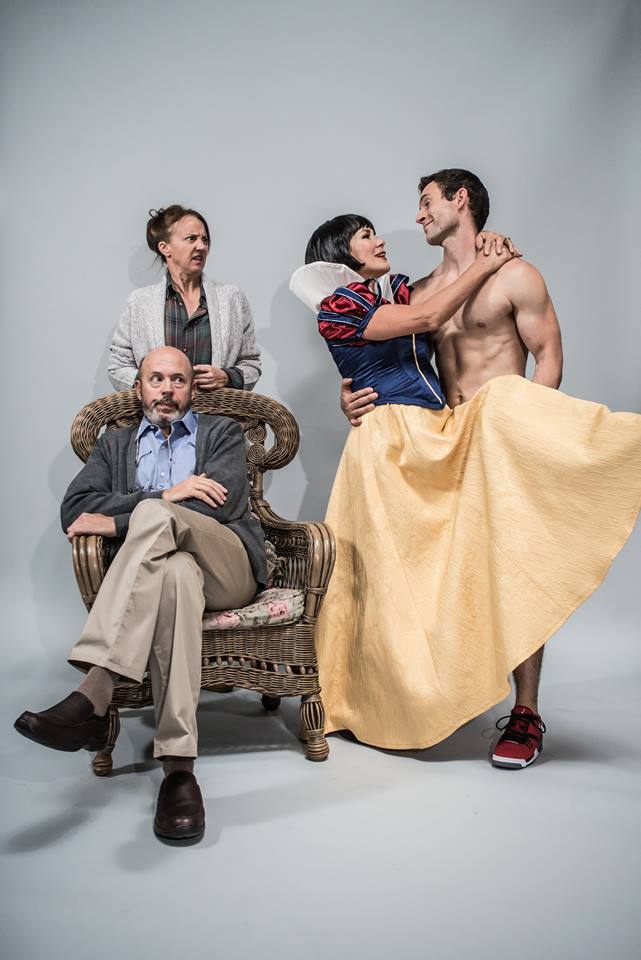
At the top of the show, Burkett introduces us to Franz and Schnitzel. Franz is a dirty sex fiend, and Schnitzel is a sweet little fairy child. When he’s not berating Schnitzel, Franz finds time to riff on the NDP, and the political left. Poor Schnitzel – everything good and innocent in the world – only wants to grow wings and fly with the birds. Cue the audience melting into a goopy puddle of emotions.

Or we would if Miss. Lillian Lunkhead, Canada’s oldest and worst actress, weren’t so picky about how the audience greets her entrance – clap this way, gasp that way. The stage veteran does make up for it by giving one lucky audience member the opportunity to be her scene partner for Romeo & Juliet. Sure, she might be a little…mature for the role of Juliet, but dang if she doesn’t know how to command the stage and audience.

The audience later meets Edna Rural, everyone’s sweet elderly neighbor. Edna is from the small community of Turnips Corner, Alberta. Lord love a duck if the audience doesn’t fall in love with Edna Rural. Edna, a widow, starts one place with her humourous (mis)adventures, and before we know it, she’s somewhere else entirely in her story. That’s life, though, isn’t it? But start to finish, the audience is taken by Edna’s genuine goodheart.

About puppets getting away with just about anything, Burkett pushes that theory to the limit. Over the course of two hours, Burkett’s puppets indulge in some of the filthiest, most bizzaro humour ever to grace a Calgary stage. (Salty old entertainer Rosemary Focaccia has quite the mouth on her!). Proving the theory right, the audience eats it up, almost falling out of their seats laughing. And it’s not just the puppets who have lots to say. Burkett has a thing or two to say during the evening, especially about Canadian Theatre (Showbiz, what’s that?).

What’s simply fascinating about Burkett are his masterful articulations of movement and voice that bring these puppet characters to life. Even though we can see the puppets hanging off to the side, there’s so much spirit that we can almost imagine each of these wacky, endearing characters nervously pacing backstage, all in their own personal ways.

Hands down, The Daisy Theatre should not be missed. The incredible wealth of humour and heart that Burkett brings to the stage makes for an unforgettable experience at the theatre. No wonder The Daisy Theatre is an audience favourite.


The Daisy Theatre by Ronnie Burkett Theatre of Marionettes runs Oct 27 – Nov 15 at the Big Secret Theatre.

For more information about the show and how to purchase tickets, visit: https://www.artscommons.ca/WhatsOn/ShowDetails.aspx?show_id=66984640-5CF2-4919-975D-FBE780E7BC3C

For more about The Daisy Theatre: http://www.thedaisytheatre.com/

Fritters in Kandahar Pours a Warm Story About Home, Purpose

Lunchbox Theatre is accepting non-perishable food items for the Veteran's Food Bank. Pictured, left to right: Amy Sawka and Barbara Gates Wilson. Photo Credit: Benjamin Laird Arts & Photo

Lunchbox Theatre is accepting non-perishable food items for the Veteran’s Food Bank. Pictured, left to right: Amy Sawka and Barbara Gates Wilson. Photo Credit: Benjamin Laird Arts & Photo

Enjoying its world premiere at Lunchbox Theatre, Peter Boychuk’s Fritters in Kandahar tells an undeniably Canadian story about finding home in a far, unknown place.

In 2006, the Canadian Forces Personnel Support Agency opened a Tim Hortons outlet for soldiers deployed in Kandahar, Afghanistan. Before ceasing operations in 2011, the Tim Hortons outlet served “four million cups of coffee, three million donuts and half a million iced cappuccinos and bagels” to soldiers from all different nations.

Tired of her humdrum life in Airdrie, Lisa (Amy Sawka) applies to work at the Tim Hortons outlet on the Kandahar base. Lisa’s boyfriend Craig (Evan Hall) absolutely disapproves of her leaving their comfortable, if stale, life for a war zone, especially when she could do the same job at home. Contrary to what Craig thinks, however, it’s not just about slinging coffee. For Lisa, it’s about serving her country, to whatever capacity she can. All good and well, except Craig suspects Lisa is leaving Canada to be with her recruiter Daryl (Justin-Michael Carriere).

The humour in travelling across the world to work at a Tim Hortons is not lost on Boychuk, but it is a premise that he handles appropriately. After all, there are many ways each of us find purpose in our lives. While Lisa recognizes that fact, she still thinks her boss Debra (Barbara Gates Wilson) is too uptight – and mean – about managing the store. It’s just donuts and coffee, Lisa thinks.

What Lisa ultimately realizes is that it’s the little things in life that we miss the most sometimes. Something so simple as, say, a double-double from the Tim Hortons just down the street. Because in that double-double, there’s not just cream and sugar, but memories, too. Memories of all the times we shared coffee with friends, family, and neighbours. And none if it could be important than when you’re miles away from home, surrounded by danger, and have suffered incredible loss.

So, if Debra can offer soldiers even just a brief escape from what’s outside the base, then she is going to do so by pouring her heart and soul into every cup of coffee she serves.

Boychuk stirs in good doses of comic relief, mainly from Hall and Carriere’s characters, into the mix. Director Val Goggin stages the physical humour well, although the general pace of the play feels a bit sluggish. Initial scenes between Hall and Sawka feel particularly lacking in zest, as if there is some hesitation from the actors.

Wilson really knows how to turn on a dime emotionally. The moment that Lisa and the audience discover there is more to Debra than meets the eye is a striking moment. Sawka and Wilson share a fun dynamic together as Wilson puts Sawka through her paces. Sawka plays ‘fish out of water’ with a charming sweetness that makes the resolution of her character’s journey all the more satisfying.

Carriere plays Daryl with a real cool composure that, to our enjoyment, dips into meathead territory. Compare that against Hall’s panic towards change (the only change Craig wants is a bigger TV!), and there’s a lot of fun to be had when the two butt heads over Lisa.

For sure, Boychuk’s script is about as sweet as eating a dozen fritters at once, but there is still something genuinely heartfelt to take away from this story about a real Canadian event – especially with Remembrance Day around the corner. Still, Lunchbox Theatre’s Fritters in Kandahar might be more appetizing with stronger direction to steer the narrative forward.


Peter Boychuk’s Fritters in Kandahar runs at Lunchbox Theatre, Oct 26 – Nov 14.

Lunchbox Theatre is accepting non-perishable food items for the Veteran’s Food Bank. Veterans and military personnel are invited to attend the show for free.

For more information about the show, visit: http://www.lunchboxtheatre.com/fritters-in-kandahar

To read more about the Tim Hortons outlet that operated in Kandahar: https://www.timhortons.com/ca/en/corporate/kandahar-withdrawal.php

Geoffrey Simon Brown’s The Circle Empty of Teen Spirit

Geoffrey Simon Brown's The Circle was produced by Alberta Theatre Projects as part of the Enbridge New Canadian Plays program. Pictured, left to right: Brett Dahl, Geoffrey Simon Brown, Eliza Benzer, Leanna Govier, and Daniel Fong. Image provided by Alberta Theatre Projects.

Geoffrey Simon Brown’s The Circle was produced by Alberta Theatre Projects as part of the Enbridge New Canadian Plays program. Pictured, left to right: Brett Dahl, Geoffrey Simon Brown, Eliza Benzer, Leanna Govier, and Daniel Fong. Image provided by Alberta Theatre Projects.

Enjoying its world premiere at Alberta Theatre Projects, Geoffrey Simon Brown’s The Circle is a new Canadian play that has been touted as a must-see for anyone under the age of 25. A bold claim if ever there was one. For The Circle suffers from an uninspired narrative, flat characters, and forced dialogue. In fact, young people may find themselves put off by the dishonesty staged in this “provocative” new play.

Directed by Anne Marie-Kerr, The Circle stages a late-night garage party, in the suburbs of Calgary, hosted by 18-year old Ily (Joe Perry) and his girlfriend Amanda (Eliza Benzer). Well, it was never supposed to be a party, just a small get-together with Will (Daniel Fong) and his boyfriend Daniel (Brett Dahl). But Ily just had to invite his childhood friend Tyler – or Mutt (Brown) as he’s known now – after reconnecting with him. And much to the annoyance of Amanda, Mutt brings with him another unexpected guest, his girlfriend Kit (Leanne Govier). The crowded get-together takes a turn for the worst when Ily realizes that a lot has changed in the years since he last saw Mutt.

Audiences will immediately notice the very liberal use of ‘fuck’ and other profanities spoken by the six troubled youth. With no adults around, it makes sense that the six teenagers (who range between 15 – 18) speak the way they do. The problem is, what does ‘fuck’ mean after the twentieth time? In the pursuit of authenticity, Brown weakens the audience’s emotional response to moments where cursing is justified, where a character really has nothing else to say but ‘fuck’.

And truthfully, Brown fails to give teenagers enough credit by suggesting that they are not capable of speaking their minds without resorting to excessive cursing.

Furthermore, Brown’s efforts towards authenticity gets in the way of telling a compelling story. Inside the garage, the kids drink, smoke pot, and just chill out. As long as the music is loud and pumping, nothing else matters – except for maybe Amanda’s AP classes. At first, the novelty of staging such an intimate look into the ‘secret lives of teenagers’ is fun, but the lack of any significant plot development is a real wet blanket. The audience knows Ily and Mutt will eventually come to blows as Mutt says and does all the wrong things at the party, but until then the audience is trying to figure out what this party and these kids are all about.

Slowly, but surely, Brown reveals what these kids are all about, and it is very simple: they are young and just trying to figure life out. All easier said than done, of course, especially in the face of loss and damaged relationships. The issues at hand will certainly resonant with some audience members, but unfortunately the characters lack any depth worth investing in. The haste in trying to establish authenticity for six characters while trying to remain edgy derails the dialogue, making it feel as forced as just about any hashtag or meme spoken out loud.

Much has been made about the fact that Brown is a 26 year old playwright. We have to assume that the point of mentioning Brown’s age is that we are going to tell ourselves that if anyone is going to write about young people with any success, it is going to be a young new playwright. That is not the case here. The representation of youth staged here feels out of touch with the complexity that defines adolescence. No doubt, Brown’s writing has the potential to tell many truths, but in trying to capture a broad image of youth, Brown captures very little of it. There is much to be desired in terms of proper time with these youth not just for the sake of a worthwhile narrative, but for young people to recognize themselves in the mirror that the stage always holds to the audience.

Kerr’s direction sees the six youth animated as if they were in a music video or Degrassi: The Next Generation montage. All sorts of antics take place inside the garage, strangely none of them are documented on social media. The blocking certainly reflects fun, but Kerr might do well to let scenes sit and breathe every once in awhile.

Jennifer Lee Arsenault’s costume design is mostly on point, but Kit’s goth/punk appearance looks dated by at least 10 years. Myspace might be a better fit for Kit than this high school party. The same can be said about Anton de Groot’s sound design (Eminem’s Without Me was released in 2002), but the soundtrack is mainly successful in getting that youthful spirit.

We learn being a high school dropout stoner is not exactly the life Ily wants for himself, but the party is too good to worry about that now. In Perry’s performance, we see Ily’s fear and regret that he tries to push down with good times. Benzer emotes well Amanda’s frustration, if not resentment, towards her loser boyfriend. Dahl does the most he can with Daniel’s vagueness, specifically the character’s long-winded monologue about fear, faith, and losing his mother. Fong also tries bringing more to Will, which he does when the nature of his and Daniel’s relationship is made clear. Brown and Govier share a particularly emotional scene together, one that sparks excitement in the play again (although too late, perhaps).

Is The Circle a must-see for anyone under the age of 25, as ATP claims? No. Certainly, what the play tries to say about youth is important, but young people will struggle to identify with this shallow representation of their everyday experiences. In fact, young people may feel that the play owes them more than what it offers.


Alberta Theatre Projects’ production of Geoffrey Simon Brown’s The Circle runs October 20 – November 27 at the Martha Cohen Theatre.

For more information about the show, visit: http://atplive.com/whats-on/the-circle/

The Shakespeare Company Stages Refreshing Production of Romeo & Juliet

The Shakespeare Company's season opener Romeo & Juliet ran Oct 1 - 17 at Vertigo Theatre's Studio. Pictured: Lady Capulet (Chantal Perron), Nurse (Elizabeth Stepkowski Tarhan), and Juliet (Allison Lynch). Photo Credit: Ben Laird Photography.

The Shakespeare Company’s season opener Romeo & Juliet ran Oct 1 – 17 at Vertigo Theatre’s Studio. Pictured: Lady Capulet (Chantal Perron), Nurse (Elizabeth Stepkowski Tarhan), and Juliet (Allison Lynch). Photo Credit: Ben Laird Photography.

To this day, William Shakespeare’s Romeo & Juliet continues to be read in nearly every high school across the country. Students read aloud the play, dissect its themes, then clumsily stage the famous balcony scene as part of their final project.

And so, by this point in time, there are very few who are not familiar with Shakespeare’s tragic love story, making it all the more challenging to stage. In their mind, audiences already know what to expect from Romeo & Juliet because the play is so well-known. The question then arises: how does one defy expectations and make Romeo & Juliet feel new once again?

Director Ron Jenkins answers that questions very well, thanks to a keen eye and stellar cast of actors.

Many will say that the feud between the Capulets and Montagues is what ultimately kills Romeo and Juliet, played by Eric Wigston and Allison Lynch, while others blame the irrational, hasty behaviour of its two main characters. Both are true, but it is the latter that Jenkins is truly concerned with in this production by The Shakespeare Company.

Here, Jenkins is not so interested in presenting the play as a tale of mean old adults versus unfairly treated teenagers. Instead, the director explores youth as a turbulent time where everything seems like the most important thing ever. That sort of immediacy is demonstrated best in Romeo, a mopey teen who’s made dumb by what he perceives as true love.

Wigston’s physicalities are big and oozing with passion (and hormones). The actor is particularly wild during the balcony scene, which he and Lynch play wonderfully. Wigston’s Romeo is reminiscent of Dustin Hoffman running away with Katharine Ross at the end of The Graduate, except he never reaches the bus. Wigston displays the sort of optimism that thinks love prevails in the end, even against an ancient family feud.

Of course, love doesn’t save Romeo and Juliet, because the feud is not only very real, but it is also very violent. The violence is well affirmed by Fight Director Karl Sine’s tight choreography. On top of being dreamy, Romeo is also a big dreamer.

Lynch plays Juliet as level headed as any 13 year old can be at that age. Because of Romeo, however, Juliet becomes a dreamer, too. We see Lynch, every so tenderly, make that journey from infatuated to completely swept up in Wigston’s enthusiasm. When everything falls apart at the end of the first act, we see Lynch play a tortured girl with no exit with tremendous force.

Juliet’s Nurse, played by a delightful Elizabeth Stepkowski Tarhan, is not blameless in this whole affair. Per this interpretation of the play, Juliet’s Nurse almost seems to play along with Romeo and Juliet, humouring them almost. In doing so, she becomes absorbed in their youthful spirit. And so, it is all fun and games until the gravity of the situation shakes the Nurse out of it and snaps her back to reality.

Jenkins offers plenty to chew on in this production of Romeo & Juliet, especially with the gender cross casting of Benvolio, played by a fierce Amy Burks. The play becomes more than about forbidden love, but the perils of being a teenager in a loveless world. Watching this production, how often do youth go astray because they feel that cannot confide in their parents? What happens when inexperienced youth are left to figure out life themselves? A lot, and sometimes they are things that cannot be undone.

The layers of depth Jenkins pursues are brilliantly staged in this refreshing production of an old classic. Jenkin’s confidence as a director is on full display from top to bottom. Those looking to fall in love with Romeo & Juliet again will want to catch this spirited production by The Shakespeare Company.


The Shakespeare Company’s production of Romeo & Juliet ran Oct 1 – 17 at Vertigo Theatre’s Studio. 

For more information about the show, visit: http://www.shakespearecompany.com/currentseason/

Theatre Calgary Stages Powerful Revival of Miller’s The Crucible

The cast of The Crucible. Photo Credit: Trudie Lee.

The cast of The Crucible. Photo Credit: Trudie Lee.

Widely considered a modern classic, Arthur Miller’s The Crucible is at once a compelling drama about the Salem witch trials and a striking allegory of McCarthyism, a practice born from the second Red Scare. To think, however, that Miller’s play is a relic of the Cold War era would be naive considering the politics of fear that govern us still today.

First produced in 1953, The Crucible stages the mass hysteria that consumed the town of Salem, Massachusetts between the years 1692 and 1693. In Miller’s semi-fictionalized account of events, the town is taken by accusations of witchcraft after Reverend Samuel Parris’ daughter Betty (Kevin Corey and Caitlynne Medrek, respectively) is struck by a mysterious, seemingly incurable illness. Rumours begin to circulate between the townspeople that Betty’s illness is the work of witchcraft.

Samuel reveals that he caught Betty and other young girls, including Abigail Williams (Claire Armstrong), from the town dancing in the forest around a fire with his slave Tituba (Lennette Randall).  Fearing punishment for trying to conjure magic, specifically a death spell against Elizabeth Proctor (Vanessa Sabourin), Abigail deflects any accusations against her by accusing Tituba of being a witch. Soon, a witch hunt is underway as Abigail and the other girls begin falsely naming other witches living among them.

Abigail’s lie turns to something even more dangerous when she tries to win back John Proctor (Karl H. Sine), a farmer whom she had an affair with while his wife was ill. To be with John, despite him rejecting her, Abigail accuses Elizabeth of witchcraft, and it is an accusation that John fights hard against in order to save his wife from hanging.

Modern audiences may find the idea of witches laughable, certainly this audience does, but the belief in witches was very strong at the time. And the belief was largely reinforced by inexplicable behaviour, which we would recognize today as neurological disorders, displayed by the accused. Awash in the unknown, the people of Salem grasped at any explanation to provide them comfort in the face of an invisible threat.

Understanding this play within a modern context, there has been no greater, incomprehensible threat in the last 15 years than the threat of terrorism. No greater period of uncertainty than the days, months, and even years that followed the attacks on September 11th. Suddenly, in the public’s mind, there were terrorists everywhere. And sadly, to great harm, members of the American public identified potential terrorists as any who fit a specific ethnic or religious background. The threat was out there, and the public needed to project their fear and panic somewhere. The very same fear and panic would justify increasing the government’s surveillance powers e.g. The Patriot Act.

Given recent anti-terror legislation in Canada, there could be no better time for Theatre Calgary to stage The Crucible. Still today, fear is used for political gain, to motivate public support for controversial measures like Bill C-51. And the public is encouraged still to watch their neighbours for suspicious behaviour – reporting them to a tip line if necessary! We may be long past claims that communists and Soviet spies have infiltrated every level of American society, but the same politics of fear continue today.

Director R.H Thomson translates the urgency of Miller’s play to the stage masterfully. Thomson’s staging displays careful attention to the text. Well-paced, the theatre seems to melt away as the audience becomes absorbed in the hysteria that suffocates all reason onstage. Given the large cast of actors, Thomson does well enough keeping the action open to the audience, but some audience members may feel left out at times nonetheless.

And what an outstanding set design from Cameron Porteous. Those familiar with Puritan beliefs will appreciate the encroaching forest in the background, a sign of danger in the wake of moral decay. Porteous’ set is lit beautifully by Kevin Lamotte.

The town of Salem comes alive thanks to exceptional performances from both veteran and emerging actors. Truly, Sine delivers an electric performance as John Proctor. The actor’s fury and sadness as the guilt-ridden farmer resonates across the theatre, leaving the audience shaken in the play’s final moments. Stephen Hair’s Deputy-Governor Danforth is like thunder, truly a force to be reckoned with. Caught in the storm is Kelly Malcolm who plays Mary Warren, a young girl whose testimony could end Salem’s hysteria over witches. Malcolm’s warm sincerity in gesture and emotion makes her character’s journey all the more involved.

Audiences will find themselves deeply frustrated with Abigail Williams who Armstrong plays with great malice. Corey’s Reverend Samuel is sure to agitate audiences, too, as he plays his character with the right sort of disgusting behaviour such an immoral, hypocritical character deserves. Such hateful characters break the Reverend John Hale, played wonderfully by Graham Mothersill, and his faith in justice.

So powerful and moving is this production of The Crucible that the audience cannot wait to applaud the cast and crew. The lights are barely dim when the audience bursts into applause, quickly rising to their feet for what is a well deserved standing ovation.

MIller’s The Crucible is an intense confrontation between personal desire and morality. Still relevant today, the play asks us to consider what we lose when we allow fear to rule us, and if what we lost can ever be gained back. Any opportunity to see such a timeless drama should not be missed.

More specifically, any opportunity to catch Theatre Calgary’s powerful revival of The Crucible should not be missed. A must-see.


Theatre Calgary’s The Crucible runs October 13 – November 8 at the Max Bell Theatre.

For more information about the show and how to purchase tickets, visit: https://www.theatrecalgary.com/2015-16/the-crucible

The Truth, or Some Version of It: Theatre BSMT Stages Drader’s Liar at Motel Theatre

Theatre BSMT's season opener Liar, by Brian Drader, ran October 6 - 10 at Motel Theatre. Pictured: Carolyn Ruether (Sherri) with Simon Tottrup (Jeremy) in background. Image provided by Theatre BSMT.

Theatre BSMT’s season opener Liar, by Brian Drader, ran October 6 – 10 at Motel Theatre. Pictured: Carolyn Ruether (Sherri) with Simon Tottrup (Jeremy) in background. Image provided by Theatre BSMT.

The truth is invaluable, or at least we like to think it is. There are times when honesty is not the best policy because sometimes, the truth is unkind. When truth becomes displaced, white lies make lofty nests. And as Ben and Sherri Ingles (Grayson Ogle, Carolyn Ruether) discover in Brian Drader’s Liar, these nests are lined with patient thorns.

Presented by Theatre BSMT, Drader’s Liar tells a compelling story about family, loss, and the lonely journey towards closure. And it begins one night at a gay bar where Sherri’s estranged brother Jeremy (Simon Tottrup) meets a strange drifter named Mark (Corey Joyce). And maybe the reason why Jeremy joins Mark on the roof of a building for some beers is that he seems harmless enough, despite leading Jeremy on.

The next morning, Jeremy is found dead, and only Mark can answer the question of whether he fell or jumped.

Ben and Sherri’s marriage is in trouble, the love that was once there is just an act these days. Ever since their four-year old son disappeared, Ben and Sherri have never been the same. And so, Sherri becomes desperate to establish a relationship with the person who was there for her brother’s last hours in order to find closure. Unfortunately, the closure Mark provides is dishonest. Mark was neither Jeremy’s boyfriend, nor a co-worker at the hospital where he worked. Slowly, good intentions reveal themselves as something more sinister.

The Canadian playwright demonstrates the shattering effect of loss on the human psyche. Ben is quick to suspect Mark has ulterior motives, especially as he starts entering deeper and deeper into the couple’s personal lives, while Sherri takes anything this stranger has to say about Jeremy (and himself) as gospel. The audience may find Sherri gullible, if not totally irrational, but is she really? Consider how psychic mediums claim to have the gift of communicating with the deceased, and the fellowship they amass by those who so desperately want to believe. From the outside, the whole idea is nonsense, but to those affected by loss it is something, which is easier to accept than the complete absence of a person.

And it is this vulnerability that Mark preys upon. What makes Mark such a threat is that, as a drifter, he has nothing to lose, and everything to gain. Given this, Mark can be anything anyone wants him to be, as he shows with Ben who he wins over by becoming his new drinking buddy. In Mark, Drader reflects the malleability of truth, the versions of truth we seek out and, sometimes to our own peril, lose ourselves in.

Unfortunately, DJ Gellatly’s direction feels too relaxed for such a gripping narrative. If the production’s pace were tighter, then perhaps the pauses and silences would be more effective than they are. As it is, Gellatly traps himself and his actors within a fairly limited range where these breaks have little significance in the face of the menace and anger from which they are born from.

Where Gellatly has some success in the staging of this play is in keeping the actors actively involved at various periods within this web of broken truths on stage. Something so simple as having Ogle review his tapes downstage while a scene plays out upstage behind him benefits the dramatic tension by adding layers to the action.

Ruethers’ has some difficulty capturing the emotional nuance of her characters’ arc, effectively lacking punch when the script calls for it, but there are moments where the young actress really digs inside and shines. Ogle is very expressive as Ben whose emotions read clear across his voice, face and gestures. The actor moves with tremendous purpose, even when the character is unclear of the situation. And that makes it all the more unsettling how such a strong-willed character is won over by a mysterious stranger. Jeremy, who appears briefly throughout, is played well by Tottrup who delivers as a troubled youth in need of presence.

Joyce has the challenge of playing a manipulative character ready to change persona at the turn of a dime, and ultimately it does prove too challenging for the actor. A part of the problem is that Joyce rarely shows the same genuineness with Ben and Sherri that he does in scenes with Tottrup’s Jeremy. The audience is never given the chance to doubt Ben’s suspicions about Mark, to be surprised when Mark’s true colors are revealed. Joyce’s performance as the evening’s catalyst for emotional ruin leaves much to be desired.

The use of the Motel Theatre’s windows as both the city’s nightscape and Ben and Sherri’s house windows is smart given the theatre’s limited space. Lisa Floyd’s atmospheric lighting design makes the theatre space feel intimate, if not deeply personal.

Although it may fall short in some areas, Theatre BSMT’s production of Liar still manages to provoke its audience to consider the many ways we lie to each other and ourselves, and what that means in the long run. And no doubt audiences will think about this on their way home from the theatre.


Theatre BSMT’s production of Brian Drader’s Liar ran Oct 6 – 10 at Motel Theatre.

For more information about the show, visit: http://www.theatrebsmt.ca/Theatre_BSMT/Whats_On.html

Totally Rad: The Wedding Singer Comes to Stage West

Sammy (Ian Ronnigen), Robbie (Aidan Desalaiz), and George (Andrew McGillivray) are a hit at all the weddings in New Jersey. Image provided by Stage West.

Sammy (Ian Ronnigen), Robbie (Aidan Desalaiz), and George (Andrew McGillivray) are a hit at all the weddings in New Jersey. Image provided by Stage West.

From the loud colours to the big hair and questionable fashion, there is no doubt that the 1980s were truly outrageous. The 80s were also a lot of fun thanks to pop culture icons like Eddie Murphy, Madonna, Pac-Man, and the ever puzzling Rubik’s Cube. And now, Stage West Theatre Restaurant brings back, in full force, these memories of the 80s with The Wedding Singer, a totally rad musical comedy.

First produced on Broadway in 2006, The Wedding Singer is a musical based on the hit 1998 film of the same name, which starred Adam Sandler in the titular role. This quirky comedy tells the story of Robbie Hart (Aidan Desalaiz), a popular wedding singer from New Jersey. When his fianceé Linda (Sarah Horsman) dumps him at the altar, Robbie becomes disillusioned with love. All that changes, however, when Robbie falls for Julia Sullivan (Elicia MacKenzie), a waitress at the reception hall where he and his bandmates Sammy (Ian Ronnigen) and George (Andrew McGillivray) perform. Unfortunately, Julia is engaged to Glen Guglia (Kellan Ziffle), an obnoxious Wall Street banker.

For sure, The Wedding Singer (book by Chad Beguelin & Tim Herlihy) is light on character development and heavy on cliché, but is it ever a good time regardless. And a lot of that is thanks to director/choreographer Tim French and the talented cast of actors at his disposal.

Right away, French’s vibrant choreography for the musical’s opening number (“It’s Your Wedding Day”) captures the audience’s attention. Leslie Robinson-Greene’s bright, eye popping costume design is an attention grabber, too. And musical director Konrad Pluta and his band deliver a great sound for the production’s catchy musical numbers (music by Matthew Sklar and lyrics by Beguelin).

Desalaiz’s Robbie, a romantic sap to begin with, is played much like a lost puppy, although this puppy has serious (and hilarious) bite as heartbreak shows. Playing opposite Desalaiz is MacKenzie who brings a charming dorkiness to her role. And both actors really dig into the fact that their characters are in love with love, giving us an innocent clumsiness between the two as they come to slowly realize their feelings for one another.

And surrounding Desalaiz and MacKenzie are a group of oddball characters. Marcia Tratt delights as Rosie, Robbie’s rapping/breakdancing grandmother. (Yes, really). Dana Jean Phoenix plays Julia’s friend Holly, a spunky Madonna-esque character who dances like a maniac. (The bucket of water from Flashdance makes a cameo). And McGillivray who wins the audience over as a very flamboyant Boy George.

But what’s a shame about the great character work, by the ensemble too, is that pieces of dialogue are hard to hear, if not totally lost, over the sound system. The issue may be with the wireless microphones, but certainly the troubled dialogue does take the audience out of the action a bit.

Nonetheless, French knows how to stage a spectacle, to fill the stage with big, exciting movement. The actors make the most of otherwise flat characters by pouring their hearts into their performances. And really, issues aside, it’s hard not to feel a smile grow on your face in this lighthearted, outrageous throwback to the 80s.


Stage West’s The Wedding Singer runs September 4 – November 8.

For more information about the show and how to purchase tickets, visit: http://stagewestcalgary.com/the-wedding-singer/

I’ll Be Back Before Midnight Conjures Up Big Laughs, Big Scares

Ah yes, there’s nothing quite like the isolation of an old farmhouse to help calm the nerves. Who cares about the grisly murder from years ago, the ghost that haunts the home, and the madman still on the loose, they’re just stories, right? Well, time will tell.

Vertigo Theatre, in association with Western Canada Theatre, presents Canadian playwright Peter Colley’s I’ll Be Back Before Midnight as its 2015/16 season opener. Celebrated as one of Canada’s most widely produced stage plays, Colley’s I’ll Be Back Before Midnight conjures up big laughs and big scares in this thrilling tale of sanity and spirits.

Directed by Daryl Cloran, I’ll Be Back Before Midnight tells the story of Jan (Brieanna Blizzard) and Greg Sanderson (David van Belle), a married couple reunited in the country after Jan’s nervous breakdown. Greg, an archeologist, has rented the farmhouse so Jan can recover while he pursues his studies at the nearby quarry. Unfortunately for her, farmer George (Paul Cowling) has plenty of gruesome stories to share about the area and the house itself, disturbing an already spooked Jan. And when Greg’s manipulative sister Laura (Alana Hawley) comes to visit, Jan’s situation only goes from bad to worse.

With the play being set in the early 1980s, audiences will immediately notice the lack of modern technologies to not only debunk the supernatural (through an effective Google search), but also provide comfort, say via Skype, in this remote setting. And so, like campers around a fire, the audience is drawn into a world at the mercy of nature, the supernatural, and whatever horror lurks in the darkness of rural Ontario. The terror of the unknown is alive and well within these walls of a supposedly haunted house.

And there are plenty scares to be had, especially with the uncertainty surrounding Jan’s state of mind. Colley steers the audience between reality and fantasy in this narrative ripe with twists and turns. And there is no greater (stomach) turn than the unsettling relationship between Greg and Laura, which raises the eyebrows inside the theatre very high as it unfolds. Audience members will have fun deciphering the clues and questions that surface, though some might find the ending unsatisfying given the buildup.

The scares are made more effective by the humour found in Colley’s script. One moment, the audience enjoy the good, if slightly odd, nature of farmer George, played wonderfully by Cowling; the next – well, that would be a spoiler, but be assured that it is a visually exciting moment that has the audience jumping out their seats. Colley’s ability for both humour and horror, and the interplay between the them, is top-notch.

Precise direction by Cloran keeps the action light on its feet inside set designer Scott Reid’s cozy farmhouse. Jonathan Lewis’ sound design contributes greatly to the evening’s creepy atmosphere with its measured control.

Hawley delivers both menace and an eerie allure as Laura, a most unwanted house guest. Van Belle’s vitamin-obsessed, rational thinking Greg is played with superb timing and gesture. (Perhaps Van Belle will keep his truly retro running attire since he seems so confident in them!). Unfortunately, Blizzard has difficulty in riding the emotional ups and downs of her character, lacking the sort of nuance needed in such a dynamic script as this. Blizzard does shine, though, is in her scenes with Cowling, which are real gut busters, thanks to their great chemistry together.

Overall, Vertigo Theatre’s production of Colley’s I’ll Be Back Before Midnight is an enjoyable romp full of thrills and laughter. Colley proves himself a fine storyteller, demonstrating why this play is so widely produced. Those looking for a strong, early start to Halloween need look no further than Vertigo Theatre’s I’ll Be Back Before Midnight.


Vertigo Theatre’s I’ll Be Back Before Midnight runs September 19 – October 18th at Vertigo Theatre’s Playhouse.

For more information about the show and how to purchase tickets, visit: http://www.vertigotheatre.com/ill-be-back-before-midnight/

Medea Boldly Reimagined by Chromatic Theatre

Chromatic Theatre presents Euripides' Medea, its sophomore production. Pictured, left to right: Justin Michael Carriere, Carly McKee, Artistic Director Jenna Rodgers, Chantelle Han, Makambe K. Simamba, Ali DeRegt, in rehearsal. Photo Credit: Mike Tan.

Chromatic Theatre presents Euripides’ Medea, its sophomore production. Pictured, left to right: Justin Michael Carriere, Carly McKee, Artistic Director Jenna Rodgers, Chantelle Han, Makambe K. Simamba, Ali DeRegt, in rehearsal. Photo Credit: Mike Tan.

None can deny that the past few years have seen an increase in racial(ized) tension, particularly in the United States. The nation’s attention has been captured by recorded incidents of police brutality against African Americans, and the failure of the courts to serve justice. And so, none can be surprised that the marginalized have taken to demonstrations in order to spread the dehumanizing reality people of color face daily.

And one such demonstration is Chromatic Theatre’s bold production of Euripides’ Medea.

Directed by Alyssa Bradac, this ancient Greek tragedy tells the story of Medea (Chantelle Han), wife of Jason (Justin Michael Carriere), whose husband abandons her and their two sons for the daughter of King Creon (Carly McKee). The political marriage drives Medea to seek violent revenge against Jason, his bride-to-be, and her father.

Those familiar with the mythology surrounding Medea will know that she is a barbarian, a term used to identify non-Greeks. Medea’s foreignness puts her at a social disadvantage among the Greeks, a major reason why Jason wants to marry into Greek royalty as it would benefit him socially. And this marginalization is made worse by Medea being a woman.

In Greek society, Medea tells us, the husband rules his wife. Women are expected to stay home with the children, live private lives while their husbands engage with the public sphere. And worse still, Medea says, is that a woman cannot divorce without attracting disgrace. For Medea, it is an injustice that women lose independence, the capacity to act freely, upon marriage.

Given this understanding of the character, the audience struggles to reconcile both their sympathy and disgust for Medea when she murders her own children as part of her vengeance against Jason. And this reconciliation is made more difficult by Chromatic Theatre’s artistic choice to cast Medea as a person of color and Jason as a white man. For the colour conscious casting introduces new politics onstage, politics that its modern audience have seen unfold across the media in recent years.

From the beginning, we see develop the sort of oppressive conditions that encourage marginalized groups to gather and protest in order to make their issues known. At the same time, the audience sees how easy unrest can turn violent, as it did in Ferguson or during the 1992 Los Angeles riots, and that when it does there are no winners. Everyone loses, but none lose more than our children, the next generation who now inherit a prolonged history of hate and violence. The immediate sadness that washes over Han in the play’s final moments is not just for the loss of her two sons, but the possibility for peace which she has threatened with her actions.

Certainly, prejudice pushes Medea towards the edge, but what truly hurts her is the failure to properly dialogue with Jason who fails to grasp her perspective. Here, we are asked to question how often the public tries contextualizing the frustrations and anger of protesters? How often news media goes beyond simplified terms like ethnic violence or racial conflict and employs an intersectional approach to social issues? As we see, it is never just one thing, but multiple, interdependent factors e.g. race, class, gender. This particular staging of the play serves as both a call for understanding and a warning of the path we continue to travel down.

Bradac’s direction is strong, displays the sort of energy such a production requires. The Chorus (McKee, Jenna Rodgers, Ali DeRegt, and Makambe K. Simamba) is kept in fluid motion, involved in the horror of Medea’s revenge plan. Although, the use of pocket flashlights by the Chorus is awkward. The Chorus members shine light on whomever is making a character change, like McKee into King Creon or DeRegt into Aegeus. Besides the brief pause created by taking time to shine (a flimsy) light on someone, the flashlights feel unnecessary considering the effective change in tone and gesture the actors employ.

Han commands the stage as Medea, playing the character with great urgency. Truly, the actress gives a captivating performance as she makes immediate Medea’s desire for revenge, at the same revealing the hurt that motivates her vengeance. Carriere’s Jason is played with the most infuriating arrogance, well deserved for such a despicable, narrow minded character. What a treat it is for the audience when Han, an unstoppable force, meets Carriere, an immovable object, onstage. Simamba establishes a determined presence as Nurse. DeRegt has the misfortune of playing a character who appears for the sake of plot convenience. To her credit, the actress does what she can with what is given to her, unfortunately there is simply not much here. Though brief, McKee does well as Creon.

While yes, the production is a contemporary staging, it remains difficult to identify a clear aesthetic choice in Benjamin Toner’s costume design. The costumes are unclear in terms of what sort of setting or period they are supposed to reflect. In contrast, Kathryn Smith’s set evokes an earthy, at odds with both the natural and supernatural world feel, which is strongly emphasised by Miquelon Rodriguez’s ethereal sound design.

Ultimately, the experience of marginalized peoples comes alive in Chromatic Theatre’s thought provoking, socially relevant production of Medea. The company reimagines the politics of its tragic heroine for an age disturbed by profound, complex levels of dehumanization. A must see.


Chromatic Theatre’s Medea ran September 24 – October 3rd, 2015 at the Motel Theatre (Arts Commons).

For more information about the show, visit: chromatictheatre.ca

Misery Loves Company: Vanya and Sonia and Masha and Spike Opens ATP’s 2015/16 Season

Directed by Glynis Leyshon, Christopher Durang's absurd comedy Vanya and Sonia and Masha and Spike opens Alberta Theatre Projects 2015/16 season. Left to right: Christopher Hunt, Lois Anderson, Sonja Smits, and Stafford Perry. Image courtesy of Alberta Theatre Projects.

Directed by Glynis Leyshon, Christopher Durang’s absurd comedy Vanya and Sonia and Masha and Spike opens Alberta Theatre Projects’ 2015/16 season. Left to right: Christopher Hunt, Lois Anderson, Sonja Smits, and Stafford Perry. Image courtesy of Alberta Theatre Projects.

Morning. Vanya and Sonia’s family home.

Unemployed and lacking purpose in their lives, middle-aged siblings Vanya (Christopher Hunt) and Sonia (Lois Anderson) indulge in self-pity, and listen to what prophecies their cleaning lady Cassandra (Nadien Chu), who no ever believes, has for them today. The day is set to be like every other day, that is until their sister Masha (Sonja Smits) makes a surprise visit home.

Opening Alberta Theatre Projects’ 2015/16 season is Christopher Durang’s Vanya and Sonia and Masha and Spike, an absurd comedy about three (im)mature siblings caught adrift in disappointment. Durang evokes elements of Russian playwright Anton Chekhov’s writing for this oddly touching, albeit flat, story of siblings trying to reconcile with each other and life’s what-ifs.

For 15 years, Vanya and Sonia cared for their parents, now deceased, while Masha made something of her life as a film actress. And despite their parents, whose love for community theatre led them to name their children after Chekhov characters, being gone, Vanya and Sonia’s lives remain in pause, burdened by discontent over what could have been. Thankfully, Masha’s film career has not only been able to pay for the home and all the bills, but also a small living stipend for her brother and adopted sister.

Underneath the shiny veneer of her film career, Masha’s life is rife with disappointment, too. After five failed marriages, Masha has landed herself Spike (Stafford Perry), a dumb-as-rocks boy toy who ‘almost’ got cast in the sequel to Entourage. Masha’s sense of superiority over her siblings is largely a facade to hide her own insecurities – which only worsen when the neighbor’s young niece Nina (Lara Schmitz), an aspiring actress, enters the picture.

Director Glynis Leyshon has the difficult task of staging Durang’s bloated script, which runs here two hours with a 20 minute intermission. The first act is certainly good. Sonia’s resentment over being adopted and ignored all her life makes tense her relationship with Masha, and uneasy Vanya who is caught between them. Anderson, Hunt, and Smits squabble as only siblings do, making for rich comedic moments as the strained dynamic between their childish characters develops. The dysfunctionality comes to a boil when Smit’s insensitive Masha tells Vanya and Sonia that she intends on selling the family home, effectively leaving them homeless. Like a rifle hanging on the wall, the audience waits to see what drama unfolds in the second act.

Misfire.

The second act sees the audience restless in their seats, which is too bad considering Leyshon finds something genuine for both Sonia and Vanya.

Over the phone, Sonia manages to develop a connection with someone she met at the neighbor’s costume party. Anderson’s timid vulnerability runs through excitement, self-doubt, and then self-affirmation, earning her well-deserved applause from the audience. Meanwhile, Hunt’s Vanya, disgusted by Spike’s ‘millennial’ ignorance, delivers an impassioned rant about the past, technology, and our increasingly isolated 21st century lives. Hunt’s convictions falter, however, as he slowly realizes that the past had its share of flaws too, eventually confronting the depressing idea that life has never been good. Regret for what was lost turns to regret for what can never be gained. Applause.

Beyond these two standout moments, the play’s second act feels hastily thrown together, almost like a mishmash of ideas. Certainly, Durang is something of an acquired taste, but here even those familiar with his work will feel dismayed by the playwright’s dull writing. Leyshon, as mentioned, does make it work to some degree, but unfortunately the script is too laden with Chekhovian decline.

Plain, but sophisticated with its fireplace and tall book shelves, Catherine Hahn’s rustic set is simply gorgeous. Hahn’s set embodies a pristine, frozen in time quality that reflects well the state of the characters whose discontent line the antiquated walls.

Really, ATP’s production of Vanya and Sonia and Masha and Spike is fun, thanks to the talent of its cast. Perry has plenty fun flaunting his sculpted physique as the underwear clad Spike. Chu hams it up to great effect for the crazed, prophesy spewing Cassandra. Schmitz’s peppy, doe eyed Nina plays a molecule in a ridiculous play-within-a-play about climate change. Unfortunately, a sluggish second act fails to deliver, leaving the audience ready to exit before curtain.


Alberta Theatre Projects’ production of Christopher Durang’s Vanya and Sonia and Masha and Spike ran September 15 – October 3rd, 2015.

For more information about the show, visit: http://atplive.com/whats-on/vanya-and-sonia-and-masha-and-spike/