Geoffrey Simon Brown’s The Circle Empty of Teen Spirit

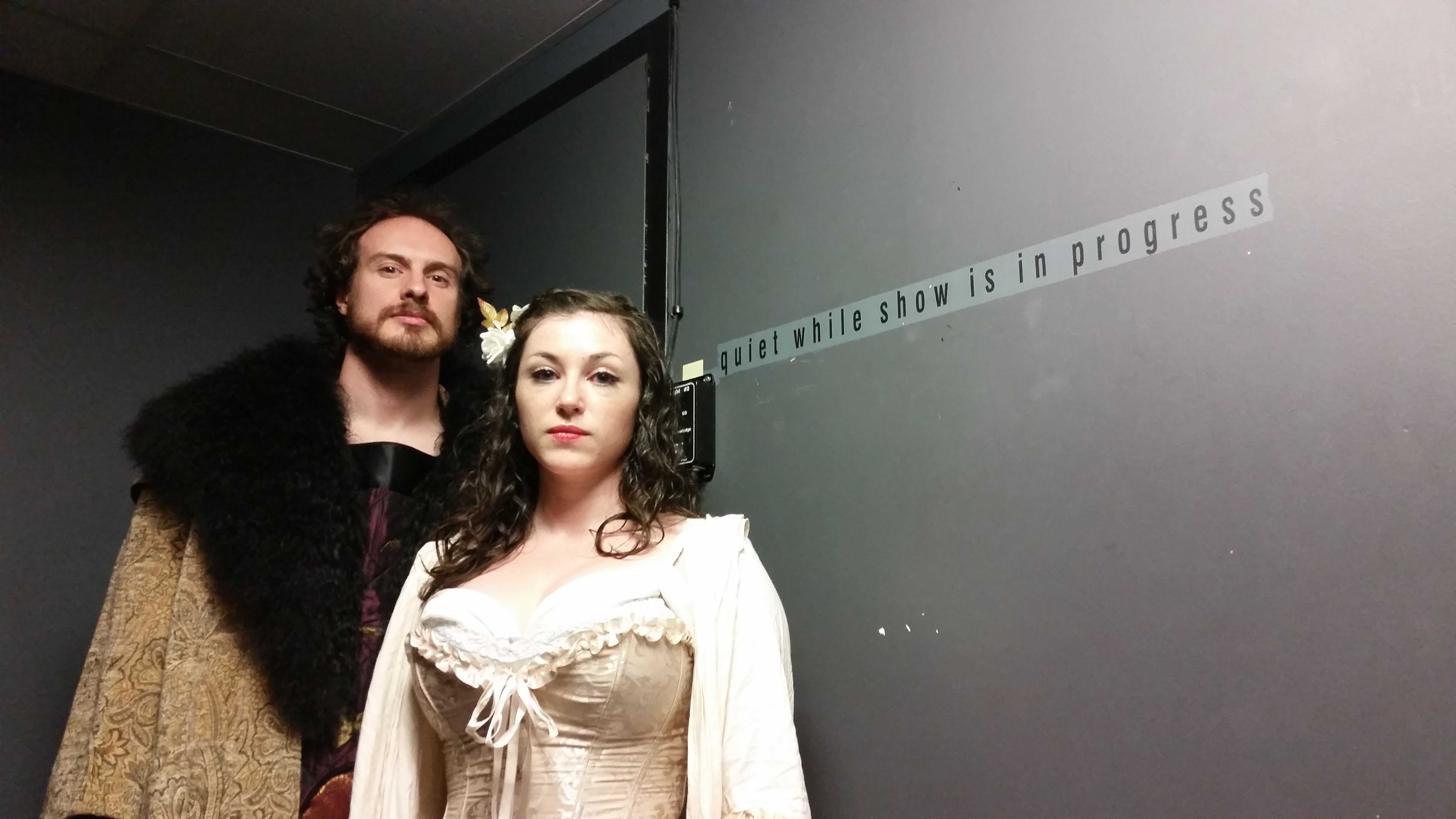
Geoffrey Simon Brown's The Circle was produced by Alberta Theatre Projects as part of the Enbridge New Canadian Plays program. Pictured, left to right: Brett Dahl, Geoffrey Simon Brown, Eliza Benzer, Leanna Govier, and Daniel Fong. Image provided by Alberta Theatre Projects.

Geoffrey Simon Brown’s The Circle was produced by Alberta Theatre Projects as part of the Enbridge New Canadian Plays program. Pictured, left to right: Brett Dahl, Geoffrey Simon Brown, Eliza Benzer, Leanna Govier, and Daniel Fong. Image provided by Alberta Theatre Projects.

Enjoying its world premiere at Alberta Theatre Projects, Geoffrey Simon Brown’s The Circle is a new Canadian play that has been touted as a must-see for anyone under the age of 25. A bold claim if ever there was one. For The Circle suffers from an uninspired narrative, flat characters, and forced dialogue. In fact, young people may find themselves put off by the dishonesty staged in this “provocative” new play.

Directed by Anne Marie-Kerr, The Circle stages a late-night garage party, in the suburbs of Calgary, hosted by 18-year old Ily (Joe Perry) and his girlfriend Amanda (Eliza Benzer). Well, it was never supposed to be a party, just a small get-together with Will (Daniel Fong) and his boyfriend Daniel (Brett Dahl). But Ily just had to invite his childhood friend Tyler – or Mutt (Brown) as he’s known now – after reconnecting with him. And much to the annoyance of Amanda, Mutt brings with him another unexpected guest, his girlfriend Kit (Leanne Govier). The crowded get-together takes a turn for the worst when Ily realizes that a lot has changed in the years since he last saw Mutt.

Audiences will immediately notice the very liberal use of ‘fuck’ and other profanities spoken by the six troubled youth. With no adults around, it makes sense that the six teenagers (who range between 15 – 18) speak the way they do. The problem is, what does ‘fuck’ mean after the twentieth time? In the pursuit of authenticity, Brown weakens the audience’s emotional response to moments where cursing is justified, where a character really has nothing else to say but ‘fuck’.

And truthfully, Brown fails to give teenagers enough credit by suggesting that they are not capable of speaking their minds without resorting to excessive cursing.

Furthermore, Brown’s efforts towards authenticity gets in the way of telling a compelling story. Inside the garage, the kids drink, smoke pot, and just chill out. As long as the music is loud and pumping, nothing else matters – except for maybe Amanda’s AP classes. At first, the novelty of staging such an intimate look into the ‘secret lives of teenagers’ is fun, but the lack of any significant plot development is a real wet blanket. The audience knows Ily and Mutt will eventually come to blows as Mutt says and does all the wrong things at the party, but until then the audience is trying to figure out what this party and these kids are all about.

Slowly, but surely, Brown reveals what these kids are all about, and it is very simple: they are young and just trying to figure life out. All easier said than done, of course, especially in the face of loss and damaged relationships. The issues at hand will certainly resonant with some audience members, but unfortunately the characters lack any depth worth investing in. The haste in trying to establish authenticity for six characters while trying to remain edgy derails the dialogue, making it feel as forced as just about any hashtag or meme spoken out loud.

Much has been made about the fact that Brown is a 26 year old playwright. We have to assume that the point of mentioning Brown’s age is that we are going to tell ourselves that if anyone is going to write about young people with any success, it is going to be a young new playwright. That is not the case here. The representation of youth staged here feels out of touch with the complexity that defines adolescence. No doubt, Brown’s writing has the potential to tell many truths, but in trying to capture a broad image of youth, Brown captures very little of it. There is much to be desired in terms of proper time with these youth not just for the sake of a worthwhile narrative, but for young people to recognize themselves in the mirror that the stage always holds to the audience.

Kerr’s direction sees the six youth animated as if they were in a music video or Degrassi: The Next Generation montage. All sorts of antics take place inside the garage, strangely none of them are documented on social media. The blocking certainly reflects fun, but Kerr might do well to let scenes sit and breathe every once in awhile.

Jennifer Lee Arsenault’s costume design is mostly on point, but Kit’s goth/punk appearance looks dated by at least 10 years. Myspace might be a better fit for Kit than this high school party. The same can be said about Anton de Groot’s sound design (Eminem’s Without Me was released in 2002), but the soundtrack is mainly successful in getting that youthful spirit.

We learn being a high school dropout stoner is not exactly the life Ily wants for himself, but the party is too good to worry about that now. In Perry’s performance, we see Ily’s fear and regret that he tries to push down with good times. Benzer emotes well Amanda’s frustration, if not resentment, towards her loser boyfriend. Dahl does the most he can with Daniel’s vagueness, specifically the character’s long-winded monologue about fear, faith, and losing his mother. Fong also tries bringing more to Will, which he does when the nature of his and Daniel’s relationship is made clear. Brown and Govier share a particularly emotional scene together, one that sparks excitement in the play again (although too late, perhaps).

Is The Circle a must-see for anyone under the age of 25, as ATP claims? No. Certainly, what the play tries to say about youth is important, but young people will struggle to identify with this shallow representation of their everyday experiences. In fact, young people may feel that the play owes them more than what it offers.


Alberta Theatre Projects’ production of Geoffrey Simon Brown’s The Circle runs October 20 – November 27 at the Martha Cohen Theatre.

For more information about the show, visit: http://atplive.com/whats-on/the-circle/
The Truth, or Some Version of It: Theatre BSMT Stages Drader’s Liar at Motel Theatre

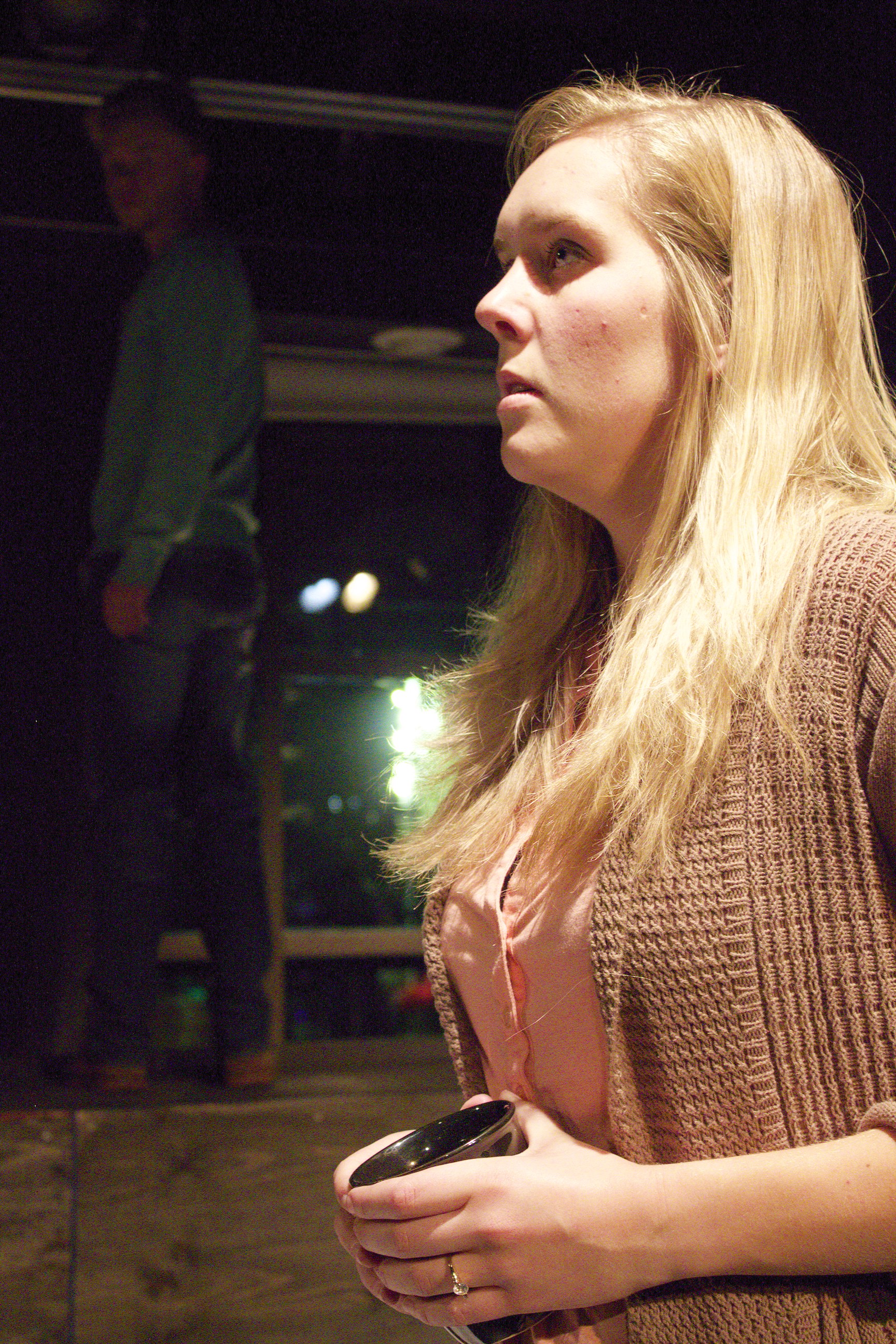
Theatre BSMT's season opener Liar, by Brian Drader, ran October 6 - 10 at Motel Theatre. Pictured: Carolyn Ruether (Sherri) with Simon Tottrup (Jeremy) in background. Image provided by Theatre BSMT.

Theatre BSMT’s season opener Liar, by Brian Drader, ran October 6 – 10 at Motel Theatre. Pictured: Carolyn Ruether (Sherri) with Simon Tottrup (Jeremy) in background. Image provided by Theatre BSMT.

The truth is invaluable, or at least we like to think it is. There are times when honesty is not the best policy because sometimes, the truth is unkind. When truth becomes displaced, white lies make lofty nests. And as Ben and Sherri Ingles (Grayson Ogle, Carolyn Ruether) discover in Brian Drader’s Liar, these nests are lined with patient thorns.

Presented by Theatre BSMT, Drader’s Liar tells a compelling story about family, loss, and the lonely journey towards closure. And it begins one night at a gay bar where Sherri’s estranged brother Jeremy (Simon Tottrup) meets a strange drifter named Mark (Corey Joyce). And maybe the reason why Jeremy joins Mark on the roof of a building for some beers is that he seems harmless enough, despite leading Jeremy on.

The next morning, Jeremy is found dead, and only Mark can answer the question of whether he fell or jumped.

Ben and Sherri’s marriage is in trouble, the love that was once there is just an act these days. Ever since their four-year old son disappeared, Ben and Sherri have never been the same. And so, Sherri becomes desperate to establish a relationship with the person who was there for her brother’s last hours in order to find closure. Unfortunately, the closure Mark provides is dishonest. Mark was neither Jeremy’s boyfriend, nor a co-worker at the hospital where he worked. Slowly, good intentions reveal themselves as something more sinister.

The Canadian playwright demonstrates the shattering effect of loss on the human psyche. Ben is quick to suspect Mark has ulterior motives, especially as he starts entering deeper and deeper into the couple’s personal lives, while Sherri takes anything this stranger has to say about Jeremy (and himself) as gospel. The audience may find Sherri gullible, if not totally irrational, but is she really? Consider how psychic mediums claim to have the gift of communicating with the deceased, and the fellowship they amass by those who so desperately want to believe. From the outside, the whole idea is nonsense, but to those affected by loss it is something, which is easier to accept than the complete absence of a person.

And it is this vulnerability that Mark preys upon. What makes Mark such a threat is that, as a drifter, he has nothing to lose, and everything to gain. Given this, Mark can be anything anyone wants him to be, as he shows with Ben who he wins over by becoming his new drinking buddy. In Mark, Drader reflects the malleability of truth, the versions of truth we seek out and, sometimes to our own peril, lose ourselves in.

Unfortunately, DJ Gellatly’s direction feels too relaxed for such a gripping narrative. If the production’s pace were tighter, then perhaps the pauses and silences would be more effective than they are. As it is, Gellatly traps himself and his actors within a fairly limited range where these breaks have little significance in the face of the menace and anger from which they are born from.

Where Gellatly has some success in the staging of this play is in keeping the actors actively involved at various periods within this web of broken truths on stage. Something so simple as having Ogle review his tapes downstage while a scene plays out upstage behind him benefits the dramatic tension by adding layers to the action.

Ruethers’ has some difficulty capturing the emotional nuance of her characters’ arc, effectively lacking punch when the script calls for it, but there are moments where the young actress really digs inside and shines. Ogle is very expressive as Ben whose emotions read clear across his voice, face and gestures. The actor moves with tremendous purpose, even when the character is unclear of the situation. And that makes it all the more unsettling how such a strong-willed character is won over by a mysterious stranger. Jeremy, who appears briefly throughout, is played well by Tottrup who delivers as a troubled youth in need of presence.

Joyce has the challenge of playing a manipulative character ready to change persona at the turn of a dime, and ultimately it does prove too challenging for the actor. A part of the problem is that Joyce rarely shows the same genuineness with Ben and Sherri that he does in scenes with Tottrup’s Jeremy. The audience is never given the chance to doubt Ben’s suspicions about Mark, to be surprised when Mark’s true colors are revealed. Joyce’s performance as the evening’s catalyst for emotional ruin leaves much to be desired.

The use of the Motel Theatre’s windows as both the city’s nightscape and Ben and Sherri’s house windows is smart given the theatre’s limited space. Lisa Floyd’s atmospheric lighting design makes the theatre space feel intimate, if not deeply personal.

Although it may fall short in some areas, Theatre BSMT’s production of Liar still manages to provoke its audience to consider the many ways we lie to each other and ourselves, and what that means in the long run. And no doubt audiences will think about this on their way home from the theatre.


Theatre BSMT’s production of Brian Drader’s Liar ran Oct 6 – 10 at Motel Theatre.

For more information about the show, visit: http://www.theatrebsmt.ca/Theatre_BSMT/Whats_On.html

A Waltz With History: Devon More on What She Learned From Berlin

Devon More's Berlin Waltz ran July 31 - August 8 as part of the 2015 Calgary Fringe Festival. Photo Credit: Petrocker Photography.

Devon More’s Berlin Waltz ran July 31 – August 8 as part of the 2015 Calgary Fringe Festival. Photo Credit: Petrocker Photography.

For singer-songwriter Devon More, live performance offers an invaluable opportunity to plant new ideas.

“I have a very active brain. I love to research, and I love to learn,” said the Vancouver-based artist. “I find that a lot of media and entertainment that we are exposed to is quite hollow, and I think what a shame…because entertainment value is the perfect way to educate or teach someone.”

And with endless information at our fingertips, live performance is more important than ever in this age of Web 2.0, says More.

“It’s amazing if people give you an hour of their time in a world where seven seconds into a Youtube video clip if it’s not entertaining, then you’re onto the next page, right? So, a full hour of time seems like a wasted opportunity to bring people into a room without trying to give them something… [that they] can marinate on later.”

Last month, More premiered her one-woman musical comedy Berlin Waltz at the Calgary Fringe Festival. Through original music and puppetry, More staged Berlin’s history during the Cold War, from the end of World War II to the fall of the Berlin Wall.

More felt inspired to develop Berlin Waltz after living in Germany’s capital city for four years.

“Everyone wants to know why I went to Berlin, but it was completely haphazard,” said More. “I had finished my first undergrad in Kamloops at Thompson Rivers University where I did a Bachelor of Arts in Theatre and Anthropology. So, naturally, I was still working a restaurant managerial job after I finished. And I thought, well I could do this somewhere cooler.”

“I had done a study exchange to the Netherlands years previous, so I already spoke Dutch. My slightly flawed logic was that German would be the next easiest language to pick up after that, and I could get a working holiday visa for Germany.”

With her best friend joining her, More set off for Germany. Upon arriving in Berlin, More and her friend attended an orientation session on how to navigate through German bureaucracy e.g. work permits, tax numbers.

“[We] figured we would probably end up getting seasonal work somewhere else in Germany, like at a ski resort. But when we got to Berlin, it was just…you could feel the energy of the city,” said More. “People are out and contributing to the city, taking part in the city. I just couldn’t think of a good enough reason to leave, even though unemployment at the time was at almost 20%. This was during the 2008/2009 Recession.”

Despite her limited German, More found work at a pub. Working and living in Berlin, More started to recognize something amazing about the city. Even after “witnessing all the extremes, all the worst possible outcomes” just decades before, Berlin still held the arts in high esteem.

“It’s the only place I’ve ever been where if someone asks you what you do, and you say I am an artist, their next question is not “What’s your real job?” It’s a very creative city,” said More. “And it’s a very beautiful thing as a creative person to be in a city that’s been basically slapped in the face by everything that happened in the 20th century and to see the priorities of the city be art and culture.”

More returned to Canada in 2012. Development on Berlin Waltz would begin after More’s 2014 fringe tour.

“The fringe is…I’ve never worked so hard for meager returns, but you know it’s amazing,” said More about the fringe experience. “Professional development pays for itself — so don’t make me seem like I’m money hungry! But you spend so much time on the fringe working, selling, trying to promote, trying to get people excited about your show…I just couldn’t…you really need to care about, at least I do, what you’re trying to sell to be able to maintain that level of involvement with it.”

With this in mind, More searched for a subject that she felt ready to invest all her time and energy into.

“In Berlin, I learned so much just by living there about what the sort of broad political, ideological ideas, terms, and decisions mean when they actually get down to the human level, to one person, to an individual. And it was a really important lesson for me to know that. And so, I thought, well that’s something i could spend a lot of time and energy on and feel good about.”

Although much of the show’s content comes from what she learned while in Berlin, More says research was necessary in order to accurately and properly contextualize the events that shaped Berlin and its people.

“Berlin is a very strange city. It’s contradictory, it’s not like most first-world capital cities,” said More. “If you don’t know why, if you don’t know what happened in history to create that, it’s kind of hard to understand, so I didn’t feel I could give people the broad strokes of Berlin without planting it in its history.”

More’s Berlin Waltz stands as a love letter to a city, an intimate encounter between biography and history, and also, a call for action. In her show, the artist encourages her audience to question actions taken by the Canadian government, specifically the introduction of invasive bills like the controversial Bill C-51.

“I learned a lot about the Cold War living in Berlin,” said More. “And then, I came back to Canada three years ago, and I was kind of astonished by what I felt like were some political mistakes we were making here. What happened in East Germany proved bad for the greater good. So, I was concerned. I thought, we already know this, we learned these lessons from history. We learned about intense surveillance of the population with the Stasi, and now that beast has morphed with online surveillance and all the beautiful implications of technology.”

More fears that the Cold War has become distant in the minds of Canadians, that the high-tension era which saw so much propaganda has “become history, rather than contemporary history.”

“At this vantage point of 25 years down the road after the victory of capitalism…of this quest for unlimited economic growth and what that entails for the environment and resources, it’s only really now that we know what that meant. I think rather than just blazing forward on the same path we’ve been on for 25 years since the wall fell, maybe it’s time to take inventory and say “could it be better?”…I think the answer is absolutely yes. We’re at a point where we don’t have enemies like the Soviets versus the US anymore.”

Looking ahead, More says she will perform Berlin Waltz again. She intends on using all the feedback she received to fine tune and polish the show. Ultimately, More says, she hopes to continue inspiring people to consider the parallels between what happened in East Germany and what is happening here at home.


Devon More’s Berlin Waltz ran July 31 – August 8 as part of the Calgary Fringe Festival.

Visit CBC Music’s profile on Devon More to learn more about the artist: http://music.cbc.ca/#!/artists/Devon-More

Devon More’s Bandcamp Page: http://devonmore.bandcamp.com/ 

Hoodlum Theatre’s Debut Production Impresses

Forsooth, My Lovely

David Belke’s Forsooth, My Lovely marks Hoodlum Theatre’s first company outing. From left to right: Andrew Burniston, Bianca Wu, Thomas Rayment, Griffin Cork, and John Tasker. Centre: Malik Elassal, Jane Wishart. Photo Credit: Benjamin Laird.

When Detective Birnam Wood (Griffin Cork) is on the case, everyone in the city of Padua is a suspect. Yes, everyone including Romeo Montague (Malik Elassal), Katherine Minola (Jane Wishart), and even the prudish Malvolio (Thomas Rayment).

A clever parody of film noir and the Bard’s best works, David Belke’s Forsooth, My Lovely imagines a seedy, corrupt world inhabited by Shakespeare’s most well-known characters. With dames, swords, and strong performances, Hoodlum Theatre’s inaugural production sets the bar high for the young company.

Directed by Karen Johnson-Diamond, Belke’s Forsooth, My Lovely follows Birnam Wood as he sets out to solve a case of blackmail that threatens to ruin a rich merchant’s family. In his search for answers, however, Birnam comes across a gallery of Shakespearean characters who make it obvious that something more sinister is afoot in Padua. Twists and turns in the case eventually see Birnham caught in a dangerous web of deception.

The manner in which Belke presents film noir’s defining elements – heavy disillusionment, moral decay at the heart of an urban centre, trench coats and trilbys – within a world where the characters speak in blank verse, but dress in 1940s fashion, is marvelous. The juxtaposition of styles makes for cheeky moments of self-awareness, which the ensemble is careful not to overdo. For that is the success of such a production, a clear understanding of the genre and what it is the playwright is parodying.

And none – which is a tough evaluation considering the talent present – demonstrate a better understanding of the genre than Wishart. Wishart plays the ‘shrewish’ Katherine with the edge of a femme fatale; independent, subversive. Wishart speaks as if engaged in a sparring match where she intends on coming out victorious.  At the same time, too, there is a vulnerability underlying Wishart’s performance which reveals itself in full form near the play’s end. Add in Wishart’s aptitude for accents, and you have an all-around stunning performance.

Belke’s script does require a certain degree of familiarity with Shakespeare’s collection of works in order to truly appreciate the playwright’s numerous winks and nods. (And the same could be said about film noir, but to a lesser degree). Those not so much in the know will still find the show very enjoyable, but may feel left out of the loop at times.

The production sees some issues in the way of actors tripping over dialogue. Fight sequences are loose and sluggish. And Cork’s toothpick is more a distraction than anything else. (A toothpick may work on film, but not on stage where every movement, no matter how small, is picked up by the audience).

Those issues aside, the tight-knit ensemble under Johnson Diamond’s sharp direction carry the two-hour long show well, which is made more impressive considering the multiple characters each actor (except for Cork) plays throughout the show.

What makes Belke’s Forsooth, My Lovely ideal as an inaugural production is that it offers plenty for actors to sink their teeth into. And the young talent here have done so boldly in the interest of proving themselves as emerging artists.

Hoodlum Theatre’s debut shows great promise for the company moving forward.


Hoodlum Theatre, in association with Calgary Young People’s Theatre, presented David Belke’s Forsooth, My Lovely at the West Village Theatre, Aug 19 – 23.

For more information about Hoodlum Theatre, visit: http://www.hoodlumtheatre.com/

Mercutio & Tybalt Impresses at Calgary Fringe Festival

MAndT_CalgaryFringe2015_byChrisTait_web-0148

From left to right: Tybalt (Celene Harder) and Mercutio (Val Duncan) bring their side of the story to life in Valour & Tea’s Mercutio & Tybalt. Photo Credit: Chris Tait.

William Shakespeare’s Romeo and Juliet has seen its fair share of adaptations and retellings, but none, Mercutio (Val Duncan) says, have come even close to the truth. For how many know that Mercutio and Tybalt (Celene Harder) were actually close friends? That is the premise of Valour & Tea’s newest work Mercutio & Tybalt, a hilarious reimagining of Shakespeare’s most popular play.

Written and directed by Duncan and Harder, Mercutio & Tybalt catches up with the titular characters in the afterlife. Still bitter about the fact that the story of two dumb, hormone-crazed teenagers has endured the last 400 years, Mercutio and Tybalt decide it’s time that they share their story with the world. What follows is an epic tale of bromance, full of puppetry and swordplay, that weaves in and out of familiar scenes from Romeo and Juliet.

Duncan and Harder stay true to the Bard’s style by performing the show entirely in iambic pentameter, with modern slang included in the mix. In doing so, Mercutio and Tybalt’s vaudeville-inspired antics are given a natural, if not musical, rhythm for the actors to follow.

Duncan and Harder have crafted a wildly fun show that works for both friends and acquaintances of the Bard. Harder’s bad-tempered Tybalt is the perfect foil to Duncan’s immature, yet sharp tongued Mercutio. The pair work brilliantly together, delivering a charming performance abundant in wit and attitude.

Mercutio & Tybalt captures the spirit of its source material, while delivering something fresh and vibrant at the same time. Audiences will find much to enjoy here, guaranteed.


Val Duncan and Celene Harder’s Mercutio Tybalt runs July 31st – August 8th as part of the 2015 Calgary Fringe Festival.

For more information about the show and how to purchase tickets, visit: http://see.calgaryfringe.ca/events/464-mercutio-tybalt

Helmut’s Big Day Charges Forward, Stumbles

Helmut_Calgary_Postcard_Side1

James Wade’s Helmut’s Big Day is one of 27 shows running at the 2015 Calgary Fringe Festival.

The Empire is good, God is great, and the uncivilized, Cat-Demon worshipping Barbarians call the Barren Plain home. Sabir (Alan Johnson) knows these three things for sure, except…well, the Barren Plain is the one with the small bush, right?

Presented by Red Phone Theatre, James Wade’s Helmut’s Big Day is a satirical comedy that pokes fun at notions of empire and conformity. The play blends hijinks and philosophy for a breezy, though sometimes sluggish, critique of political ideologies.

Atop the wall separating the Empire from the Barren Plain, Sabir keeps a vigilant eye over the Great Plain which he is sworn to protect. While marching back and forth may not be glamorous, Sabir is compelled to serve the Empire because, according to the army’s manuals, God is watching – always watching. Lonely at his post, Sabir finds a friend in Helmut, a soldier’s helmet he converses with.

Sabir’s troubles begins when Helmut “asks” him to identify what the difference is between the two Plains. (After all, they’re both plain!) The question, at first taken with confidence, makes Sabir uneasy as what he actually sees, which is no discernible difference at all, stands at odds with the narratives fed to him by the Empire. As the contradiction disturbs Sabir, he suddenly spots riders approaching from both sides. Which is the enemy, which is the ally, the problem of the Plains worsens with every passing second.

The nature of Sabir’s blind loyalty to the Empire reveals itself further when Katar (Emma Sinclair) comes to check on her comrade. Also confused by the Plains, Katar proposes the idea that morality is subjective, that maybe the Barbarians see themselves as good and the Empire as evil. Either that, Katar says, or life is random and all action, like guarding the wall, is meaningless. (God, Cat-Demon, makes no difference in the end). Sabir dismisses Katar’s foolish ideas, despite being confronted by the falseness of the Empire head on.

What emerges from the total confusion of these two lowly soldiers is sheer buffoonery. Sabir and Katar’s ‘best’ judgement leads to disastrous results.

While fun, Wade’s expression of these philosophical ideas is largely cumbersome. The script has difficulty weaving the play’s big ideas and physical humour together without resorting to mouthfuls. The ideas land heavy and, as a result, interrupt Johnson and Sinclair’s comedic antics.

Director/Designer Kathryn Smith’s clean, simple set helps the action flow neatly. Smith’s remedies the sometimes stagnant pace of the script by employing the two wall borders to create and thrust the audience into the panicked frenzy shared between Sabir and Katar. The use of the wall borders to show different dimensions of both the wall and the action is smart.

The snappy chemistry between Johnson and Sinclair is enjoyable, though not so much until later in the show when the script gives the actors more room to play. Sinclair’s performance as the oblivious ‘wise fool’ plays well against Johnson’s condescending, but utterly foolish character.

Ultimately, Helmut’s Big Day satirical bite is bogged down by clumsy dialogue. The play delivers fun, physical humour, but its commentary struggles to have a sharp presence in the mix.


Presented by Red Phone Theatre, James Wade’s Helmut’s Big Day runs July 31st – August 8th at the 2015 Calgary Fringe Festival. 

For more information about the show and how to purchase tickets, visit: http://see.calgaryfringe.ca/events/473-helmuts-big-day

Mir & Andrews’ ‘A Picture With A Bull’ A Mixed Effort

Ruben (Ahad Mir) loves his friends, that he knows for sure. Everything else, well, everything else he just doesn’t know about anymore. Ever since his best friend Nico (Chad Hamilton Andrews) started dating Lisa (Courtney Charnock), Ruben’s life has been a weird mess.

A comedy co-written by Mir and Andrews, A Picture With A Bull asks if adulthood and friendship can ever mix. What audiences will find here is certainly a mix: a lengthy mix of crude humour and cliché under the guise of something meaningful.

The play begins with Ruben taking us back to before all the trouble began, the trouble of girlfriends, responsibility, and nostalgia. Every year, Ruben, Nico, and Greg (Alex Peters) go on a trip together to bond and get away from life. For Ruben, what makes the trip special is that it’s always just him and his bros – no girls allowed. This year, though, Ruben’s friends have a different idea for the trip: what if Lisa and Ruben’s girlfriend Diana (Natasha Strickey) came along too? Ruben outright rejects the idea. He refuses to betray tradition, a tradition only he seems to really care about.

Ruben’s stubbornness eventually leads the guys to question their friendship, career paths, and ultimate end goals; the usual frustrations of twenty-somethings in a 9-5 world.

Mir and Andrews’ play is set up much like a sitcom. In fact, the audience can identify almost right away the usual personalities. Lisa is something like the Phoebe of the group, quirky and artsy. Greg is the Funny Guy/Slacker who is good for a laugh, but not much else (like character development). Ruben is the charismatic Cool Guy, the clever one who has a comeback for everything. And they all work in the professional fields of law, healthcare, and business – except for Lisa who is a dancer, naturally.

Like a sitcom, the writing is (over)stuffed with zingers and risqué jokes. At the same time, too, there are real concerns about adult friendships, about relationships being work rather than things that simply happen. The balance between the two is uneven, to say the least. What unfolds is a messy demonstration of the ensemble’s comedic chops. The play’s more serious commentary exists largely as an afterthought.

When the play exhausts its cheap laughs, the show settles on presenting in full its dramatic side. What follows is a forgettable conclusion – forgettable because the characters never earn anything beyond that – that abruptly ends on a less than hopeful note.

The ensemble’s strength is their charming chemistry which invites the audience into this group of friends, allowing them to laugh along plenty at Mir’s sharp tongued performance and Peters’ wacky antics. The ensemble, however, is allowed to be too much at ease with each other. Brett Tromburg’s relaxed direction takes the punch out of some of the play’s more witty exchanges.

There is no denying that Mir and Andrews have written a funny, if uneven, script. The problem is that not much stands out to make this play particularly memorable. The characters, along with the comedy, are flat, and the drama is undercooked.

Despite having its moments, Mir and Andrews’ A Picture With A Bull is ultimately a mixed effort that offers nothing new that hasn’t been done before.


Ahad Mir and Chad Hamilton Andrews’ A Picture With A Bull ran July 22 – July 25 at the Motel Theatre (Arts Commons) as part of the Common Ground Festival. The full festival runs until Aug 1st.

For more information about the festival, visit: http://www.commongroundyyc.com/

Ryan Gray’s Beneath The Skin Travels a Dark, Compelling Path

How far would you go in search of the truth? How well do we know our limits, our boundaries that keep us from being consumed by a hungry darkness? Ryan Gray explores these questions in Beneath The Skin, a thriller/mystery that boldly ventures into the abyss.

Directed by Jenna Rodgers, Gray’s Beneath The Skin stages reporter Carmin Morgan’s (Justine Westby) exclusive interview with convicted murderer Colton Cassio (Justin Michael Carriere), better known as the Portrait Killer. Colton’s long violent history – a history that started at a young age – fascinates Carmin who will stop at nothing to learn as much as she can about him and his victims. Carmin quickly learns, however, that is just not Colton’s crimes that make him a dangerous man, but also his charisma which threatens to take her down a path she never intended to travel.

The focus of Carmin’s interview is centered around Erin (Claire Bolton), Colton’s first victim whom he fell deeply in love with. Via flashbacks, the audience sees how an awkward 20-year-old Colton (Jacob Lesiuk) eventually came to befriend and then murder Erin while away at university.

Gray skillfully creates tension between Colton and Carmin by rarely letting one person hold power too long between them. While Carmin sees herself locked in a game of wits against Colton, Colton sees the two engaged in a more emotional game, a game of wills. And that is what makes Colton so dangerous, he has nothing to lose; he has given himself over to the darkness that calls him inside. Yet, victory is not so assured, Colton comes to realize, as Carmin’s determination for the truth reveals itself to be something more than a professional obligation.

Colton and Erin’s young love, though sometimes a bit too sweet, is crafted very well by Gray. There is a certain sadness in knowing Erin’s eventual fate, but never dulled anticipation. The interplay between the past and present delivers just enough information to maintain our attention. And then, Gray hits the audience with the inevitable which is both very creative and disturbing. (The audience gasps in horror as the scene becomes obvious).

Where the production fails the script is in its blocking. Noticeably challenged by the limited space available inside the Motel Theatre, the rising tension of the play breaks periodically when Carriere and Westby have to stand and carry the table and their seats to the side in order to make way for a flashback scene, sometimes while fully lit. The whole business seriously throws off the established atmosphere.

Despite the proximity of the audience to the actors (the Motel Theatre has a 50 seat capacity), there is no warning for the audience about the use of live smoke. The sudden inhalation of cigarette smoke distracts from the play’s dramatic conclusion.

Carriere and Westby are truly a force together. Carriere displays an unsettling, yet alluring confidence that make very real the presence of danger, to which Westby responds to with an exhilarating tenacity. Westby is truly firm in her character’s resolve, and that makes her performance all the more exciting to watch.

Bolton and Lesiuk share a pleasant chemistry on stage. Bolton is very easy to like as the cheery, good-natured Claire. Lesiuk plays the young, unassuming Colton with ease. There is a bit of a strain, though, when Lesiuk’s character begins to embrace his more sinister side, but the script is more at fault here than Lesiuk. Lesiuk’s performance during his final scene will have audience members abuzz in the lobby afterwards.

Ryan Gray’s Beneath The Skin is a thrilling piece of work that leaves an impression on any who dare step into the darkness.


Ryan Gray’s Beneath The Skin runs July 22 – July 28 at the Motel Theatre as part of the Common Ground Festival. The full festival runs until Aug 1st.

For more information about the Common Ground Festival, visit: http://www.commongroundyyc.com/

MacAlpine’s Polonius and His Children Delivers Intense Family Drama

Anna MacAlpine's Polonius and Children ran as part of Sage Theatre's 2015 Ignite! Festival. Pictured: John McIver (Polonius) and Brianna Johnston (Ophelia). Imaged provided by Sage Theatre.

Anna MacAlpine’s Polonius and Children ran as part of Sage Theatre’s 2015 Ignite! Festival. Pictured: John McIver (Polonius) and Brianna Johnston (Ophelia). Imaged provided by Sage Theatre.

One hopes that the dead find peace in the afterlife; some respite from their mortal pains. That is, after all, the promise of death: an ultimate end. But what if, what if the dead are no different than those who roam the earth, burdened by secrets and regret?

Anna MacAlpine’s Polonius and His Children imagines a reunion between the titular character (John McIver) and his children – Ophelia (Brianna Johnston) and Laertes (Greg Wilson) – in the afterlife. The reunion is, unfortunately, not a happy one as the characters, the very same from William Shakespeare’s Hamlet, meet only to confront each other on unresolved issues. Among them is an unseen, mischievous spirit of the void (Amy Sawka) who narrates the drama.

Ophelia is the first to meet Polonius. Upon seeing her soaked dress, Polonius, whose stab wounds have not healed, asks who drowned her. Ophelia’s response is, very fortunately, interrupted by Laertes’ entrance into the void. Quickly, Ophelia and Laertes find that their father, despite an eternity for reflection, is the same old fool he was when they were alive.

While Polonius’ children both assert themselves against their father, it is Ophelia who struggles most to have her independence recognized. Even in this hellish landscape, Polonius and Laertes continue to dominate Ophelia’s life. They speak so much over Ophelia that she is never given the chance to explain herself. In fact, MacAlpine argues, Ophelia has never been allowed to explain herself.

Here, MacAlpine examines through a feminist lens the works of art inspired by Ophelia’s death. MacAlpine does so by envisioning what Ophelia would say about the artists who, over the years, have portrayed her as a virginal beauty who died a ‘beautiful death’. It was not beautiful, Ophelia says, it was painful. And why is there, she asks, such importance placed on virginity? How does that make a death beautiful in any way? Ophelia’s soliloquy is replete with anger, frustration at the narratives imposed upon her exploited body.

Along the way, MacAlpine infuses humour into the play in the way of clever references to the source material. The playwright, too, has fun with the characters whom she has written with her own flavour. Although, while the humour works in some areas, the humour feels out of place and at odds with the play’s overall brooding tone.

In terms of performances, the ensemble is strong. Sawka is very physical and light on her feet. Her playfulness never upstages the main action. McIver plays Polonius brilliantly. McIver’s mannerisms signal a Polonius who has lived one life too many; an old man unable to find rest. Johnston and Wilson do well as Ophelia and Laertes. Wilson’s casual demeanor mixed with his solid delivery attracts big laughs from the audience. Johnston nails the soliloquy given to her, she is truly in synch with her character.

MacAlpine’s Polonius and His Children is a smart, poignant drama that intrigues with its troubled characters and urgent themes.


Anna MacAlpine’s Polonius and His Children was presented by Sage Theatre’s 2015 Ignite! Festival. The festival ran June 18-20 at The Studio inside Vertigo Theatre.

Urban Curvz Theatre Takes A Trip Across Legoland

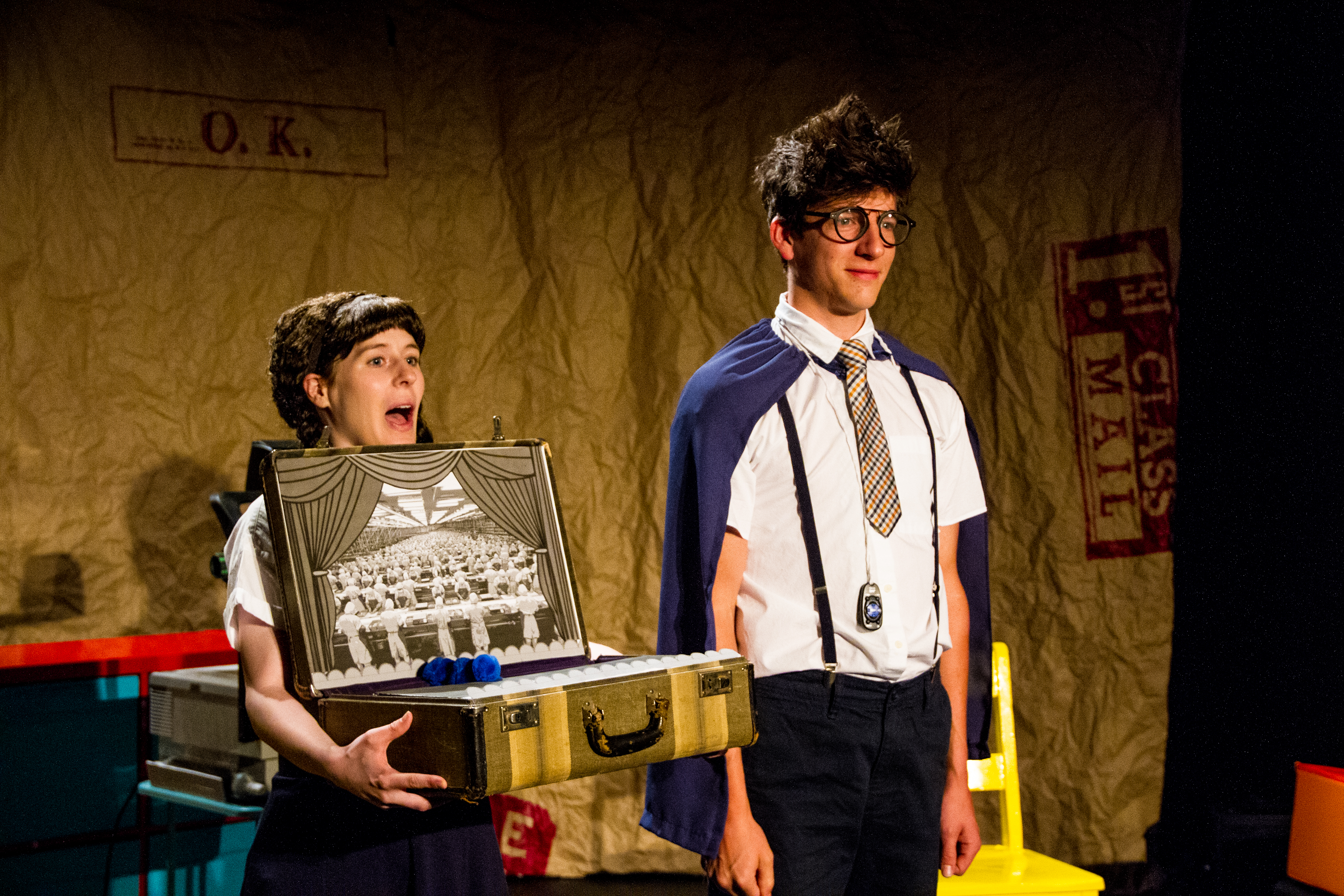
Penny Lamb (Kelly Malcolm) and her younger brother Ezra (Matt McKinney). Photo Credit: Aldona B Photography.

Penny Lamb (Kelly Malcolm) and her younger brother Ezra (Matt McKinney). Photo Credit: Aldona B Photography.

Being a teenager can be hard. Everyone wants to be an individual, but no one wants to stick out. No matter what you do it seems like teachers are always out to get you. And your hormones are everywhere, so you really never know how you feel.

And yet, despite everything, being a teenager can also be pretty awesome.

Presented by Urban Curvz Theatre, Jacob Richmond’s Legoland is a fun, spirited celebration of youth. A vaudeville-inspired comedy, Richmond’s play looks at our crazy world through the bright eyes of a teenage girl ready to leave her mark.

Sixteen-year-old Penny Lamb (Kelly Malcolm) and her younger brother Ezra (Matt McKinney) are not your typical teenagers. Penny and Ezra were raised on a hippie commune outside Uranium City, Saskatchewan. For years, the outside world, dismissively referred to as “Legoland” by the commune’s elders, fascinated the Lamb siblings. One day, the commune is busted by police for being Saskatchewan’s largest grow-op. With their parents imprisoned, Penny and Ezra are enrolled into a private Catholic school where they quickly learn that Legoland is as bizarre as it is unwelcoming.

In Legoland, commercial music lacks originality as reflected in the use of recycled personality types – the bad boy, the cute one, the sporty one, etc. People are unkind and distant. The status quo is maintained through prescription pills, which are seen as easy fixes to all life’s problems. Yes, Legoland is a rather plain, material place that is as rigid as a plastic toy brick.

As one might guess, Penny and Ezra’s unconventional upbringing makes them total outcasts in Legoland. Penny is rejected by the popular girls at school for being a “lesbian,” while Ezra is prescribed Ritalin to keep his behaviour in check.

It is this rejection by their peers that ultimately bring Penny and Ezra to us, or rather the assembly of high school students whom they present their story to as part of their community service.

When introduced to the boy band Seven-Up as a way to help fit in with the other girls, Penny develops a major crush on the lead singer Johnny Moon. She follows Johnny’s career long after Seven-Up breaks up, eventually becoming determined to meet him in person. Meeting Johnny, however, means crossing the border and traveling cross-country to Orlando. Thankfully for Penny, Ezra’s medication can easily fetch the necessary funds for such a trip.

What Richmond does with Penny is provide teenagers with a positive, albeit imperfect, role model. For one, Penny stands up for her values, despite the constant pressure from her peers to abandon what she believes in. And secondly, Penny sees no limits to her potential; her potential is limitless. She is abound with the sort of youthful enthusiasm that springs creativity  – and sometimes trouble! But that is okay, we learn, because it is all a part of being young and inexperienced. Everyone starts somewhere.

Penny’s mistakes – which are her’s and her’s alone to make – encapsulate the excitement of being a teenager, of growing up and discovering yourself as a young person. Penny is the kind of person that Legoland needs, flaws and all.

Where Richmond’s play falls flat is in its cross-country scenes which feel unnecessarily drawn out. The audience, in fact, may feel like they too are on board a greyhound bound for Orlando with the way Richmond stretches the play’s conclusion with the same repeating bits.

Otherwise, the play is a wildly energetic blend of puppetry (puppet design by Lindsey Zess Funk), song, and dance; a real vaudevillian treat. Director Jacqueline Russell’s creative staging sees the actors transform the stage into a dynamic space from which the story unfolds from, corner-to-corner.

Malcolm throws herself into every scene like it is, at the moment, the most important part of Penny’s life. Malcolm brings an infectious charm to the character who in other hands might be too much for the audience. Here, thanks to Malcolm’s take on the plucky teenage girl, Penny is almost impossible not to like. And despite Ezra not saying very much, McKinney is successful, too, in drawing us into his character. McKinney’s often deadpan look sells the character’s dark, bizarre humour. Together, Malcolm and McKinney are a lot of fun to watch on stage.

Optimistic, vibrant, and certainly unique, Richmond’s Legoland is one not to miss.


Urban Curvz Theatre’s production of Jacob Richmond’s Legoland runs June 11-20 at Motel Theatre.

For information about the show and how to purchase tickets, visit: http://urbancurvz.com/current-season/legoland/