Dads in Bondage Breathes Enthusiasm, Delights

Left to Right: Kirk (Eric Wigston), Charles (Doug McKeag), and Joey (JP Thibodeau),

Left to Right: Kirk (Eric Wigston), Charles (Doug McKeag), and Joey (JP Thibodeau), “A Fistful of Pampers.” Photo Credit: Nicole Zylstra.

Robert More’s Dads in Bondage, with music by Tom Doyle, returns to Lunchbox Theatre where it was first produced in 1988. Relevant, hilarious, and heartwarming, Dads in Bondage will make audiences smile from ear-to-ear.

For Charles (Doug McKeag), Joey (JP Thibodeau), and Kirk (Eric Wigston), staying at home with the kids will be a piece of cake. Why? Because they’re ‘millennium men’ who know what they’re doing! Well, that’s what the men tell themselves, anyway. Little do they know that bravado alone is no match for stinky diapers and baby colic.

Directed by Glenda Stirling, Dads in Bondage is a ‘fish out of water’ story about three new fathers turned stay-at-home dads when they find themselves suddenly unemployed. Charles and Kirk, an oil executive and construction worker respectively, have been laid off as a result of sinking oil prices. Joey, a nervous Latin teacher, is placed on stress leave to remedy his burn out. Quickly, dreams of ‘having it all’ fill their heads as they take on their new roles. But it is not too long afterwards that Charles, Joey, and Kirk realize what a task it is to raise children.

The men navigate through fatherhood by themselves, then together as they join in their common cause. Knowing murmurs and outbursts of laughter are heard as More presents experiences that parents in the audience may have encountered at some point themselves. Of course, the story More tells is one with a twist, a play on traditional roles.

Much of the show’s humour grows out of the masculine pride that begins so strongly, then falls apart as the stress of parenthood piles on. The men try their best to fool their wives into thinking that nothing is wrong when in fact everything is a disaster. Charles, for example, is completely sleep deprived, while Joey is at his wit’s end trying to handle twins. But for their wives’ sake, and to save face, the men keep silent about their difficulties.

To great effect, More turns antiquated notions of masculinity into something more human. The men eventually get a hold on fatherhood. What was once strenuous and taxing becomes a privilege, a source of joy. The ultimate lesson More leaves the audience with is that being a ‘successful man’ is not what’s important, it’s being a loving parent that is.

McKeag, Thibodeau, and Wigston are a whole lot of fun to watch on stage. There is a lot of great character work by the actors who dive into infectious musical numbers like “A Fistful of Pampers” with gusto. Each contributes significantly to the upbeat, zany nature of the show. Vanessa Sabourin, who plays the men’s three wives and other characters, is a fun addition to the show as well. Although she does not share the stage as much, Sabourin brings plenty of laughs with each appearance.

(And the puppets – they’re something too!)

An enthusiastic musical comedy about stay-at-home dads, Dads in Bondage is sure to delight and entertain audiences.


Robert More’s Dads in Bondage, with music by Tom Doyle, runs at Lunchbox Theatre, May 4 – 23.

For more information about the show, visit: http://www.lunchboxtheatre.com/calendar/2015/4/27/dads-in-bondage-by-robert-more-with-music-by-tom-doyle?view=calendar

Before The Night Takes Us Lurks, Bumps

Kas Nixon as Alison in Ryan Reese's Before The Night Takes Us. Photo Credit: Colton Holmes.

Kas Nixon as Alison in Ryan Reese’s Before The Night Takes Us. Photo Credit: Colton Holmes.

Alison (Kas Nixon) hasn’t been sleeping well lately. Nightmares of grisly murders torment the frustrated clarinetist who has all but lost her ability to play. When Ray (Joel David Taylor), a telepathic pianist, walks into Alison’s life, she is soon thrown into something more sinister than she could ever expect.  For Alison, things are only going to get worse (and weirder) before they get better.

Presented by Theatre BSMT, Ryan Reese’s Before The Night Takes Us is a suspense-filled drama that trips over its paranormal premise.

For a character whose abilities are even a mystery to him, Ray sure seems to have a lot of answers, or a lot of good guesses. Part of that is due to Reese being quick to change/expand the rules of Ray and Alison’s telepathy when convenient. Of course, Reese is faced with the challenge of both establishing ground rules to adhere by and fleshing out a whole story within 120min, so wild assumptions by the characters are to be expected. Still, one cannot help but feel that the drama is undermined by fluctuations in the play’s logic.

Thankfully, Amy (Samantha Duff), a no-nonsense detective, gives the play immediacy, a sense of danger. While Amy trusts Ray’s abilities, Amy also needs answers now. She can’t wait on Ray to unlock the secrets of Alison’s dreams, especially not when there is a serial killer loose in the city. For Amy, the clock is ticking, and every minute that goes by is another minute where someone’s life is in danger.

But again, there are some problems with the play’s logic that are hard to ignore. The truth about Alison’s dreams raise questions about what kind of office Amy is working in that none of her colleagues or superiors would notice something off about one of their top detectives. And despite having access to her case files, in addition to her mind, Ray fails to recognize any inconsistencies with the investigation.

These issues aside, Reese intrigues with the general greyness of the characters – greyness in terms of his characters’ true motives, their murky pasts, and their relationships with one another. As we become more acquainted with Alison, Ray, and Amy, the loneliness of these characters become more apparent; the search for a connection more potent. And that is mainly what carries our interest through to the end: the fate of these characters thrown together against strange circumstances.

Unfortunately, the play proceeds at a choppy pace, mainly due to its scenes of varying lengths and their hard transitions. When the lights come down, so too does the energy. The dip in pace is partly due to the odd configuration of just one entrance/exit. Director Kyle Schulte might have opted for a set-up that allows better flow between scenes, rather than one where there is a good amount of unused physical space (which would feel emptier if it were not for some instruments laying around).

Taylor rises to the task of playing the piano live on stage. He and Nixon share good energy together on stage. Though Duff is who most catches our eye with her menacing presence. Fortunately, Nixon holds her own in her clashes with Duff. The two are a sharp pair that respond to each other effectively.

A murdery mystery with a paranormal twist, Reese’s Before The Night Takes Us catches our attention with its grey characters, but then loses us with its thin logic.


Theatre BSMT’s Before The Night Takes Us runs May 6 – 9 at Motel Theatre (Arts Commons).

For more information about the show, visit: http://www.theatrebsmt.ca/Theatre_BSMT/Whats_On.html

Post-Show Discussion: Gravel, Vigneault on Usually Beauty Fails

Frédérick Gravel & Groupe d’Art Gravel Art Group’s Usually Beauty Fails opened April 15th at Theatre Junction. Audience members were invited to a reception following the performance. Gravel and Lucie Vigneault were present and shared some of their thoughts on both the group and the show.

In 2001, Vigneault graduated from the Université du Québec à Montréal with a degree in Contemporary Dance Performance. Since then, Vigneault has danced with numerous companies and choreographers in Montreal. In 2006, Vigneault joined Groupe d’Art Gravel Art Group, or GAG.

Directed by Gravel, another UQUAM graduate, GAG is a “moving team of artists” that includes both musicians and dancers. That is to say, Usually Beauty Fails started with a different set of artists than the one’s who appeared on stage for its most recent run. Introducing new artists to the group is important because it brings new energy to the piece, Gravel explains.

“The piece is not about I created the piece, I wrote the piece and there is truth about it. It’s more like…I led a team of artists to create something. Then, when a new artist comes…the group evolves with whoever is in,” said Gravel. “It’s not just about a new artist to get what is going on and fit in. I choose people who will fit well in this energy with [our artists]. When I find these people, these kind of artists, I know they will fit in, and we will all be inspired by them. They will be inspired by what we are doing.”

With regards to the type of work GAG produces, Vigneault says it is the company’s focus on presence that appeals to her as a dancer.

Dancer Lucie Vigneault, opening night reception for Usually Beauty Fails.

Dancer Lucie Vigneault, Usually Beauty Fails’ opening night reception.

“There is something about the way to be present on stage that is really interesting for me, because we don’t want to be too much ‘representative’ in the performance for the public, but something more directly in the action,” said Vigneault.

Vigneault describes Usually Beauty Fails as a show about relationships and how complicated they can be sometimes. “It’s not easy, these relationships…like you want to do something, but there is always something that is not working.”

For Gravel, the relationship between audience and performer is one that takes considerable navigation.

“I think we are trying to be as live as we can be,” said Gravel. “We are still here, you’re still there with us, living in the moment…I know you are thinking about what is going on. Is it worth the time I am putting in? What does that mean?”

“I’m trying to just not get the audience to be numb. To get involved. Be engaged. To see my strategies, our strategies to be seductive, but still appreciate it and be into it…maybe see what is at stake and not just …“that was the greatest show!” and then forget about it. It has to be engaging. It has to be engaging and still seductive, because it is live performance.”


Frédérick Gravel & Groupe d’art Gravel Art Gravel Group’s Usually Beauty Fails ran at Theatre Junction, April 15 – 18.

For more information about the show, visit: http://www.theatrejunction.com/1415season/ubf/

Music and dance performers on stage
David Albert-Toth

Frédérick Gravel
Charles Lavoie
Vincent Legault
Brianna Lombardo
Peter Trosztmer
Lucie Vigneault
Jamie Wright

Dancers at Creation
Kimberley De Jong

Francis Ducharme
Frédérick Gravel
Brianna Lombardo
Frédéric Tavernini
Jamie Wright

Usually Beauty Fails Lands With Mixed Results

Frederick Gravel & GAG's Usually Beauty Fails opened April 18th at Theatre Junction GRAND.

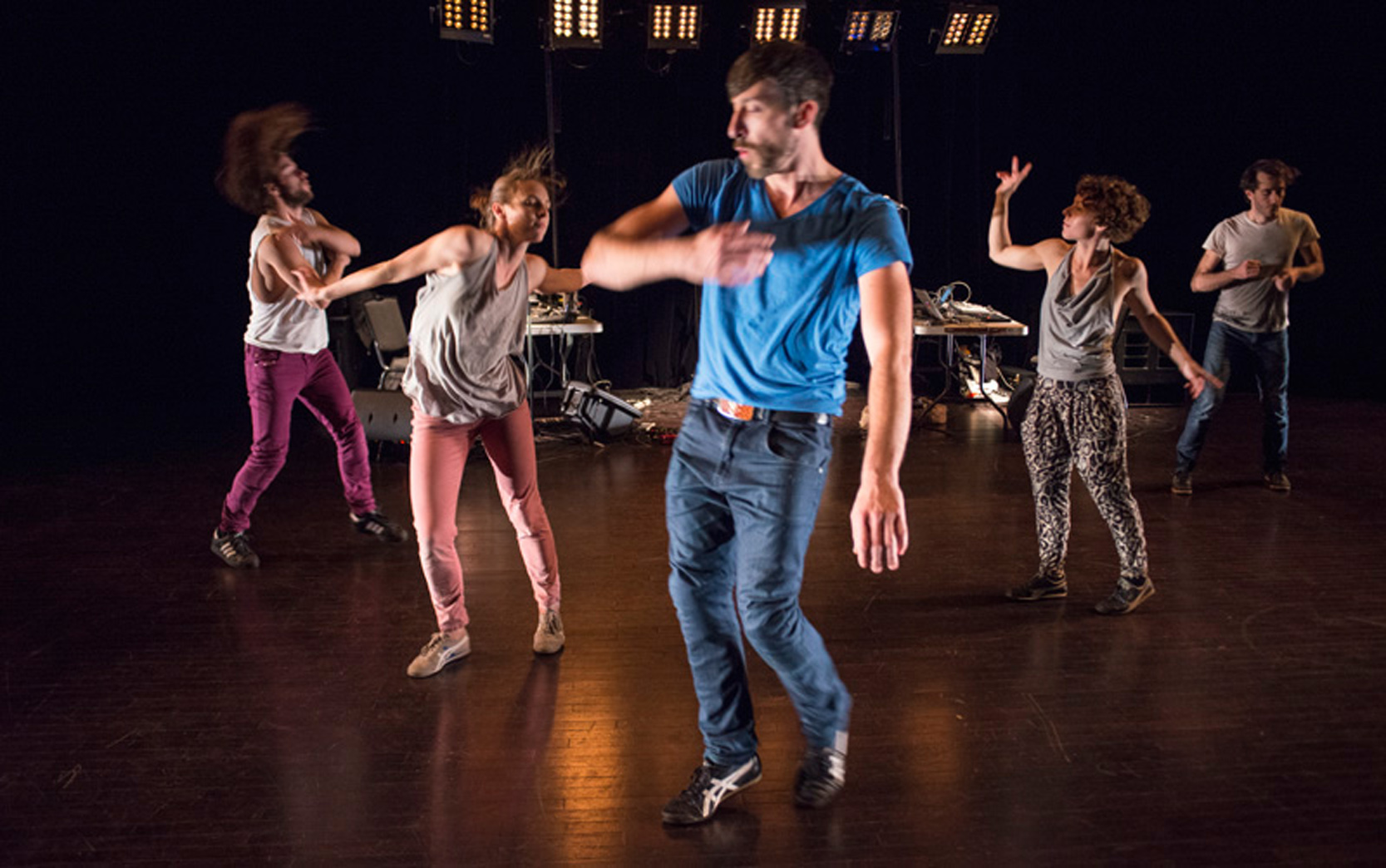
Frédérick Gravel & Groupe d’art Gravel Art Gravel Group’s Usually Beauty Fails opened April 15th at Theatre Junction GRAND. Photo Credit: Denis Farley.

Loud and assertive, this is the way Frédérick Gravel & Groupe d’art Gravel Art Gravel Group’s Usually Beauty Fails opens. The music holds us down in our seats. The dancers, whose eyes were locked with ours just moments ago, escape into fervid movement.

Blending dance and live music, Usually Beauty Fails is a raw display of human emotion. Parts of it, anyway.

Gravel, the show’s creator, director, and choreographer, is the evening’s leading man. Taking the microphone between dance pieces, he shares his thoughts, which are largely self-deprecating, with the audience about the performance. Gravel’s charm is well received by the audience, albeit for a short while. Eventually, the audience’s laughter shifts from warm to tired and nervous as Gravel’s drawn out, wayward thoughts overstay their welcome.

Gravel’s band (Charles Lavoie, vocals/guitar; Vincent Legault, guitar; Gravel, vocals/guitar) perform a varied arrangement of music that sometimes rocks out loud, then other times goes for a soft, melodic sound. The rock pieces are not particularly interesting. The acoustic pieces, on the other hand, draw us in close with simple, tender lyrics that travel smoothly thanks to Lavoie’s clean vocals.

Likewise, the choreography resonates best in its quieter moments.

There is a moment where two of the dancers stand closely together, undress, and explore each other’s naked bodies. Soft pauses. Gentle touches. Nothing is said, and it does not feel like anything has to be said. In this moment that breathes and takes its time, we are witness to human affection in its purest form.

But then, in the show’s final piece, we are reminded of life as we share it together socially. The dancers change into fancy dress – cocktail dresses and suits. They open bottles of champagne and pour each other plenty (and then some). Besides quick whispers between the dancers, not too much is said. And not too much happens. It is as almost as if the dancers have slipped into disguises, masks; pretenses. The dancers look at each other from afar as though wanting to say something, but choosing not to. What keeps them from doing so? Whatever it is, the champagne eventually causes the dancers to throw caution to the wind.

These impactful moments are scarce, stuffed away in favor of presenting something big and loud. Something so big, in fact, that at one point the stage lights flash so hard that the audience has trouble keeping their eyes on the stage. It is then that point that one ask themselves whether this is a dance show, a rock show, or an uneven effort in trying to accomplish both at the same time.

The show’s main problem, though, is that Gravel seems more interested in speaking about the work than allowing the work to speak for itself. It is too bad considering that the work does at times succeed in stirring something intimately profound within us. Not to mention also that Gravel’s dancers, who move with vigor, feel terribly underused.

Presented by Theatre Junction, Usually Beauty Fails’ integration of live music and dance is mixed at best, resulting in a show that sometimes grabs our attention, but mainly pushes us away.


Frédérick Gravel & Groupe d’art Gravel Art Gravel Group’s Usually Beauty Fails ran at Theatre Junction, April 15 – 18.

For more information about the show, visit: http://www.theatrejunction.com/1415season/ubf/

Music and dance performers on stage
David Albert-Toth

Frédérick Gravel
Charles Lavoie
Vincent Legault
Brianna Lombardo
Peter Trosztmer
Lucie Vigneault
Jamie Wright

World Premiere: Meg Braem’s A Worthy Opponent Delivers Big Laughs

An abandoned drug den turned trendy street-themed restaurant. Maybe not the best place to bring your fiance’s mother…and maybe not the best place to break the news that you’re marrying her only son.

Enjoying its world premiere at Lunchbox Theatre, Meg Braem’s A Worthy Opponent is a delightful new comedy that is as smart as it is hilarious.

Ivy (Allison Lynch) loves Nathan and wants to marry him, that she knows for sure. But then again, Ivy’s never really stuck to anything, like acting school or even her own name. And that for Helen (Elinor Holt) is cause for concern. An accomplished entomologist, Helen is not so sure about her son Nathan, a grad student, marrying Ivy who works at a hair salon.

It’s not that Helen hates Ivy, despite Ivy thinking so, or that she is completely opposed to their union, it’s just that she’s worried. And it’s not just Nathan that she’s worried about, it’s Ivy too. Of course, the truth only comes out after the two women have had a ‘couple’ drinks and traded barbs with one another.

Ivy and Helen’s all-out battle of wits sees lots of potent insults, some more subtle than others, that one can feel from their seat. Accordingly, their waiter Eric (Brett Dahl) makes sure to quickly disappear after serving them their drinks. And yes, there are plenty of drinks served.

Braem’s lively, sharp tongued characters breathe wit and fresh air into the ‘horrible mother-in-law’ trope so often repeated across various media. But it is not just their ability to ‘dish it out’ that makes this work feel refreshing, it is also their dimensions which Braem explores to the fullest.

Contrary to what Ivy thinks, Helen is not just a cold, unfeeling academic. No, she is also a mother, as Helen reminds Ivy, a mother who raised her son alone. And the thought of Nathan marrying and leaving her behind is not one Helen is so ready to accept. So, Nathan cannot just marry anyone, let alone someone who is not so sure about where their own life is headed.

And so, after all the drinks and hostility, Braem brings the play to a heartfelt moment where the two women reconcile their differences and finally see eye-to-eye. So moving are the play’s final moments, in fact, that quiet sobs can be heard from the audience.

Holt and Lynch meet what the other brings to the table in terms of impeccable comedic timing and energy. Although, Holt noticeably trips over several lines of dialogue during the course of the show. Though easy to overlook the first time, Holt’s line flubs occur just enough that the steadfast pace of her and Lynch’s exchanges dip as a result. Otherwise though, Holt is a great opposite to the sweet, but fiery Lynch.

Sharp and refreshing, Meg Braem’s A Worthy Opponent delivers big laughs while celebrating mother-in-laws everywhere.


Meg Braem’s A Worthy Opponent runs at Lunchbox Theatre April 6 – 25, 2015.

For more information about the show, visit: http://www.lunchboxtheatre.com/calendar/2015/3/30/a-worthy-opponent-by-governor-general-award-nominee-meg-braem?view=calendar

U of C Grad Student Working to Bring The Arts & Social Sciences Together

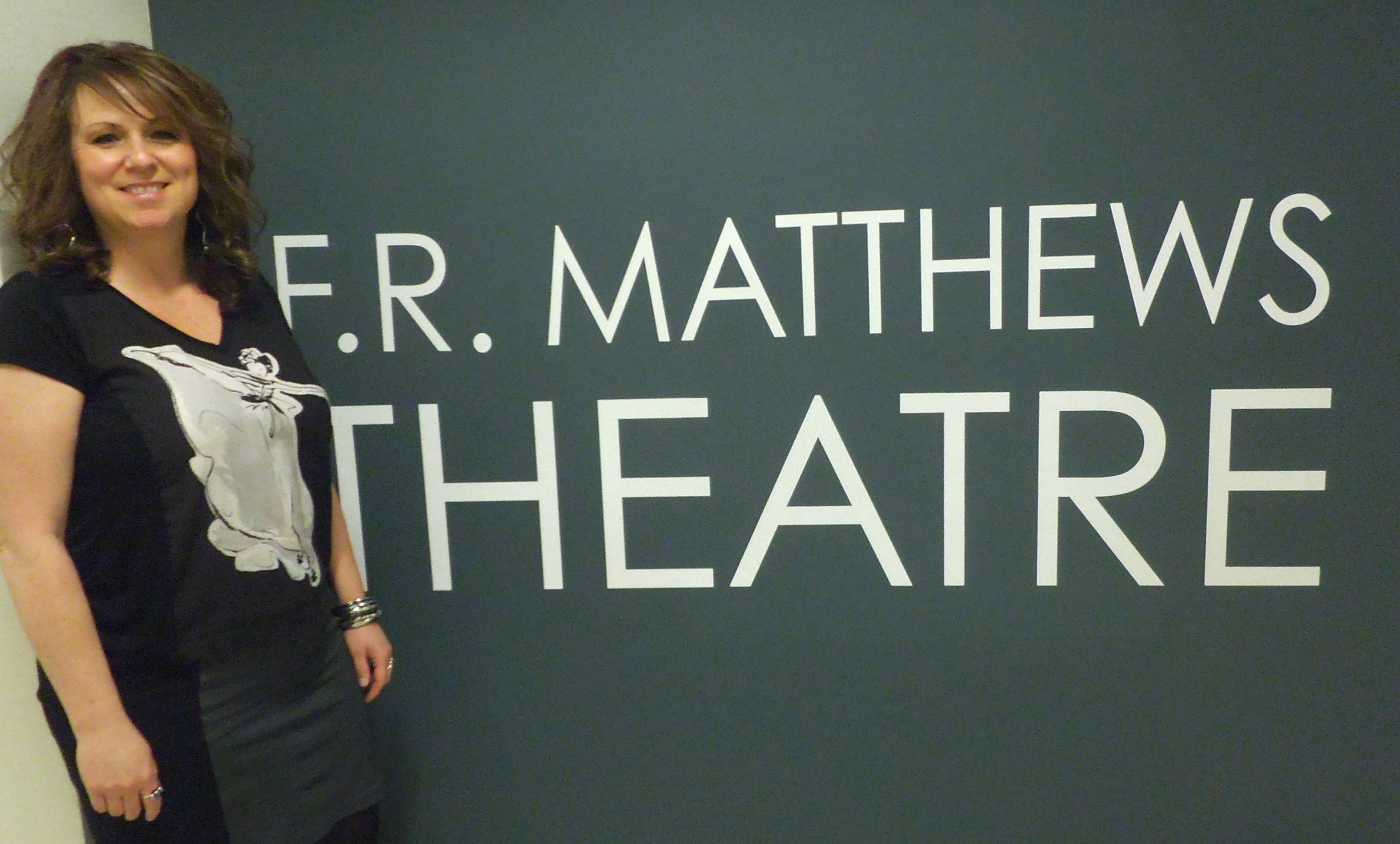
Playwright Sherryl Melnyk after the staged reading of her new play Can't Cross a Bridge.

Playwright Sherryl Melnyk after the staged reading of her new play Can’t Cross a Bridge.

Sherryl Melnyk’s new play Can’t Cross a Bridge was read aloud publicly for the first time this Monday night at the University of Calgary’s F.R Matthews Theatre. The staged reading was presented by the School of Creative and Performing Arts’ Taking Flight: Festival of Student Work.

But whereas much of the work in the annual student festival has been largely fictional, Melnyk’s play differs in that it is rooted in real women’s stories of abuse.

Can’t Cross a Bridge tells the story of Velma and Lizzy, a mother and daughter estranged for 16 years. One day, a surprise call from the RCMP informs Velma that her daughter has returned. But hanging over their reunion are secrets from the past, painful secrets that Lizzy can no longer keep inside.

Melnyk is completing her PhD in the Interdisciplinary Studies program, combining studies in English, Drama, and Women’s Studies/Sociology. Can’t Cross a Bridge is one component of her PhD dissertation.

The first component, the social science component, saw Melnyk interviewing 21 women about their sexual histories. From that research, Melnyk chose three of the stories that she thought fit together the best, then synthesized them for the play. The last component comprised of theory, discussions around the creation of the work.

Melnyk says her work is focused on bringing the arts and social sciences together, disseminating research through the arts as a means of creating meaningful dialogue surrounding social issues.

“I think what happens to a lot of research is that it’s wonderful research, but it’s lost in journals,” said Melnyk. “No one really reads it but other academics. I think a better combination of the arts and social sciences working together is going to make it more accessible to the public at large.”

And of course, her research could not have been possible without participants willing to share their lives openly with Melnyk.

“I started out my research trying to understand if women are kind of moving beyond the traditional view of women in sexuality; Woman as part of the male gaze, woman in pornography, woman as victim…How have women’s stories changed, that’s how I started my interview with all the people that participated.”

“I think what was really interesting about all of the women I interviewed was the fact that they wanted to tell their story. They want people to hear it. They want women to be empowered through their stories. All different ages sat down with me and spoke. Some of them were an hour, and some were two and half hours about their life history.”

For Melnyk, the intimacy theatre grants between audiences and ideas is necessary for not only bridging the arts and social sciences, but also bringing these women’s stories to the community.

“I think you could see it tonight in the gasps and the reactions of the audience. The sadness, the laughter, the drama that is created through theatre. I think it speaks more to our heart and soul than reading an article.”

Melnyk hands in her dissertation on April 24th, then defends it later next month.


The staged reading of Sherryl Melnyk’s Can’t Cross a Bridge was presented by the School of Creative and Performing Arts’ Taking Flight: Festival of Student Work. The festival runs Mar 31 – Apr 11th, 2015.

For more information about the festival, visit: http://scpa.ucalgary.ca/events/taking-flight-festival-student-work

Cast

Lizzy – Jacqueline Dyment
Velma – Val Campbell
Lester – Brian Smith
Andrea – Courtney Charnock

Company

Director – Dawn Mari McCaugherty
Stage Directions – Siobhan Cooney

World Premiere: Ambition Leads to Rough Waters in The Last Voyage of Donald Crowhurst

In 1969, nine men set off on what was at the time the first round-the-world yacht race. A widely covered event, the Sunday Times Golden Globe Race excited the public at large. And Donald Crowhurst was among those caught up in the excitement. Crowhurst, an amateur sailor, sought to defy the odds and capture victory against well-seasoned competitors. The Teignmouth Electron, a boat of Crowhurst’s own design, would be the vessel to deliver Crowhurst to the finish line.

Crowhurst did not return home.

It is this story of ambition, the pursuit of greatness, that Alberta Theatre Projects, in association with Ghost River Theatre, stages in The Last Voyage of Donald Crowhurst.

Written by David van Belle & Eric Rose, with Rose directing, The Last Voyage of Donald Crowhurst is concerned with the fine line between ambition and obsession. There is nothing particularly special about Crowhurst (Braden Griffiths). He is a husband and father of four who runs a small, failing business. What sets Crowhurst apart is his astounding confidence in that he is destined for greatness. And he makes us believe it too with his grandiose speeches.

But failure looms on the horizon when Crowhurst’s boat experiences serious issues during the race, and an unexpected storm wreaks havoc on the vessel. Failure, though, does not mean simple defeat. In exchange for the necessary funds to construct his boat, Crowhurst signed a deal with the condition that should he lose the race he will have to pay everything back in full. For Crowhurst, failure means the total loss of everything he and his family owns.

And that is why Crowhurst sees no other option than to cheat by falsifying his race progress.

The presentation of Crowhurst’s story is fascinating with its use of video projection and live effects. The production features creative techniques like filming Crowhurst and his wife Clare (Vanessa Sabourin) standing against two separate ‘beds’, then joining the images together on-screen to show them lying in the same bed. As well, documentary footage of the real-life Crowhurst overlaps on-screen with Griffiths’ portrayal. And, the play’s first act ends with a violent storm on stage where large sheets simulate waves and buckets of water drench Griffiths.

Unfortunately, the first act is where the excitement ends. The production runs dry in its second act where an otherwise compelling human drama becomes a disjointed bore.

One specific offense is the scene where Crowhurst meets an Argentinian couple who he asks to help him in the way of supplies. The humour attempted here falls flat, and little happens to justify the scene’s inclusion. The scene stalls the pace of the play.

From where the play starts to where it ends is a significant distance. After the initial awe produced by the first act’s visual feats, one realizes there is not much else carrying the show. And certainly a part of that is the challenge of what do you do when your main character is stranded miles away from human contact? Van Belle and Rose do their best to make the journey to Crowhurst’s final moments interesting, but the path there is one that not even the biggest smoke and mirrors could disguise what it really is: a disappointment.

The Last Voyage of Donald Crowhurst is an ambitious, visually stunning production that ultimately disappoints due to weak characterization and a less-than satisfying second act.


Alberta Theatre Projects’ The Last Voyage of Donald Crowhurst, in association with Ghost River Theatre, ran at The Martha Cohen Theatre, February 24 – March 14, 2015. 

For more information about the show, visit: http://www.atplive.com/2014-2015-Season/Last-Voyage/index.html


Mudfoot Theatre Ready to Set Sail Again, Infuse Canadian History With Magic

Promotional image for The Hudson Bay Epic. Pictured: Mudfoot Theatre Co-Founders and Artistic Directors Genevieve Pare and Ian McFarlane, with ensemble member Ryan Reese (right). Photo Credit: Chantal Wall.

Promotional image for The Hudson Bay Epic. Pictured: Mudfoot Theatre Co-Founders/Artistic Directors Geneviève Paré and Ian McFarlane with ensemble member Ryan Reese (right). Photo Credit: Chantal Wall.

Geneviève Paré and Ian McFarlane first met at the University of Lethbridge where they completed a BFA in Dramatic Arts (‘11) and BFA in Multidisciplinary (‘10), respectively. Paré and McFarlane met in their second year while working as designers on a show together. But Paré and McFarlane say one of their first real collaborations came later when a special room inside the university caught their attention.

“There was this miniature room that was built as sort of a ‘found space’ theatre space at the university,” Paré explained. “There was a microphone in the middle inviting people to sing songs and play music. The sound would be projected out into the atrium so everyone could hear what was going on in there. It was a way for people who were shy to share their music. Anyone had the opportunity to contribute.”

Sharing each other’s excitement for impulsive performance art, Paré and McFarlane decided to perform inside the space together. In the room, the pair washed their hands in a bowl of soap water, beat boxed, and performed improvised poetry.

Paré says the collaboration signaled to both her and McFarlane that not only were they “both weird” and into “super bizarre ideas,” but that they could also work together.

In 2012, Paré and McFarlane collaborated again for Junquatica, a performance installation that ran as part of We Should Know Each Other #100. McFarlane says Junquatica was inspired by the aquatic intertidal zone, an area of interest for Paré who was working as a kayak guide off the coast at the time.

“It was a fun project,” said McFarlane about Junquatica. “Gen had this great idea of [creating] this box where people looked in and there were performers. But when they looked in they were also looking at each other…They all became characters of this world.”

At the time, Paré and McFarlane performed under the name Deux Fous Frivoles. The name was later changed to English (Frivolous Fools) due to pronunciation difficulty.

It was also at this point that the pair became excited about using found materials, like garbage. Junquatica’s performance space was constructed out of reclaimed materials meant to reflect a concern for the health of the oceans. McFarlane says the idea of found materials carried over into The Hudson Bay Epic, a play that toured both the Winnipeg Fringe Festival and Calgary Fringe Festival in 2014.

A historical fiction, The Hudson Bay Epic stages the story of Henry Hudson’s last voyage into the Canadian arctic. On board the ill-fated Discovery, a forbidden romance develops between two crew members while the threat of violent mutiny grows larger with every passing day.

The production featured a ship-like structure made from reclaimed materials. The structure was unique for its ability to produce music and ambient sounds.

“The initial inspiration came out of a performance idea of creating a structure that we could play like an instrument,” McFarlane explained. “We were excited about having this machine that we turn a crank and runs some music.”

For The Hudson Bay Epic, Paré and McFarlane formally adopted the name Frivolous Fools Performance. But the two ran into a problem with the name when touring the show, McFarlane explains.

“It was when we started touring The Hudson Bay Epic, people started calling us ‘The Fools’. We can’t do that because in Calgary there’s already ‘The Fools’ [Green Fools Theatre]. [We thought] we can’t have – This is just not good for anybody! It’s going to confuse and disrupt.”

Unfortunately, this was not the only issue with the name. When it came time to apply for grants, McFarlane and Paré were advised to change their name to something more suitable, as McFarlane explains.

“Grant advisors would be like ‘you should consider changing your name because you are neither foolish or frivolous.’ And yes, it’s ironic because we are working with junk and we’re not frivolous at all. We’re being quite humble with our work, this humble magic we are working with. But when it comes to applying to Canada Council…”

Paré and McFarlane sought a name that better reflected their work and aesthetic. After much consideration, Paré and McFarlane finally agreed on the name Mudfoot Theatre.

“There’s a whole bunch of ways to look at a name and how it resonates with who we are as artists,” said Paré about the name change. “If you’ve got muddy feet, it’s because you’re doing something awesome…If you’ve got your feet wet in the mud, then you’re active and in some interesting process.”

As their history shows, McFarlane and Paré are no strangers to change. What began as a performance duo has now grown into an independent creation-based theatre company.

Mudfoot Theatre collaborates with interdisciplinary artists to create contemporary folk tales through simple, grassroots storytelling. The company primarily stages Canadian history, something some Canadian theatre artists avoid, says Paré.

“Theatre artists don’t want to be identified as Canadian theatre artists. There’s something….What’s the word? It’s patronised a little bit. Because we’re softcore Americans, we’re so nice…Canadian is like…It’s not cutting edge.”

“If you’re a Canadian artist, you’re not from like Berlin or New York where you’re cutting edge and taking chances. But we do, do that as Canadian artists.”

Paré and McFarlane believe there are other reasons that make Canadian history less enticing as both performance material and a subject of interest among Canadians. For McFarlane, one reason has to do with how Canadian history was documented.

“It’s written as a business account,” said McFarlane. “We traded furs for this much money. We set up a shop in this place. It’s all written by merchants who are writing back to the homeland.”

“One of the fascinating things about Canadian history,” McFarlane continued, “is that that there were so many details that weren’t written down. In Europe, quite clear that these are the stories and these are the people. Endless literature. But in Canada, someone in the bush had this crazy experience but didn’t know how to read or write.”

“One of the things Europeans have about their history,” Paré added, “is that because their history goes so far back and it’s not written about in such a clinical way, there is room for myth…There’s magic, actual magic in the soil where they live. I want to have magic in my soil too.”

For Paré and McFarlane, staging Canadian history is not just about finding our collective voice as a nation, but also infusing our identity with a sense of magic.

And it is this sense of magic that the company’s next project River will embrace.

Inspired by David Thompson’s expeditions, River will tell the story of the Bow River through live music and puppetry. McFarlane says River will be a very different production from The Hudson Bay Epic.

“In The Hudson Bay Epic, we were quite direct with our history,” said McFarlane. “We took a journal and pulled stuff straight out of the journal and created characters that were actually historical people. In River, we are being quite broad and quite loose. Making it more on the mythical side than the historical side.”

Paré says audiences can expect “a tragic love story between a glacier, a star and a trickster paralleled by some narrative from David Thompson’s personal journals.”

Joining Paré and McFarlane for River are pianist Jesse Plessis and guest collaborator Jesse McMann-Sparvier.

River will be presented this week as part of the Calgary Region One-Act Play Festival at Pumphouse Theatres. Paré notes that the presentation is a prototype, or launching point, for a larger show.

Looking to the future, Paré and McFarlane say they are not sure what the company will develop next, but that they are confident they will find themselves doing something inventive and unexpected.


Mudfoot Theatre’s River will be presented at The Calgary Region One-Act Play Festival, March 26th at 7:30pm.

For more information about the festival and how to purchase tickets, visit: http://www.pumphousetheatre.ca/sections/calendar_s/calendar_2.htm

For information on Mudfoot Theatre, visit their website:
http://www.mudfoottheatre.com/

The Old Trouts Spare No Puppet in Famous Puppet Death Scenes

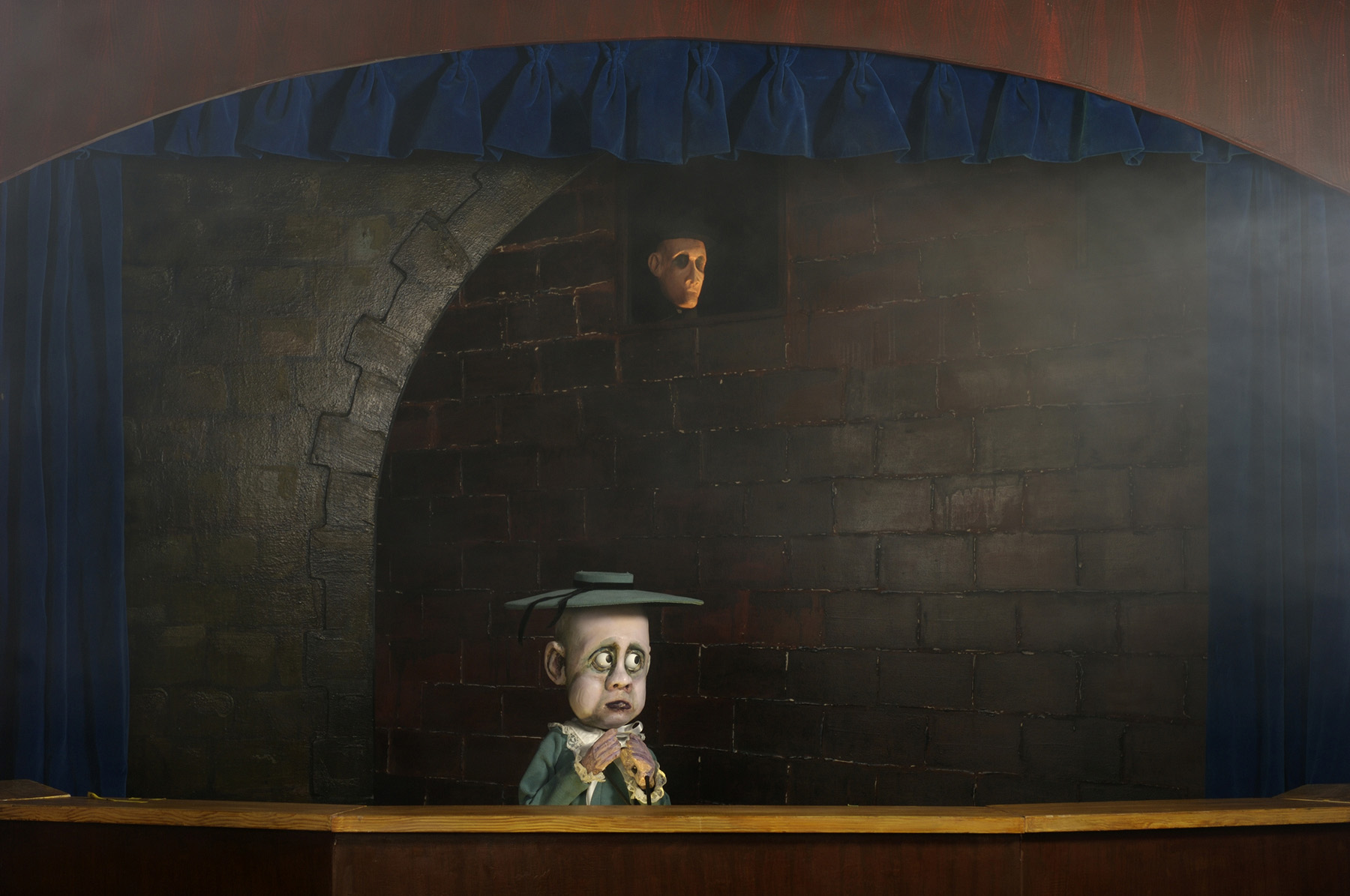
Pictured, The Beast of Muggditch Lane by August Stainbrook: Act 1, Scene 1. Image supplied by Theatre Junction GRAND.

The Beast of Muggditch Lane by August Stainbrook: Act 1, Scene 1. Image supplied by Theatre Junction GRAND.

Death.

A taboo subject in our society, and why not? ‘Not being here’ one day is an unpleasant idea that some would rather not think about, much less openly discuss. Others are more keen on the subject, like Nathanial Tweak, host and curator of Famous Puppet Death Scenes.

Created by The Old Trout Puppet Workshop, Famous Puppet Death Scenes recreates death scenes from history’s greatest (fictional) puppet shows. Tweak, a puppet himself, has amassed this grand collection in hopes that the scenes reveal something to us about the nature of life and death.

One of the first things we learn is that death is random. One minute, we may find ourselves enjoying some fresh air, then the next we are crushed under the weight of a giant fist (The Feverish Heart by Nordo Frot – Act 1, Scene 3). Or, powerful gusts of winds blow us apart, limb by limb (The Forgotten Dish by Sterling Lowry; “The Winds of Fate”). Sometimes though, it’s just a matter of picking the wrong door (Das Bipsy Und Mumu Puppensiel by Freuliecher Friedrich – Episode 43 “Bipsy’s Mistake”).

Other times too, our poor decisions invite death; poor decisions like dressing up as a deer in the middle of the forest (The Ballad of Edward Grue by Samuel Groanswallow: Act 4, Scene 6).

But perhaps the evening’s most resonant lesson is that death simply happens.

Taking a pause from the absurd, The Last Whale by Grover Bellick features a giant whale’s eye that opens, then closes very slowly. That’s it. Even the mightiest creature on Earth cannot outrun death’s grip.

Lucille Arabesque by Agathon Finley is no different. An old woman rests on her deathbed, taking what are perhaps her last breaths. There are no moving last words. Only an unsettling silence, a confrontation with our fragile mortality.

And yet, despite everything, Tweak insists there is such a thing as The Perfect Death Scene. In the play’s final moments, we wonder whether or not Tweak himself learned anything in the process.

The Old Trouts are at their finest in this spectacular display of grisly humour and puppetry. The depth of dramatic styles and periods explored is quite remarkable. Not to mention the inventive staging that takes us across such a variety of fictional works, which each feel distinct in both voice and aesthetic.

And the audience is right there for every moment of it. Joy, shock, pity, you can hear it all in the theatre. The reactions from the audience almost lend a ‘musical’ quality to the production. That is the strength of the work by
the puppeteers (Nick Di Gaetano, Pityu Kenderes, Viktor Lukawski) who really make us feel for the ill-fated puppets.

Dark and funny at one moment, then haunting the next, Famous Puppet Death Scenes is a brilliant show that will stay with audiences long after its finale. A standing ovation truly earned.


Co-presented by Theatre Junction GRAND and The International Festival of Animated Objects, The Old Trout Puppet Workshop’s Famous Puppet Death Scenes runs at Theatre Junction GRAND, March 13 – 28, 2015.

For more information on the show and how to buy tickets, visit: http://www.theatrejunction.com/1415season/fpds/

MoMo Dance Theatre Springs Forward With I Didn’t Wear My Raincoat

Pictured, MoMo Dance Theatre's Performance Ensemble member Kathy Austin in

Pictured, Kathy Austin in “We Have Come To Be Danced” (April ’12). Audiences can catch Austin in I Didn’t Wear My Raincoat which opens March 26th at the Vertigo Studio Theatre. Photo Credit: Matthew Brucker

Later this month, MoMo Dance Theatre will be presenting I Didn’t Wear My Raincoat. The company’s latest production will explore the four seasons with original work from its performance ensemble members and new work created by guest artists.

And as the company prepares for opening night, Artistic Director Mark Ikeda remembers when he first started working with MoMo Dance Theatre two years ago.

“Just walking into that door was like walking into a big hug. Everyone was so welcoming and just wanted to see what I had to share, and was so ready to engage” said Ikeda who was teaching workshops for the company at the time.

When it was announced that then Artistic Director Pam Boyd was leaving the company, Ikeda lept at the opportunity to fill the position. Ikeda says he was not only taken by the overwhelming positivity of the MoMo family, but that he was also impressed by the skill level going in.

“There are some challenges…but being able to launch into the work and really dig into some ideas has never been a problem…when I was welcomed by that idea I was enticed into the MoMo family.”

Founded in 2003, MoMo Mixed Ability Dance Theatre offers artists of all abilities and skill levels a range of classes focused on growth through creative movement. Currently, the company offers three adult classes and two youth classes. As well, MoMo offers performance opportunities for its members.

Part of the company’s mission is to facilitate artistic expression by removing barriers that might otherwise restrict the exchange of ideas between artists. For Ikeda, a combination of improvised and choreographed movement works best to achieve this mandate.

“While we do we have set choreography…other times we’ll explore a mood or an emotion or a thought or a color, even. Let’s say we’re exploring sunshine…we’re all going to move like sunshine until someone claps. And so, in that while everyone is in the same or at least similar idea and adapting it to their own bodies…they can move how they like to move and interpret the idea of sunshine [as they like]. It’s open to exploration.”

But in order for this exploration to truly take off, Ikeda says, an individual must first feel comfortable within the space. Ikeda explains that this turning point usually occurs after three classes.

“If someone will come to three classes, they’ll usually open up. That’s kind of the shifting point… for someone totally new to feel comfortable and engage in the activities. And so, after three classes, there’s that open – and again it’s like that family idea of who are you and how we can play? How can we enjoy each other in this art?”

This year, the first in a three year process, MoMo launched an outreach program to share their passion for play with various communities.

With funds received by The Calgary Foundation, the company has been able to partner with URSA (Universal Rehabilitation Service Agency), the Calgary Association of Self-Help, the Vecova Centre, and Carewest Garrison Green. In these spaces, MoMo’s dance teachers promote community and personal development through interdisciplinary, communal physical activity. What results is a holistic approach to wellness, something the partner organizations have praised.

“There’s a bunch of papers out right now about how interdisciplinary and communal physical activity is one of the strongest ways of bringing someone into an idea of what a community is…and the idea of empathy that if you’re doing the same thing as I am, I can see that not only are we a team, but you have your own unique way of doing things.”

“A lot of those intangibles…can’t really be measured or quantified…[but] when you can engage with someone creatively…be able to go into yourself, find an idea or thought or something that hasn’t existed either in you or outside of you before and share it with other people there is an intelligible connection that happens…MoMo has for over a decade now found a way to set that up for people who identify as having disabilities.”

And with MoMo’s spring performance fast approaching, the company looks to add another success to an already great year.

A dance piece audiences can expect to see in the production is one choreographed by Ikeda which incorporates the use of hand stilts. Hand stilts have been famously used in the Broadway adaptation of The Lion King to portray giraffes. Ensemble member Thomas Poulsen, who uses crutches, will be the performer raised off the ground alongside Ikeda.

“[I thought about] what would be a great duet with [Thomas] or piece for him. I thought of these hand stilts and how a lot of the movement I have to do to stay up on the hand stilts are quite similar to the movement he uses everyday and he uses on the dance floor. We’ve been exploring for a few weeks now and I really love where it’s going.”

And it is this love for play and exploration that makes MoMo Dance Theatre a company to watch.


MoMo Dance Theatre’s I Didn’t Wear My Raincoat runs March 26 – 28 at the Vertigo Studio Theatre.

Tickets can be purchased online here: momo.brownpapertickets.com

For more information on the company, visit: http://www.momodancetheatre.org/