Trillo and Arnista’s Perpetual Wednesday Entertains

WhiteCollarCrimes-PerpetualWednesday-p5

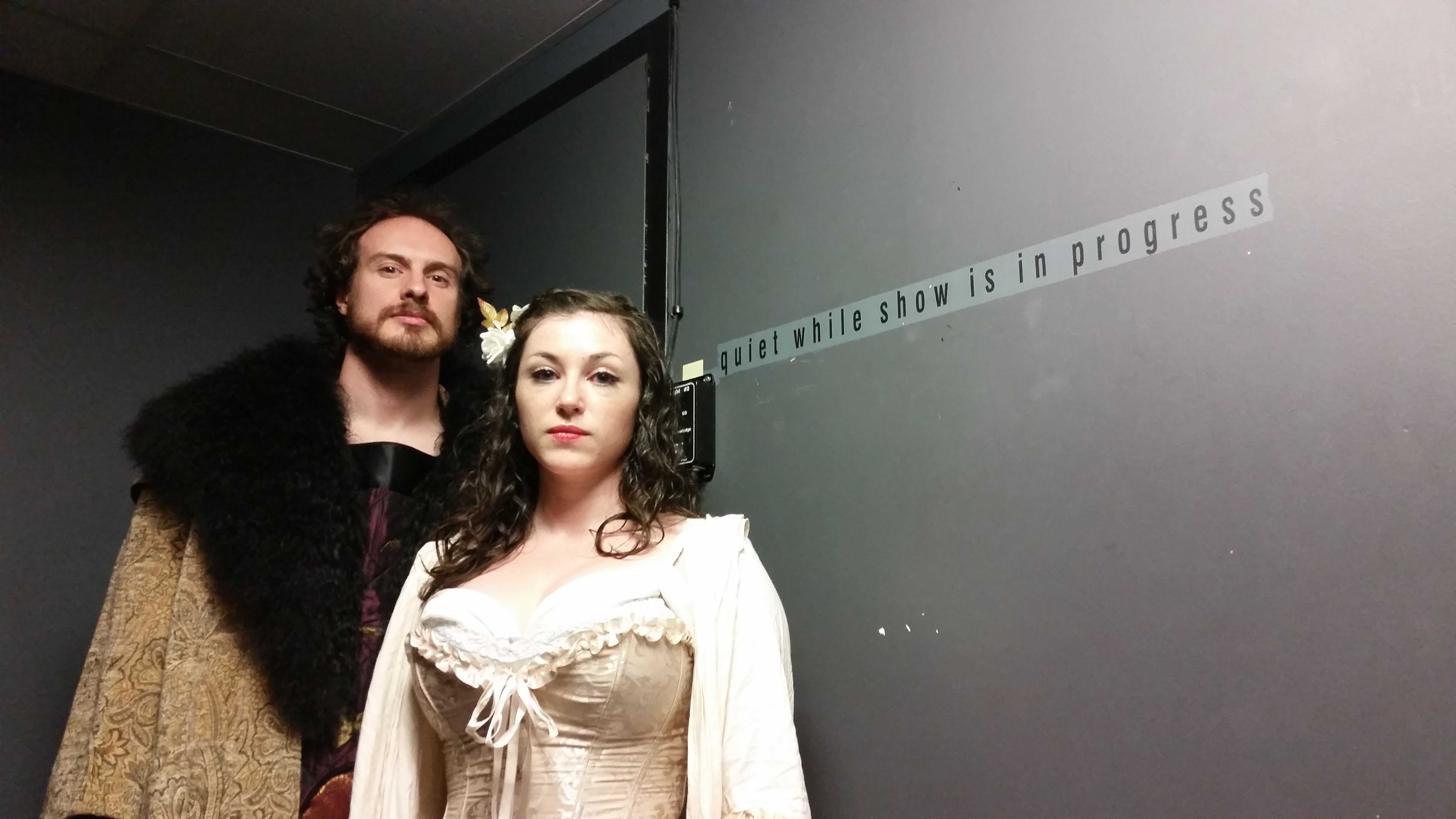
From left to right: Walter (Jacob Trillo) and Bruce (Anthony Arnista) are in big trouble after their magic act turns deadly in White Collar Crimes’ Perpetual Wednesday.

When two-bit magicians Walter (Jacob Trillo) and Bruce (Anthony Arnista) mess up, boy do they really mess.

White Collar Crimes’ Perpetual Wednesday, created by Arnista and Trillo, follows Walter and Bruce after a disastrous magic act where they may or may not have shot a man in the face. Walter insists it was all part of the act, that the audience volunteer is perfectly fine. Bruce isn’t so sure, after all the blood and the body he chopped up seemed pretty real to him.

Trillo and Arnista’s hyper-energetic act makes for a very sweaty performance inside the hot Lantern Church Sanctuary. Shadow theatre, dance, and off-colour humour, the actors’ amusing variety show has it all. Trillo and Arnistra’s showmanship is impeccable. The show, unfortunately, loses momentum once it dives straight into the rabbit hole.

One moment Walter and Bruce are the sort of sleazy magicians you might find at a Las Vegas lounge, the next it turns out they’re actually immortals who struck a deal with the ancient Egyptian god Anubis. The joke that Walter and Bruce were actually some of history’s iconic figures, while fun at first, becomes tired. The two in time come around to settle the matter of the dead man, but by then the whole ordeal has collapsed under its own weight. The audience is left with an abrupt, less than satisfying ending.

Ultimately, Trillo and Arnista’s Perpetual Wednesday entertains, despite some script issues that hold back its full comedic potential.


White Collar Crimes’ Perpetual Wednesday runs July 31st – August 8th as part of the 2015 Calgary Fringe Festival.

For more information about the show and how to purchase tickets, visit: http://see.calgaryfringe.ca/events/476-perpetual-wednesday

A Woman of a Certain Age’s Honest Commentary Troubled by Script Issues

Wendy Froberg's A Woman of a Certain Age runs as part of the 2015 Calgary Fringe Festival.

Wendy Froberg’s A Woman of a Certain Age runs as part of the 2015 Calgary Fringe Festival.

For playwright/actor Wendy Froberg, age is just not a number, especially not for women. The more a woman ages, Froberg argues, the more she becomes flawed in the eyes of society. Seldom are women allowed to grow old without their self-worth being diminished in the process.

Presented by Archetype Productions, Froberg’s one-woman show A Woman of a Certain Age chronicles the lives of six mature women as they deal with their families, marriages, and careers.

The play’s central character is Gwen Randall, a mother of two who is caught shoplifting at the local mall. The criminal act has seemingly come out of nowhere considering Gwen is an upstanding member of the community with a good career. All eventually comes to light as we learn more about Gwen’s hidden troubles at home and with her widowed mother who has dementia.

Around Gwen there are other women, too, trying to cope with aging, specifically the loss of status. Gwen’s mother, who lives in a nursing home, feels a loss of self now that her children are grown up with lives of their own, and her husband has passed on. No longer a mother, no longer a wife, what defines Gwen’s mother in her old age?

Froberg proposes that older women are defined by their appearance. Like Gwen’s mother, once women reach a certain age, they are largely ignored, that is unless they have aged well. But what does that mean, to age well? Here, Froberg defines aging well as not just being (normatively) capable both physically and mentally, but also being free of any signs that mark old age. Although, as she points out, women and men are not held to the same standards. Men grow old without worry, while women are pressured to be wrinkle-free.

Froberg’s commentary is derailed drastically by the analogy Gwen’s European Esthetician draws between North America’s “War on the Face” and World War II. The second World War, the Esthetician believes, instilled (all?) Europeans with socially progressive attitudes towards aging and beauty. Having never experienced any such trauma, North Americans are, therefore, incapable of recognizing inner beauty. (REAL blemishes are caused by artillery explosions). The whole scene is perplexing, and Froberg’s poor attempt at a “European” accent does little to help.

What else might confuse audiences are Froberg’s messy character transitions. Froberg is not up to task on presenting six, distinct characters. In fact, she may simply be working with more characters than necessary. Some of the other character storylines, like Gwen’s sister who has a son with special needs, wander aimlessly until the end where Froberg rushes to close them with a nice feel-good ribbon. The result is a play that know what it wants to say, but then tries to fit in as much else as it can, making for a very obvious one-hour run time.

Overall, Froberg’s A Woman of a Certain Age speaks hard truths about women, aging, and beauty, but not without some major bumps along the way.


Presented by Archetype Productions, Wendy Froberg’s A Woman of a Certain Age runs July 31 – August 8th as part of the 2015 Calgary Fringe Festival.

For more information about the show and how to purchase tickets, visit: http://see.calgaryfringe.ca/events/468-a-woman-of-a-certain-age

Mercutio & Tybalt Impresses at Calgary Fringe Festival

MAndT_CalgaryFringe2015_byChrisTait_web-0148

From left to right: Tybalt (Celene Harder) and Mercutio (Val Duncan) bring their side of the story to life in Valour & Tea’s Mercutio & Tybalt. Photo Credit: Chris Tait.

William Shakespeare’s Romeo and Juliet has seen its fair share of adaptations and retellings, but none, Mercutio (Val Duncan) says, have come even close to the truth. For how many know that Mercutio and Tybalt (Celene Harder) were actually close friends? That is the premise of Valour & Tea’s newest work Mercutio & Tybalt, a hilarious reimagining of Shakespeare’s most popular play.

Written and directed by Duncan and Harder, Mercutio & Tybalt catches up with the titular characters in the afterlife. Still bitter about the fact that the story of two dumb, hormone-crazed teenagers has endured the last 400 years, Mercutio and Tybalt decide it’s time that they share their story with the world. What follows is an epic tale of bromance, full of puppetry and swordplay, that weaves in and out of familiar scenes from Romeo and Juliet.

Duncan and Harder stay true to the Bard’s style by performing the show entirely in iambic pentameter, with modern slang included in the mix. In doing so, Mercutio and Tybalt’s vaudeville-inspired antics are given a natural, if not musical, rhythm for the actors to follow.

Duncan and Harder have crafted a wildly fun show that works for both friends and acquaintances of the Bard. Harder’s bad-tempered Tybalt is the perfect foil to Duncan’s immature, yet sharp tongued Mercutio. The pair work brilliantly together, delivering a charming performance abundant in wit and attitude.

Mercutio & Tybalt captures the spirit of its source material, while delivering something fresh and vibrant at the same time. Audiences will find much to enjoy here, guaranteed.


Val Duncan and Celene Harder’s Mercutio Tybalt runs July 31st – August 8th as part of the 2015 Calgary Fringe Festival.

For more information about the show and how to purchase tickets, visit: http://see.calgaryfringe.ca/events/464-mercutio-tybalt

Gomes and Haight’s Now What? Shows Weight of Relationship Dynamics

Brian and Marina

Now What? stages the key moments of Jared and Isabel’s (Brian Haight and Marina Gomes) relationship out of chronological order. Photo credit: Helen Tansey

How much does pain weigh? How light does love make us feel? These are the questions that Marina Gomes and Brian Haight’s play Now What? explores through a physical form of theatre known as Contact. Through contact acting, Gomes and Haight give weight to both the emotional and physical impact of relationships, delivering something unique in the process.

During their morning routine, Jared and Isabel, played by Haight and Gomes respectively, lean on and share each other’s weight as they brush their teeth. The couple perform the sort of acrobatics that only two people who love and trust each other would ever dare execute together.

When a car accident leaves Jared unable to walk, Jared and Isabel’s relationship becomes strained as they try to deal with the new dynamic between them. Isabel carries Jared on her back as she tries to complete their morning routine, but the weight of her unhappiness and Jared’s anger is too much. She and Jared fall to the ground.

Gomes and Haight stir a deep, emotional response with the simplicity and honesty of their movement. They successfully capture the sort of intimate connection that makes two lovers at a loss for words when they try explaining to friends what they share or how the other makes them feel.

However, while the play’s Contact elements are interesting,  the writing leaves something to be desired in terms of delivering a tight, cohesive narrative. Jared and Isabel are a means for Gomes and Haight to showcase what contact acting can achieve in terms of expressing the indescribable. Everything else exists only to help Gomes and Haight reach the brilliant concepts they have written the script around. The result is a weak script that tries in earnest to pull all its elements together.

Gomes and Haight’s Now What? displays exciting thought and perspective on the nature of relationships. Script issues aside, Gomes and Haight’s experiment with Contact is a serious effort that ultimately delivers its audience a powerful experience.


Presented by Girl Meets Boy Theatre Company, Marina Gomes and Brian Haight’s Now What? runs July 31 – August 8th as part of the 2015 Calgary Fringe Festival.

For more information about the show and how to purchase tickets, visit: http://see.calgaryfringe.ca/events/466-now-what

Helmut’s Big Day Charges Forward, Stumbles

Helmut_Calgary_Postcard_Side1

James Wade’s Helmut’s Big Day is one of 27 shows running at the 2015 Calgary Fringe Festival.

The Empire is good, God is great, and the uncivilized, Cat-Demon worshipping Barbarians call the Barren Plain home. Sabir (Alan Johnson) knows these three things for sure, except…well, the Barren Plain is the one with the small bush, right?

Presented by Red Phone Theatre, James Wade’s Helmut’s Big Day is a satirical comedy that pokes fun at notions of empire and conformity. The play blends hijinks and philosophy for a breezy, though sometimes sluggish, critique of political ideologies.

Atop the wall separating the Empire from the Barren Plain, Sabir keeps a vigilant eye over the Great Plain which he is sworn to protect. While marching back and forth may not be glamorous, Sabir is compelled to serve the Empire because, according to the army’s manuals, God is watching – always watching. Lonely at his post, Sabir finds a friend in Helmut, a soldier’s helmet he converses with.

Sabir’s troubles begins when Helmut “asks” him to identify what the difference is between the two Plains. (After all, they’re both plain!) The question, at first taken with confidence, makes Sabir uneasy as what he actually sees, which is no discernible difference at all, stands at odds with the narratives fed to him by the Empire. As the contradiction disturbs Sabir, he suddenly spots riders approaching from both sides. Which is the enemy, which is the ally, the problem of the Plains worsens with every passing second.

The nature of Sabir’s blind loyalty to the Empire reveals itself further when Katar (Emma Sinclair) comes to check on her comrade. Also confused by the Plains, Katar proposes the idea that morality is subjective, that maybe the Barbarians see themselves as good and the Empire as evil. Either that, Katar says, or life is random and all action, like guarding the wall, is meaningless. (God, Cat-Demon, makes no difference in the end). Sabir dismisses Katar’s foolish ideas, despite being confronted by the falseness of the Empire head on.

What emerges from the total confusion of these two lowly soldiers is sheer buffoonery. Sabir and Katar’s ‘best’ judgement leads to disastrous results.

While fun, Wade’s expression of these philosophical ideas is largely cumbersome. The script has difficulty weaving the play’s big ideas and physical humour together without resorting to mouthfuls. The ideas land heavy and, as a result, interrupt Johnson and Sinclair’s comedic antics.

Director/Designer Kathryn Smith’s clean, simple set helps the action flow neatly. Smith’s remedies the sometimes stagnant pace of the script by employing the two wall borders to create and thrust the audience into the panicked frenzy shared between Sabir and Katar. The use of the wall borders to show different dimensions of both the wall and the action is smart.

The snappy chemistry between Johnson and Sinclair is enjoyable, though not so much until later in the show when the script gives the actors more room to play. Sinclair’s performance as the oblivious ‘wise fool’ plays well against Johnson’s condescending, but utterly foolish character.

Ultimately, Helmut’s Big Day satirical bite is bogged down by clumsy dialogue. The play delivers fun, physical humour, but its commentary struggles to have a sharp presence in the mix.


Presented by Red Phone Theatre, James Wade’s Helmut’s Big Day runs July 31st – August 8th at the 2015 Calgary Fringe Festival. 

For more information about the show and how to purchase tickets, visit: http://see.calgaryfringe.ca/events/473-helmuts-big-day

Mir & Andrews’ ‘A Picture With A Bull’ A Mixed Effort

Ruben (Ahad Mir) loves his friends, that he knows for sure. Everything else, well, everything else he just doesn’t know about anymore. Ever since his best friend Nico (Chad Hamilton Andrews) started dating Lisa (Courtney Charnock), Ruben’s life has been a weird mess.

A comedy co-written by Mir and Andrews, A Picture With A Bull asks if adulthood and friendship can ever mix. What audiences will find here is certainly a mix: a lengthy mix of crude humour and cliché under the guise of something meaningful.

The play begins with Ruben taking us back to before all the trouble began, the trouble of girlfriends, responsibility, and nostalgia. Every year, Ruben, Nico, and Greg (Alex Peters) go on a trip together to bond and get away from life. For Ruben, what makes the trip special is that it’s always just him and his bros – no girls allowed. This year, though, Ruben’s friends have a different idea for the trip: what if Lisa and Ruben’s girlfriend Diana (Natasha Strickey) came along too? Ruben outright rejects the idea. He refuses to betray tradition, a tradition only he seems to really care about.

Ruben’s stubbornness eventually leads the guys to question their friendship, career paths, and ultimate end goals; the usual frustrations of twenty-somethings in a 9-5 world.

Mir and Andrews’ play is set up much like a sitcom. In fact, the audience can identify almost right away the usual personalities. Lisa is something like the Phoebe of the group, quirky and artsy. Greg is the Funny Guy/Slacker who is good for a laugh, but not much else (like character development). Ruben is the charismatic Cool Guy, the clever one who has a comeback for everything. And they all work in the professional fields of law, healthcare, and business – except for Lisa who is a dancer, naturally.

Like a sitcom, the writing is (over)stuffed with zingers and risqué jokes. At the same time, too, there are real concerns about adult friendships, about relationships being work rather than things that simply happen. The balance between the two is uneven, to say the least. What unfolds is a messy demonstration of the ensemble’s comedic chops. The play’s more serious commentary exists largely as an afterthought.

When the play exhausts its cheap laughs, the show settles on presenting in full its dramatic side. What follows is a forgettable conclusion – forgettable because the characters never earn anything beyond that – that abruptly ends on a less than hopeful note.

The ensemble’s strength is their charming chemistry which invites the audience into this group of friends, allowing them to laugh along plenty at Mir’s sharp tongued performance and Peters’ wacky antics. The ensemble, however, is allowed to be too much at ease with each other. Brett Tromburg’s relaxed direction takes the punch out of some of the play’s more witty exchanges.

There is no denying that Mir and Andrews have written a funny, if uneven, script. The problem is that not much stands out to make this play particularly memorable. The characters, along with the comedy, are flat, and the drama is undercooked.

Despite having its moments, Mir and Andrews’ A Picture With A Bull is ultimately a mixed effort that offers nothing new that hasn’t been done before.


Ahad Mir and Chad Hamilton Andrews’ A Picture With A Bull ran July 22 – July 25 at the Motel Theatre (Arts Commons) as part of the Common Ground Festival. The full festival runs until Aug 1st.

For more information about the festival, visit: http://www.commongroundyyc.com/

Ryan Gray’s Beneath The Skin Travels a Dark, Compelling Path

How far would you go in search of the truth? How well do we know our limits, our boundaries that keep us from being consumed by a hungry darkness? Ryan Gray explores these questions in Beneath The Skin, a thriller/mystery that boldly ventures into the abyss.

Directed by Jenna Rodgers, Gray’s Beneath The Skin stages reporter Carmin Morgan’s (Justine Westby) exclusive interview with convicted murderer Colton Cassio (Justin Michael Carriere), better known as the Portrait Killer. Colton’s long violent history – a history that started at a young age – fascinates Carmin who will stop at nothing to learn as much as she can about him and his victims. Carmin quickly learns, however, that is just not Colton’s crimes that make him a dangerous man, but also his charisma which threatens to take her down a path she never intended to travel.

The focus of Carmin’s interview is centered around Erin (Claire Bolton), Colton’s first victim whom he fell deeply in love with. Via flashbacks, the audience sees how an awkward 20-year-old Colton (Jacob Lesiuk) eventually came to befriend and then murder Erin while away at university.

Gray skillfully creates tension between Colton and Carmin by rarely letting one person hold power too long between them. While Carmin sees herself locked in a game of wits against Colton, Colton sees the two engaged in a more emotional game, a game of wills. And that is what makes Colton so dangerous, he has nothing to lose; he has given himself over to the darkness that calls him inside. Yet, victory is not so assured, Colton comes to realize, as Carmin’s determination for the truth reveals itself to be something more than a professional obligation.

Colton and Erin’s young love, though sometimes a bit too sweet, is crafted very well by Gray. There is a certain sadness in knowing Erin’s eventual fate, but never dulled anticipation. The interplay between the past and present delivers just enough information to maintain our attention. And then, Gray hits the audience with the inevitable which is both very creative and disturbing. (The audience gasps in horror as the scene becomes obvious).

Where the production fails the script is in its blocking. Noticeably challenged by the limited space available inside the Motel Theatre, the rising tension of the play breaks periodically when Carriere and Westby have to stand and carry the table and their seats to the side in order to make way for a flashback scene, sometimes while fully lit. The whole business seriously throws off the established atmosphere.

Despite the proximity of the audience to the actors (the Motel Theatre has a 50 seat capacity), there is no warning for the audience about the use of live smoke. The sudden inhalation of cigarette smoke distracts from the play’s dramatic conclusion.

Carriere and Westby are truly a force together. Carriere displays an unsettling, yet alluring confidence that make very real the presence of danger, to which Westby responds to with an exhilarating tenacity. Westby is truly firm in her character’s resolve, and that makes her performance all the more exciting to watch.

Bolton and Lesiuk share a pleasant chemistry on stage. Bolton is very easy to like as the cheery, good-natured Claire. Lesiuk plays the young, unassuming Colton with ease. There is a bit of a strain, though, when Lesiuk’s character begins to embrace his more sinister side, but the script is more at fault here than Lesiuk. Lesiuk’s performance during his final scene will have audience members abuzz in the lobby afterwards.

Ryan Gray’s Beneath The Skin is a thrilling piece of work that leaves an impression on any who dare step into the darkness.


Ryan Gray’s Beneath The Skin runs July 22 – July 28 at the Motel Theatre as part of the Common Ground Festival. The full festival runs until Aug 1st.

For more information about the Common Ground Festival, visit: http://www.commongroundyyc.com/

MacAlpine’s Polonius and His Children Delivers Intense Family Drama

Anna MacAlpine's Polonius and Children ran as part of Sage Theatre's 2015 Ignite! Festival. Pictured: John McIver (Polonius) and Brianna Johnston (Ophelia). Imaged provided by Sage Theatre.

Anna MacAlpine’s Polonius and Children ran as part of Sage Theatre’s 2015 Ignite! Festival. Pictured: John McIver (Polonius) and Brianna Johnston (Ophelia). Imaged provided by Sage Theatre.

One hopes that the dead find peace in the afterlife; some respite from their mortal pains. That is, after all, the promise of death: an ultimate end. But what if, what if the dead are no different than those who roam the earth, burdened by secrets and regret?

Anna MacAlpine’s Polonius and His Children imagines a reunion between the titular character (John McIver) and his children – Ophelia (Brianna Johnston) and Laertes (Greg Wilson) – in the afterlife. The reunion is, unfortunately, not a happy one as the characters, the very same from William Shakespeare’s Hamlet, meet only to confront each other on unresolved issues. Among them is an unseen, mischievous spirit of the void (Amy Sawka) who narrates the drama.

Ophelia is the first to meet Polonius. Upon seeing her soaked dress, Polonius, whose stab wounds have not healed, asks who drowned her. Ophelia’s response is, very fortunately, interrupted by Laertes’ entrance into the void. Quickly, Ophelia and Laertes find that their father, despite an eternity for reflection, is the same old fool he was when they were alive.

While Polonius’ children both assert themselves against their father, it is Ophelia who struggles most to have her independence recognized. Even in this hellish landscape, Polonius and Laertes continue to dominate Ophelia’s life. They speak so much over Ophelia that she is never given the chance to explain herself. In fact, MacAlpine argues, Ophelia has never been allowed to explain herself.

Here, MacAlpine examines through a feminist lens the works of art inspired by Ophelia’s death. MacAlpine does so by envisioning what Ophelia would say about the artists who, over the years, have portrayed her as a virginal beauty who died a ‘beautiful death’. It was not beautiful, Ophelia says, it was painful. And why is there, she asks, such importance placed on virginity? How does that make a death beautiful in any way? Ophelia’s soliloquy is replete with anger, frustration at the narratives imposed upon her exploited body.

Along the way, MacAlpine infuses humour into the play in the way of clever references to the source material. The playwright, too, has fun with the characters whom she has written with her own flavour. Although, while the humour works in some areas, the humour feels out of place and at odds with the play’s overall brooding tone.

In terms of performances, the ensemble is strong. Sawka is very physical and light on her feet. Her playfulness never upstages the main action. McIver plays Polonius brilliantly. McIver’s mannerisms signal a Polonius who has lived one life too many; an old man unable to find rest. Johnston and Wilson do well as Ophelia and Laertes. Wilson’s casual demeanor mixed with his solid delivery attracts big laughs from the audience. Johnston nails the soliloquy given to her, she is truly in synch with her character.

MacAlpine’s Polonius and His Children is a smart, poignant drama that intrigues with its troubled characters and urgent themes.


Anna MacAlpine’s Polonius and His Children was presented by Sage Theatre’s 2015 Ignite! Festival. The festival ran June 18-20 at The Studio inside Vertigo Theatre.

Urban Curvz Theatre Takes A Trip Across Legoland

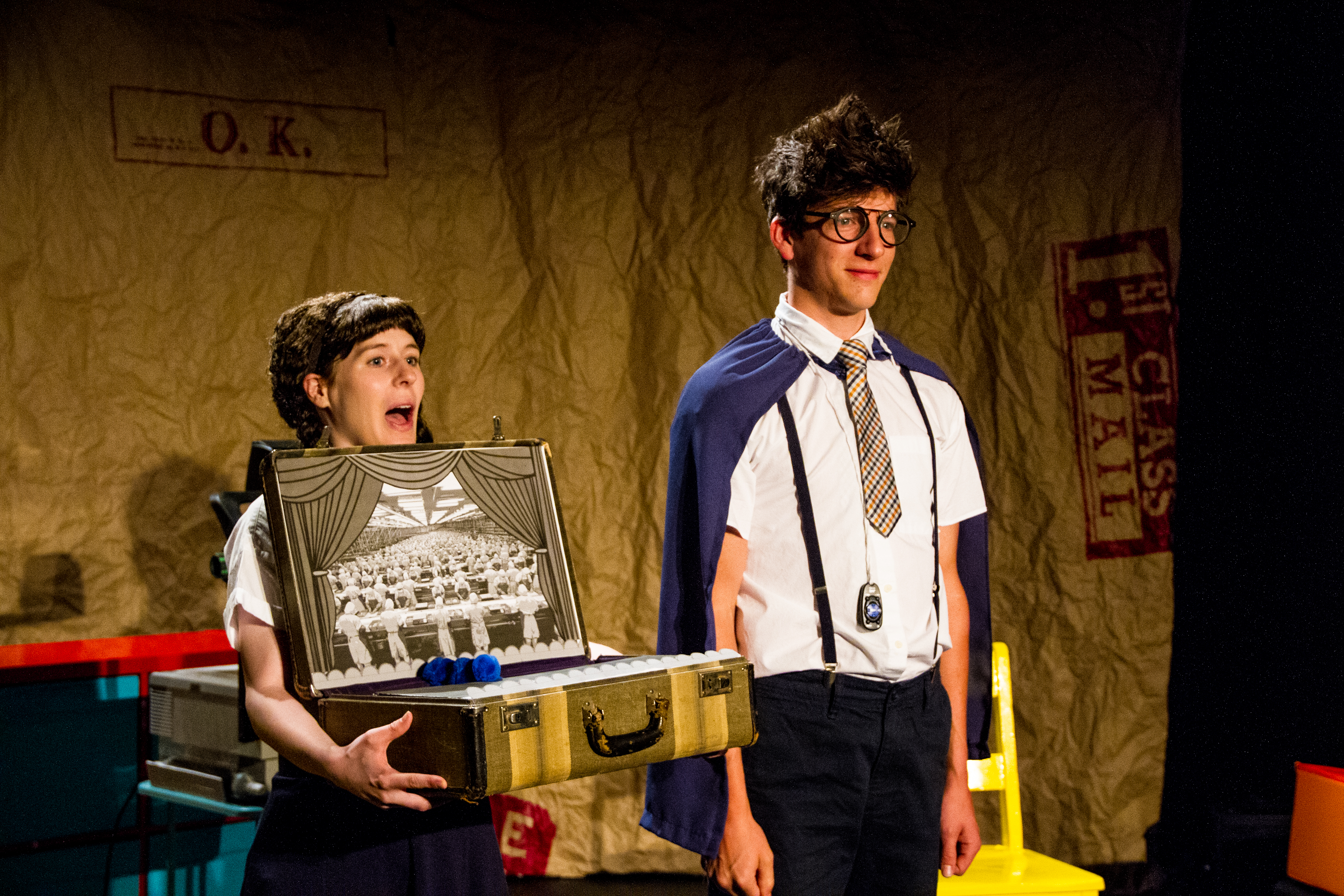
Penny Lamb (Kelly Malcolm) and her younger brother Ezra (Matt McKinney). Photo Credit: Aldona B Photography.

Penny Lamb (Kelly Malcolm) and her younger brother Ezra (Matt McKinney). Photo Credit: Aldona B Photography.

Being a teenager can be hard. Everyone wants to be an individual, but no one wants to stick out. No matter what you do it seems like teachers are always out to get you. And your hormones are everywhere, so you really never know how you feel.

And yet, despite everything, being a teenager can also be pretty awesome.

Presented by Urban Curvz Theatre, Jacob Richmond’s Legoland is a fun, spirited celebration of youth. A vaudeville-inspired comedy, Richmond’s play looks at our crazy world through the bright eyes of a teenage girl ready to leave her mark.

Sixteen-year-old Penny Lamb (Kelly Malcolm) and her younger brother Ezra (Matt McKinney) are not your typical teenagers. Penny and Ezra were raised on a hippie commune outside Uranium City, Saskatchewan. For years, the outside world, dismissively referred to as “Legoland” by the commune’s elders, fascinated the Lamb siblings. One day, the commune is busted by police for being Saskatchewan’s largest grow-op. With their parents imprisoned, Penny and Ezra are enrolled into a private Catholic school where they quickly learn that Legoland is as bizarre as it is unwelcoming.

In Legoland, commercial music lacks originality as reflected in the use of recycled personality types – the bad boy, the cute one, the sporty one, etc. People are unkind and distant. The status quo is maintained through prescription pills, which are seen as easy fixes to all life’s problems. Yes, Legoland is a rather plain, material place that is as rigid as a plastic toy brick.

As one might guess, Penny and Ezra’s unconventional upbringing makes them total outcasts in Legoland. Penny is rejected by the popular girls at school for being a “lesbian,” while Ezra is prescribed Ritalin to keep his behaviour in check.

It is this rejection by their peers that ultimately bring Penny and Ezra to us, or rather the assembly of high school students whom they present their story to as part of their community service.

When introduced to the boy band Seven-Up as a way to help fit in with the other girls, Penny develops a major crush on the lead singer Johnny Moon. She follows Johnny’s career long after Seven-Up breaks up, eventually becoming determined to meet him in person. Meeting Johnny, however, means crossing the border and traveling cross-country to Orlando. Thankfully for Penny, Ezra’s medication can easily fetch the necessary funds for such a trip.

What Richmond does with Penny is provide teenagers with a positive, albeit imperfect, role model. For one, Penny stands up for her values, despite the constant pressure from her peers to abandon what she believes in. And secondly, Penny sees no limits to her potential; her potential is limitless. She is abound with the sort of youthful enthusiasm that springs creativity  – and sometimes trouble! But that is okay, we learn, because it is all a part of being young and inexperienced. Everyone starts somewhere.

Penny’s mistakes – which are her’s and her’s alone to make – encapsulate the excitement of being a teenager, of growing up and discovering yourself as a young person. Penny is the kind of person that Legoland needs, flaws and all.

Where Richmond’s play falls flat is in its cross-country scenes which feel unnecessarily drawn out. The audience, in fact, may feel like they too are on board a greyhound bound for Orlando with the way Richmond stretches the play’s conclusion with the same repeating bits.

Otherwise, the play is a wildly energetic blend of puppetry (puppet design by Lindsey Zess Funk), song, and dance; a real vaudevillian treat. Director Jacqueline Russell’s creative staging sees the actors transform the stage into a dynamic space from which the story unfolds from, corner-to-corner.

Malcolm throws herself into every scene like it is, at the moment, the most important part of Penny’s life. Malcolm brings an infectious charm to the character who in other hands might be too much for the audience. Here, thanks to Malcolm’s take on the plucky teenage girl, Penny is almost impossible not to like. And despite Ezra not saying very much, McKinney is successful, too, in drawing us into his character. McKinney’s often deadpan look sells the character’s dark, bizarre humour. Together, Malcolm and McKinney are a lot of fun to watch on stage.

Optimistic, vibrant, and certainly unique, Richmond’s Legoland is one not to miss.


Urban Curvz Theatre’s production of Jacob Richmond’s Legoland runs June 11-20 at Motel Theatre.

For information about the show and how to purchase tickets, visit: http://urbancurvz.com/current-season/legoland/

Theatre Transit Visits Matt & Ben

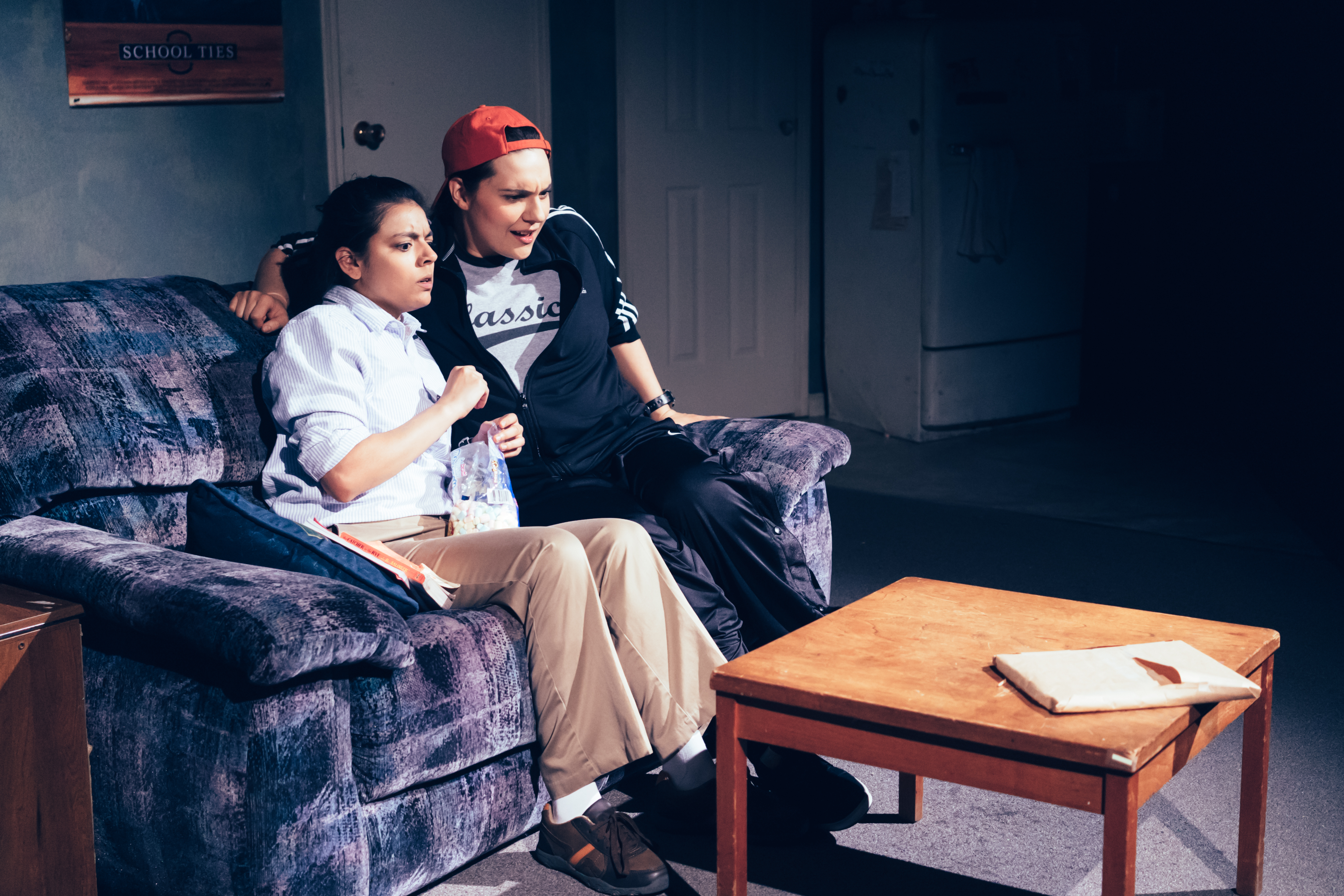
Matt Damon (Kristen Padayas) and Ben Affleck (Carly McKee), startled by Good Will Hunting. Photo Credit:  Justine Matsalla

Matt Damon (Kristen Padayas) and Ben Affleck (Carly McKee), startled by Good Will Hunting. Photo Credit: Justine Matsalla

The scene: Ben Affleck’s apartment, 1996.

Out of nowhere, the script to 1997’s Academy-Award winning Good Will Hunting falls from the sky and lands right in front of Ben and his best bro Matt Damon. A test, a curse, or a pivotal point in both their careers? Whatever it is, it’s certainly better than Ben’s line-for-line adaptation of Catcher in The Rye.

An explosion of pop culture references, Mindy Kaling and Brenda Withers’ Matt & Ben is a fun, totally absurd parody of Matt Damon and Ben Affleck’s famed ‘bromance’.

Matt Damon (Kristen Padayas) and Ben Affleck (Carly McKee) are two struggling actors trying to make it big in Hollywood. Creative partners, the two friends meet in Ben’s greasy, run-down apartment to work on their screen adaptation of J.D. Salinger’s Catcher in The Rye. While Ben believes it’s their ticket to Hollywood, Matt is not so sure about the project and sneaks off to auditions behind his back. So begins the rift that emerges between the friends.

Good Will Hunting’s sudden appearance makes clear the differences between Matt and Ben. Matt, a neurotic loser, has always hated the way Ben, a dumb popular guy, has coasted through life, not putting much effort in the things he does. In some way, Matt feels that Ben has held him back through the years. So, while he could stay with Ben and continue eating doritos and writing a terrible (plagiarized?) screenplay, Matt could also use Good Will Hunting to propel him to stardom, earning him the success he feels he deserves.

The only issue is, where did the Oscar worthy original screenplay come from? And why does it have both their names written on it? (Damon and Affleck both co-wrote and starred in Good Will Hunting). These questions and more threaten to destroy the greatest bromance of the 1990s.

Along the way, Kaling and Withers throw winks and nudges at both actors’ personal lives and filmography. Enough so that if one is coming in not well versed in their Damon/Affleck histories they might miss a good amount of the play’s jokes.

Even so, audiences can still appreciate the bizarre circumstances that Kaling and Withers throw two of Hollywood’s top leading men into. Gwyneth Paltrow and J.D. Salinger make guest appearances, turning the weird factor up. And the Good Will Hunting script seemingly has a life of its own.

Designer Julia Wasilewski has created a wonderfully detailed set for Matt & Ben. The refrigerator is stocked with take-out containers and expired food. Budweiser cans are scattered everywhere. The couch is ugly and possibly rotten. Ben Affleck’s headshot hangs neatly on the wall, along with a movie poster for 1992’s School Ties. Yes, it’s certainly the kind of place one would expect 1990s Ben Affleck and Matt Damon to live in.

Padayas and McKee’s comedy chops elevate Kaling and Withers’ wicked funny script. Padayas’ nervous energy mixed with McKee’s boisterous portrayal of Ben Affleck have the audience in stitches, agasp for air. The madcap physical humour lights up the stage, but sometimes Valmai Goggin’s direction feels too relaxed. Padayas and McKee get lost in the play’s antics and bungle through some moments. While it passes just enough as part of the play’s quirky charm, one cannot help but feel that the direction could be tighter for Kaling and Withers’ zippy script.

Of course, that is not to say that the script itself is not without issues. Although it starts strong, Kaling and Withers’ script does start to feel sloppy as it tries to reach a satisfying ending. Nostalgia and pop culture references carry the show, which runs at 80 min, only so far before the material dries up.

Presented by Theatre Transit, Mindy Kaling and Brenda Withers’ Matt & Ben is a hilarious play that has fun with its premise, making for a lively night at the theatre.


Theatre Transit’s Matt & Ben runs May 28 – June 6 at Motel Theatre (Arts Commons).

For more information about the show, visit: http://www.theatretransit.ca/matt-ben