Soulocentric’s Dance Cabaret Features Diverse Original Works by Local, National Dancers

Shelby Jansen and Allison Zwozdesky duke it out in Cooking Truths, one of eleven works presented in Soulocentric's Dance Cabaret. Photo Credit: Ben Laird Arts and Photo

Allison Zwozdesky (left) and Shelby Jansen (right) duke it out in Cooking Truths, one of eleven works presented in Soulocentric’s Dance Cabaret. Photo Credit: Ben Laird Arts and Photo

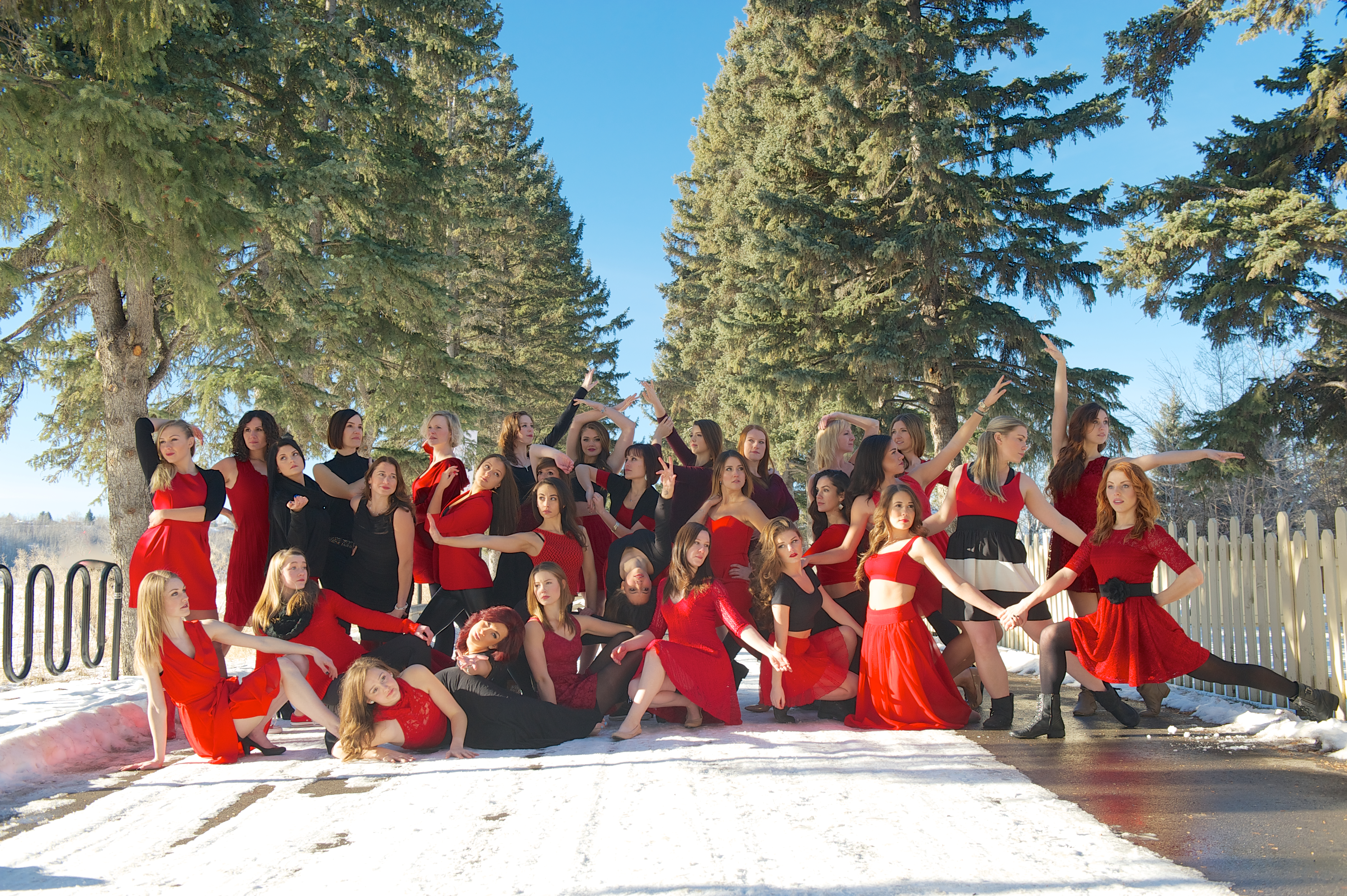
Presented at West Village Theatre, Soulocentric’s Dance Cabaret is a showcase of original works by both emerging and professional dancers. The Dance Cabaret runs as part of the company’s 2015 Contemporary Performance Showcase, formerly known as the Soulocentric Dance Festival.

Ranging in style and tone, the Dance Cabaret comprises of eleven works choreographed and performed by local and national dancers.

The showcase opens with Tangy Lime Dance Projects’ baBBLe ON, a contemporary stilt dance piece. Stilt dancer Allara Gooliaf impresses with the control and ease of effort she displays moving to the sounds of a bustling city. The urban soundscape mixed with Julie Funk’s active movement is reminiscent of the 1998 film Run Lola Run. The piece runs smoothly until Tara Blue, who is also on stilts, starts singing. The loud music overpowers the dancer who simply cannot compete, thus making the audience lost on the lyrics. As a result, the piece ends on a weak note.

Next, Kelsey Hanna and Megan Fraser take the stage for their contemporary piece From Silence. Hanna and Fraser, both professional graduate students from the School of Alberta Ballet, are a tight pairing in this piece that explores the difficulty of loving that which cause one pain.

Dario Charles’ solo piece Without Face follows. Charles confidently exposes and plays with the the impact social conventions have on our capacity for real, unmediated human interactions. One way Charles does this is by creating uneasiness through inactivity. Sitting down, adjusting himself for maximum comfort, Charles takes a stand against the expectations of the audience – performer relationship. Then, through repeated motions, the dancer emphasizes the scripted nature of our relationships with the other. Overall, Charles presents an interesting piece. (Although, at one point, Charles’ own script refers to non-existent armrests which does remove us from the narrative).

Natalka Lewis and her company Trip The Light Dance present Dandelion Children. A collaborative effort between Lewis and her seven dancers (Misha Behnia, Madison Dixon, Odessa Johnston, Christina Robertson, Janelle Shiffner, Jordan Wallan & Katherine Mandolidis), Dandelion Children stages the abusive relationship between a mother and her daughter. The ensemble reflects the complexity of these relationships in a recurring phrase of movement where one dancer supports the other, only to drop her suddenly onto the floor. And then, they switch positions; the abuser becomes the abused. The choreography is well-thought out, and clearly presents the narrative it sets out to tell. Although, the choreography does lack an exact moment where the daughter, played by Lewis, comes into her own, leaving something to be desired in terms of a cohesive resolution.

Halifax-based dance company Votive Dance tells its own narrative of control in Proven Lands (choreography by Catherine Hayward). Kathleen Doherty plays a sinister character/force that sets out to corrupt and manipulate Stephanie Mitro’s character who attempts to resist her influence. Doherty embodies very well the weight of conformity on the individual, and Mitro displays a great vulnerability in the piece. The piece does lose some steam near its end, which is drawn out quite slowly, but overall it is a solid piece from start to finish.

Der schuh-shoe-La chaussure, choreographed by Jason Owin Galeos, is the last piece before intermission. Interested in the shoes we wear and where they take us in life, the piece begins with four dancers – Galeos, Cenzia Nina Aviles, Meghann Michalsky, and Chandler Smith – who walk on stage holding in their arms various footwear. The piece fails to make its intentions clear, thus making it feel like a missed opportunity. Galeos’s choreography attempts to grasp onto a central idea, but leaves the audience with little going into intermission.

Taking us into the second act is Metamorphsis, choreographed and performed by Krizia Canvas Carlos and Aris Nsungani. Carlos and Nsungani light up the stage in this exciting urban dance fusion piece.

Choreographed by Naomi Lawson Baird, Jass Parlour’s Daughters of The Deep is a short jazz piece that features Baird, Kimberley Ilott, and Hannah McCathy. Well-executed, though not particularly memorable.

Performed by Terra Plum, Jessalyn Britton, and Janelle Schiffer, Tri Some blends jazz with West African dance forms. Plum’s upbeat choreography is delivered effortlessly by the dancers. The mix between the two dance styles makes for a very cool piece.

Carisa Hendrix brings a strong stage presence in Just For Me, a solo hula hoop act created by Hendrix. What makes this short, playful piece particularly entertaining is both the speed at which Hendrix maneuvers her hula hoop and the element of risk (e.g. the hoop hitting the floor, bringing the piece to a sudden stop) in the maneuvers she performs.

Shelby Jansen and Allison Zwozdesky bring the night to a close with Cooking Truths. In Cooking Truths, Jansen and Zwozdesky play two celebrity chefs competing against each other in the kitchen. There is an array of fun, bizarre moments, like Jansen plucking her rival’s heart out, that receive big laughs from the audience. And inventive staging keeps the piece moving forward as the dancers flip and fold tables to create big, epic moments of warfare (performed in slow motion, of course). The piece does take time to hit its stride, however, as its first couple minutes are rather clunky and awkward. Moreover, the piece might benefit from a shorter run time as it feels a little too loose in its current state.

Featuring a diverse range of original works, Soulocentric’s Dance Cabaret succeeds at entertaining, and giving audience members the opportunity to witness and support Canada’s independent artists.


Soulocentric’s Contemporary Performance Showcase ran at West Village Theatre, Feb 19-21 2015.

For more information on the company, visit: http://www.soulocentric.org/


W & M Physical Theatre’s Waiting Rooms in Heaven Reflects On The Life (Not) Lived

W & M Physical Theatre's Waiting Rooms in Heaven. Pictured: Laura Henley and Wojciech Mochniej. Photo Credit:

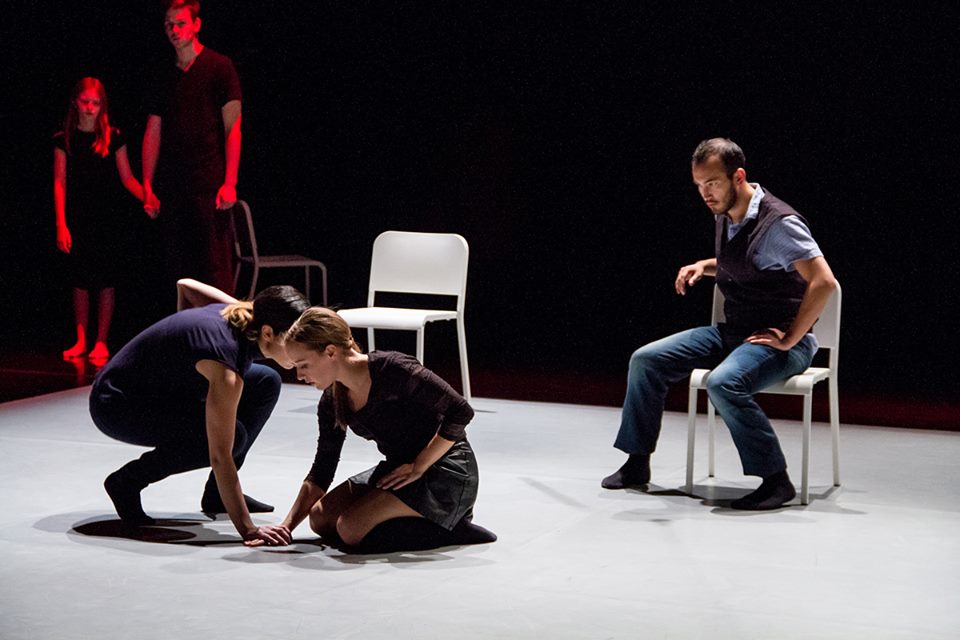
W & M Physical Theatre’s Waiting Rooms in Heaven. Pictured (left to right): Valerie Campbell, Laura Henley and Wojciech Mochniej. Photo Credit: Aldona B Photography

Presented at the University Theatre, W & M Physical Theatre’s preview of its latest work in development Waiting Rooms in Heaven summons poignant reflections on life and the life (not) lived.

The piece takes place inside a room decorated with pristine white chairs. The only exit is a door atop some stairs, but out this door are a flock of birds that obscure the sky. This place is nowhere exact or well-defined. It is a metaphysical space whereupon eight unfortunate individuals enter into without any answers nor any clarity. Regrets from the past soon reemerge and make heavy the souls of those trapped in this mysterious unknown.

There is woven into this piece this desire that life choices were not so permanent. It is an idea that repeats itself as a wish that life were written in pencil than in pen, that one could go back and do things differently. It is an idea, however, that removes the opportunity to not only learn, but to also experience life in the moment. After all, what is a life stripped of its spontaneity? What is a life interrupted by fear and anxiety?

Driving this idea of doing one’s life over again are the “what ifs” the adult characters of this piece find themselves trapped within. Repeated again and again are what the characters wish they could have done differently if only ‘this’ or ‘that’. It is fitting then that the there is an almost violent sense of control in the movement. As if trying to change the outcomes of some past scenarios, the dancers attempt to manipulate and bend to their will the other. Their efforts are in vain just as wondering “what if?” is a futile attempt at changing the past. Where they manage to exert any sort of “real” control is in throwing the rows of chairs into one large pile. Of course, what meaningful impact does such a destructive action have in the grand scheme of things?

The company has incorporated in this piece four actors who range from 10 to 60 years old. It makes sense that the two adult characters would carry some baggage as they certainly have had the years to accumulate such burdens, but what about the little girl and teenager trapped in this room with the others? How do they, who appear to be brother and sister, fit in this place? Perhaps their baggage is of the second-hand kind, the kind handed down through the generations. If this is the case, then perhaps their wish is not to have lived life differently, but to have been born into a whole different life altogether.

The piece ends on a hopeful tone when the door is opened once again and, this time, soaring birds greet the characters. It is an invitation to let go and move on, to fly away and live a life unrestrained.

Here, the company’s latest work explores the idea that the gravity of our burdens are only as great as we allow them to be. While the current circumstances of our lives may be cemented as a result of choices made, the life not yet lived remains to be written. And this life that waits for us relies upon on the right state of mind which, in the end, makes all the difference.

With this only being stage one of development, it will be interesting to see how the piece evolves and what it will ultimately resemble when W & M Physical Theatre brings Waiting Rooms in Heaven to Calgary again in 2016.


W & M Physical Theatre’s Waiting Rooms in Heaven ran at the University of Calgary’s University Theatre Jan 22 – 24, 2014. The piece was presented as part of U of C’s School of Creative and Performing Arts’ Dance Pro Series.

Choreographed by: Wojciech Mochniej with Melissa Monteros
Performers: Wojciech Mochniej, Laura Henley, Rufi O. Rodriguez, and Serenella Sol
Guest Performers: Valerie Campbell, Valerie Pearson, Griffin Cork, Ruby June Bishop, and Kent Brockman (bass)

For more information about the show, visit: 
http://wmdance.com/
http://scpa.ucalgary.ca/events/pro-series


Keeping Dance Local: En Corps Dance Collective Provides Opportunities for Calgary Dancers

This is Melanie Nightingale’s last year with En Corps Dance Collective, a company she helped found twenty years ago. One of the last founding members remaining, Nightingale says it has been interesting to see how the company has grown since its inception in 1995.

Initially, En Corps was influenced by the style of dance Nightingale and its other founding members were introduced to in Los Angeles during the 1990s.

“A lot of us used to go to Los Angeles to dance in the summertime,” Nightingale explained.”En Corps really started back in fall of ‘95, maybe spring ‘96, because a lot of us dancers – I think there were five or six of us – we wanted to bring a style of dance to Calgary that we didn’t think existed. We wanted to bring kind of that LA style and feel up to Calgary and give that opportunity to dancers.”

Nightingale adds that while there was a studio in Vancouver they could have gone to, it was important to the dancers that they stay in Calgary.

With how Calgary’s dance community has grown in the past twenty years, Nightingale says the company’s original mission is no longer as relevant as it once was. Now, En Corps is more concerned with retaining local talent.

“We first started because we thought we were bringing to Calgary something that didn’t exist…now, we don’t really see ourselves in that way anymore,” said Nightingale. “We just want to provide a dance experience to dancers in the city, so they don’t have to leave.”

It is not uncommon that dancers move to cities like Toronto or New York in order to pursue dance professionally. The reason for leaving is usually attributed to the lack of local opportunities for professional growth. To remedy this, En Corps offers dancers over the age of 18 classes and performance opportunities aimed at helping them grow and evolve as professional dancers.

For Nightingale, however, it is not enough that dancers gain solid technical training, but that they also feel a sense of belonging within the company, especially since founding members like herself are not always going to be around.

“I think I’m the last remaining founding member of En Corps, and this will be my last year because I’m going on to do different things,” said Nightingale. “We want to make people feel welcome in our group, so that they know that we want them on committees. We want them to get involved in what we’re doing and have a vested interest in En Corps to keep it going.”

And as the company prepares for its upcoming show The Escape, it is not hard to see what a significant impact the company and its commitment to fostering a friendly, professional environment has had on both new and veteran members.

En Corps Dance Collective presents The Escape, Jan 30-31st at the Wright Theatre, 8:00pm. Photo Credit: Red Dot Photography

En Corps Dance Collective presents The Escape, Jan 30-31st at the Wright Theatre, 8:00pm. Photo Credit: Red Dot Photography

The Escape tells the story of a distraught young girl who uses the power of her magic red ball to escape into a magical world of fantastic creatures. Unable to cope with reality, the young girl becomes dependent on this fantasy world to deal with her problems. Will she find the strength to return to the real world or will she become trapped in this unknown dimension?

Brittany Robertson and Jenna Powell started with the company’s drop-in classes five and nine years ago, respectively. Now, Robertson and Powell are not only dancing in The Escape, but they have also helped choreograph pieces for the show.

Powell, the artistic director of En Corps, says Nightingale’s departure signals a ‘passing on’ to the next generation who are becoming more active within the company.

“It’s slowly trickling down into my generation. We’re starting to direct more and to choreograph, ” Powell explained. “There’s also younger dancers who are part of our cast and part of [the University of Calgary’s] dance program, and they’ll eventually probably start to choreograph and become more involved.”

Odessa Johnston, a second year U of C dance student, says her first year with the company has been a valuable learning experience thanks to the diversity of dance experience she has been exposed to.

“This is quite a large range of age which is so great and so wonderful to experience because you get dancers that have been dancing for so long and have these great experiences, then dancers like me who have only been in university dancing for a few years now,” said Johnston.

Johnston, who hopes to pursue an MA in Dance, says she would like to continue dancing with the company, maybe even choreograph for them as well.

Even though there is always the challenge of fundraising and increasing costs associated with performance spaces and costumes, Nightingale believes that En Corps will be around so long as the company is willing to nurture the love of dance that its members share.

“[Twenty years] it’s a long time, especially since we’re a non-profit and we do everything ourselves,” Nightingale said. “I think it’s just because we have such a good base of dancers and we are really creating kind of, like I said, a family of dancers. We’re welcoming to people. We don’t – once people have children or they have families, we don’t say “oh, you can’t dance with us anymore.” …We’ve had pregnant ladies who’ve danced on stage…and they’re dancing because they have a passion for it. We’re open to involving people in different ways and we think there’s a lot of talent in the city that we want to bring to the company.”

Ultimately, Nightingale hopes that the company continues to thrive so that it can continue to keep dance and those who are passionate about it in Calgary.


En Corps Dance Collective’s The Escape runs Jan 30 – 31st at the Wright Theatre (Mount Royal University), 8:00pm.

Tickets can be purchased online here: https://tickets.mtroyal.ca/TheatreManager/1/tmindex.html

For more information about the company and The Escape, visit: http://www.encorpsdance.ca

This story has been edited to make the following correction: Melanie Nightingale (Malarchuk).


20 Years Later, W & M Physical Theatre Shows No Signs of Slowing Down

W & M Physical Theatre's newest work, Waiting Rooms in Heaven. Photo Credit: Aldona B Photography

W & M Physical Theatre’s newest work Waiting Rooms in Heaven. Photo Credit: Aldona B Photography

This week, W & M Physical Theatre previews Waiting Rooms in Heaven, their newest dance work, at the University of Calgary. The presentation coincides with the company’s 20th anniversary celebrations.

Founded in 1994, W & M Physical Theatre’s story begins in Poland where Melissa Monteros and Wojciech Mochniej, the company’s founders, met at Silesian Dance Theatre.

“They were just starting the very first professional contemporary dance company [Silesian Dance Theatre] in Poland. The wall had just come down. This was 1991,” Monteros recalls. “[Wojciech and I] made our first work together in 1993. We launched our company at the end of ‘94.”

The company left Poland in 2000 after financial struggles made it clear that a move was necessary, Monteros shares.

“We started the company in Gdansk. We were there for a long time, six or seven years before we felt that funding was never going to happen. I had a house. I sold my house. I put half of my salary into the bank so I could pay the Polish dancers. It was a big struggle…Wojciech and I finally decided that it was too big a struggle. We also wanted to be working in one place because we would be going back and forth between Poland and Canada. It was expensive and difficult.”

20 years later, Monteros and Mochniej’s commitment to the company has not wavered.

Balancing responsibilities at U of C, where Monteros and Mochniej both teach, with a professional commitment to making art with the company is a matter of making time, says Monteros.

“I think we are relentless. Some people criticize us for it, some people shake their heads. Other people maybe admire us for it…there is a big part of the university job that is committed to research, so that’s a huge support, but it’s true that there isn’t the time. You have to make it happen.”

And with that time, W & M Physical Theatre has been busy developing Waiting Rooms in Heaven which Monteros says has been a great opportunity to revisit themes and questions from old works.

Waiting Rooms in Heaven sets out to explore how we experience life, that is if we are truly living rather than waiting for life to happen.

“Really, the piece overall is not about leaving life. It’s about, are we really experiencing life? Maybe, is this heaven? If it is, why are we sitting in the waiting room and not doing anything about it?”

And though she likes to ask big questions in her work, Monteros says that she “would never try to find the answers for somebody,” preferring instead that the audience discover the answers for themselves.

After its preview in Calgary, the company will tour their new work across Poland for a month in the spring. There, as they have done here with this production, the company will integrate local actors into the performance in what Monteros says will be a “very short, intense rehearsal process.”

The piece will then return to Calgary in 2016 as a fully-developed work.

With a rich history behind it, W & M Physical Theatre has plenty to celebrate on its 20th anniversary as it moves forward into the future with new, exciting works.


U of C’s School of Creative and Performing Arts’ Dance Pro Series presents W & M Physical Theatre’s preview of Waiting Rooms in Heaven Jan 22 – Jan 24, 2015 at the University Theatre.

For more information about the show and how to purchase tickets, visit: http://scpa.ucalgary.ca/events/pro-series

For more information on W & M Physical Theatre, visit: http://wmdance.com

Undressing The Dance: Dancers’ Studio West’s Latest Initiative Promotes Open, Critical Dialogue

Kimberley Cooper has been invited to partake in a public discussion hosted by Dancers’ Studio West surrounding her biography and latest show Year of The Horse. Leading the discussion is Davida Monk, the artistic director of DSW, who asks Cooper insightful questions about the dancer’s influences and where she is headed as a choreographer. Encouraged to participate, guests in attendance ask questions of their own along the course of the discussion.

This was DSW’s 3rd Undressing The Dance Dialogue.

Beginning in September of last year, the Undressing The Dance Dialogues are the latest initiative by DSW and its Dance Action Group to promote open, critical dialogue about dance with the involvement of audience members.

“We’re really passionately interested and committed in critical dialogue as a way to improve our own creativity and works, to raise awareness amongst interested members of the public and to build community in an effective way,” Monk said about the Dance Dialogues.

The first Dance Dialogue focused on the Alberta Dance Festival where audience members, choreographers, along with production crew, discussed the works in the program. The second Dance Dialogue, which took place in October, focused on Lev’s House which ran at the Fluid Festival.

In regards to post-performance discussions, Monk says the Dance Dialogues offer audience members a different sort of critical dialogue, one that she feels is not possible without some distance.

“After some time, some reflection on the work and a longer period of time not in the theatre setting – a different kind of dialogue can be done,” Monk explained. “You have to ask yourself what stayed with you after the week. When you go home that night something will stay with you, but after a week what stayed with you?”

DSW’s next Dance Dialogue will host Ame Anderson of Public Recordings. One of the topics that will be discussed is Anderson’s what we are saying which opens January 21st as part of the High Performance Rodeo.

The free event will be held at Ironwood Stage & Grill, Nov 23 from 12-2pm. Space is limited. RSVP to communications@dswlive.ca


Decidedly Jazz Dancework’s Year of The Horse: The Completely Fictional Adventures of Josephine Baker ran Nov 7 – 15, 2014, at Theatre Junction Grand. Cooper, DJD’s artistic director, choreographed the piece which featured eight mechanical horses.

Public Recording’s what we are saying runs Jan 21 – 24 at the Royal Canadian Legion #1 as part of the High Performance Rodeo. For more information about the show and how to buy tickets, visit: https://www.hprodeo.ca/2015/what-we-are-saying

For more information about Dancers’ Studio West, visit: http://www.dswlive.ca/

*This interview with Davida Monk took place Nov 23, 2014 at the 3rd Undressing The Dance Dialogue.

Staging a Classic: U of C’s SCPA Brings West Side Story to Calgary

Something’s coming.

This week, the University of Calgary’s School of Creative and Performing Arts will be presenting the hit Broadway musical West Side Story.

For Colleen Whidden, the artistic director of U of C’s Music Theatre company, the decision that West Side Story should be the SCPA’s first show was an easy one to make.

“It’s West Side Story! Classic story…amazing music, every song…and from a dance point of view, it’s so dance intensive,” said Whidden. “There’s just so much area in the music for amazing creativity in the dance.”

“When we were bringing together the dance, drama, and music departments we said what would be a great first show for us to do together. It was sort of a no-brainer that [West Side Story should be it] because every department could really flourish, could really shine through this particular musical.”

Based on William Shakespeare’s Romeo and Juliet, West Side Story stages the heated gang rivalry between the American Jets and the Puerto Rican Sharks in New York’s Upper West Side during the 1950s. Caught between the conflict are two young lovers whose relationship is threatened by the hatred and violence that surrounds them.

And despite the almost 60 year gap between this production and when the musical was first produced in 1957, Whidden believes that the story and its themes have not lost any of their relevance over the years.

“Even in 2015 now, we still can relate to it,” said Whidden. “Is it a story we don’t see anymore? No. We see it everyday. We probably just read about it in the paper…we see it in our own community, across our country and abroad. Maybe even more now we need to hear that story of resolution of coming together and bringing…divisive parties together.”

Tony (Ahad Mir) and Maria (Jocelyn Francescut) in West Side Story. Photo Credit: Citrus Photography.

Tony (Ahad Mir) and Maria (Jocelyn Francescut). Photo Credit: Citrus Photography.

This spirit of coming together is also reflected in the collaborative nature of the production which Whidden says has benefited the students, alumni, and community members involved.

“We’re coming together as the School of Creative and Performing Arts…with four of us from the drama, music, and dance departments each of us [can] bring our strengths.”

This has made West Side Story a great learning experience for both Ahad Mir and Jocelyn Francescut who play the lead characters Tony and Maria, respectively.

Mir, a fourth year U of C drama student, praises the collaboration, saying that he feels it has fostered plenty of opportunities to learn from his peers in the dance and music departments, and vice versa.

Likewise, Francescut, a music graduate from the University of Alberta’s Augustana Campus, says she has learned a lot through working with other disciplines in what she calls her first acting role ever.

“This has been a huge challenge for me since I haven’t done a lot of acting [but] I feel like I’ve learned a lot in the process,” said Francescut. “Sometimes it’s been hard, but it’s been so rewarding.”

Delivering such a well-rounded experience means that the level of what is expected of students in the future will only go up, Whidden says. She is confident, however, that students will meet, if not exceed, those expectations.


The University of Calgary’s School of Creative and Performing Arts’ production of West Side Story opens Thursday, January 8th at the University Theatre.

Performance Schedule:

Jan. 8 – 10, 13 – 15 at 7:30 p.m.
Jan. 11 at 2 p.m.
Jan. 14 at 12 p.m.

Tickets are $20 for Adults and $15 for Students/Seniors. Tickets can be purchased on-line (http://www.ucalgary.ca/tickets/) or at the door.

For more information about the show, visit: http://scpa.ucalgary.ca/events/west-side-story

Award-Winning Playwright Trina Davies Talks The Bone Bridge

For Canadian playwright Trina Davies, staging a public reading of a new work is an invaluable part of a play’s development.

“This is the first time I have had the chance to have a wide audience present [which] is a totally new experience for the play,” said Davies. “I’ve learned so much in a very short period of time from the audience’s reactions tonight.”

This November, Davies was announced the winner of the 2014 Uprising National Playwriting Competition for her play The Bone Bridge. A joint initiative between Downstage and the Consortium for Peace Studies at the University of Calgary, the annual competition recognizes plays that “dynamically [engage] with social and political issues and/or [promote] peace, social justice and human rights.”

Set in the aftermath of the Bosnian War, The Bone Bridge follows several characters who struggle to move on with their lives and reconcile with both family and neighbors. When the charismatic ‘Leader’ is captured and charged with war crimes by an international tribunal, the characters are called to confront the past and testify at the trial. Relevant and insightful, The Bone Bridge is a poignant reminder of the invisible damages of war.

Davies shares what the research process looked like in developing the play which is based off real people and events.

Playwright Trina Davies

Playwright Trina Davies

“[I read] books on…the Bosnian conflict and the post-conflict. And then, I pulled trial transcripts from The Hague. I actually went through them and watched pieces of the trial. Then, I went broader. I looked into the social psychology of war and peace, reading on people who have worked in conflict resolution and have published [on] what they’re finding around the world.”

For first place, Davies’ play received a two-day workshop, followed by a public reading which was held at U of C’s F.R Matthews Theatre on Dec. 12th.

“I always sit in the back [because] I feel like I get the best read on how the audience is reacting,” said Davies. “It’s an energy you feel from the audience. If there’s fidgeting, something’s gone on too long. So, you get a good read on what’s hitting, what’s working, and what’s not working.”

After the reading, the audience was invited to ask Davies questions and to share their responses to the piece. Audience members were later invited to a reception where they could speak with Davies one-on-one.

The actors who participated in the workshop and reading, Davies says, were also very important in terms of feedback.

“The first day [of the workshop] was very discussion based,” said Davies. “We did a read of the play, and then we had a really engaging discussion about what their personal response was to it, and then their character response. And then we went from that and moved into a second read of the play [where] we talked about technical specifics like structure and image.”

The input from both the actors and the audience have helped give Davies an idea of how she wants to move forward with the script, but still, she says, the play’s future remains uncertain.

“Right now, I don’t know where this play is going to go next. It’s a bit of a tough play. It’s a large number of characters and well, it’s not Mary Poppins. So, it is something that will have to be a labor of love and a passion for the theatre who agrees to take it on.”

But Davies says the audience’s response from the reading has left her feeling encouraged.


The staged reading of Trina Davies’ The Bone Bridge was held at the University of Calgary’s F.R Matthews Theatre, December 12th, 2014.

Actors:
Paul Cowling – The Leader
Valerie Planche – Mevla
Ellen Close – Ankica
Dawn McCaugherty – Blanka
Kevin Rothery – Dragan
Shawna Burnett – Danika
Brian Jensen – Judge/Male Voice/Husan

Director: Simon Mallett
Assistant Director: Azri Ali

Competition Director: Dawn Mari McCaugherty

For more information:
Trina Davies – http://trinadavies.com

Downstage – http://downstage.ca/
The Consortium for Peace Studies – http://www.ucalgary.ca/peacestudies/

Fully Functional Starts a Conversation About Disability, Sexuality, and Society

A co-production between Inside Out Theatre and MoMo Dance Theatre, Fully Functional is a new play that gives a voice and real presence to its artists of mixed abilities. Drawing inspiration from their own personal experiences, the artists/creators tell stories of love, sex, and romance through dance and movement.

Being late to a first date, sex poems and orgasmic shouting: it is fearless storytelling injected with humour.

But past the laughter and heartbreak of these stories, the artists ignite a conversation about how our society views persons with disabilities.

In a talk-back session after the performance, an audience member asked “what impact do you hope to have for people afraid to let others in? [I mean it’s] easy to say I want love, but to say I deserve love is a good place to start as well.”

Mark Ikeda, artistic director of MoMo Dance theatre, responded.

“We got together in a room…and talked how taboo the topic is about the intersection between disability and sexuality, and how not only does no one know how to talk about it but people are afraid to talk about it. We hope to start a conversation, start people thinking about…how certain preconceived notions or thoughts might be quite harmful”

Thomas Poulsen, one of the performing artists, followed Ikeda’s response with his own, saying “I think you indicated that fear is very much out there in the community – in the disability community.”

Fully Functional opened at the Joyce Dolittle Theatre inside The Pumphouse Theatre on December 3rd. Pictured (left to right): Stephen Henry, Gaelyn Thomson, and Kathy Austin. Photo Credit: Chantal Wall

Fully Functional opened at the Joyce Dolittle Theatre inside The Pumphouse Theatre on December 3rd, 2014. Pictured (left to right): Stephen Henry, Gaelyn Thomson, and Kathy Austin. Photo Credit: Chantal Wall

The fear Poulsen refers to is a fear of rejection that goes deeper than what one might assume. On a whole, persons with disabilities are marginalized and rejected by mainstream society.

Consider how we speak about disability.

The disabled – a homogenizing term that attempts to refer to all persons with disabilities. It is a term that ignores the fact that disabilities are various in their form and appearance. Above all, it is a damaging term that erases the individual and reduces them to a diagnosis.

Newspaper articles sometime describe wheelchair users as either “bound” or “confined” to their chair. Persons with disabilities are framed as ‘victims who suffer from’, rather than ‘persons who live with’ a disability.

And then, it is the distance “the able-bodied” maintain between themselves and persons with disabilities. This distance comes out of fear, anxiety, and discomfort. But yet, we feel comfortable enough to stare out of curiosity and to make assumptions about their lives (but never to assume that they might have their own desires for human intimacy).

So, how can one think that they deserve to be loved when they are confronted over and over again with this idea that living with a disability somehow makes you a lesser human?

On its surface, Fully Functional addresses the assumption that disability interrupts sexuality. What it also addresses is the lack of belonging persons with disabilities experience in society.

Fittingly, the play ends with a slow dance, but this time – unlike the first time – the artists invite members of the audience to come dance with them. The slow dance serves as an invitation to close the distance and to start connecting with one another.

After all, at the end of the day, we are all human beings who want to love and be loved.


Inside Out Theatre and MoMo Dance Theatre’s Fully Functional ran at the Joyce Dolittle Theatre inside The Pump House Theatre from Dec 3 – 6, 2014.

Fully Functional was created and performed by:

Kathy Austin
Emily Collins-Tucker
Stephen Henry
Thomas Poulsen
Gaelyn Thomson

Co-directors: Col Cseke and Mark Ikeda, artistic directors of Inside Out Theatre and MoMo Dance Theatre respectively.
Assistant Director: Jordan Dalley

Inside Out Theatre: http://insideouttheatre.com/
MoMo Dance Theatre: http://www.momodancetheatre.org/

Closing Night, Open Doors: Western Canada High School Drama Students Say Goodbye to Our Town

It is closing night of Western Canada High School Drama’s production of Our Town, a play by Thornton Wilder. Family and friends have braved the freezing weather outside to come support the cast and crew.

Laughter. Tears. Curtain.

Inside the empty school theatre, Grade 12 student Julia Hermanson says goodbye to her second family.

“Everyone [comes to know] each other so well. You spend two or three hours with each other after school and then see each other on the weekends. You become like a family” says the graduating WCHS student who played Mrs. Webb in the production.

Hermanson not only learned more about how she works with others, but in the process she also learned more about her self. To be true to a character, she shares, is to be true to one’s own emotions and experiences.

And while the show may be over, fellow castmate Emilee Shackleton (Emily Webb) says she won’t soon forget the lessons she also learned along the way.

“Theatre has taught me to be honest. It has taught me to never stop discovering” says Shackleton, a senior student who made her debut in last year’s production of Macbeth.

For drama teacher Brittany Babott, it is this sense of discovery that drives WCHS’ Drama program.

“For me, it is the exploration of what it means to be human that is a big component of the program” Babott explains. Theatre offers students like Hermanson and Shackleton a great opportunity for personal growth and development.

Despite this, Babott says, theatre still has a hard time in education.

“You need measurable outcomes, [but] you can’t have quantifiable outcomes for empathy, expression, or the students who are shy and push that.”

Part of the program’s mandate, Babott continues, is also to replicate a professional experience for students – on both the performance and technical side. It does this by collaborating with theatre professionals from the community. (Our Town was directed by Calgary based director Kevin McKendrick, an eight time Betty Mitchell nominee for Outstanding Direction).

And for students who plan to pursue a career in theatre, Babott says, the exposure to successful industry professionals fosters theatre as not only a possible career option, but a viable one as well.

What’s next for Hermanson and Shackleton after graduation?

Hermanson has applied to York University, the University of Toronto, and will be auditioning at the National Theatre School of Canada.

“Big, small, this is what I want to do…I want to continue telling the truth” says Shackleton who has also applied to several theatre schools.

It is closing night. The stage is clear. The lights are off. And with a wave goodbye, the cast and crew of WCHS Drama’s Our Town are ready to go celebrate a successful run.

Hermanson and Shackleton are deep in reflection.

Exit.


Western Canada High School Drama’s production of Our Town ran at the WCHS Theatre from Nov 25 – 28, 2014.

Celebrating 45 Years: Dance Montage and The Importance of Community

For Wojciech Mochniej, Dance Montage’s Artistic Director, dance is more relevant than ever in our fast-paced, modern society. “[What attracts people to dance] is the connection to the human, to the three-dimensional world. With TV, we can cook, clean, and pick up the phone at the same time…but we are not meeting anyone. We are disconnected,” says the full-time dance instructor at the University of Calgary.

Celebrating its 45th anniversary this year, Dance Montage – presented by U of C’s School of Creative and Performing Arts – is an opportunity for both beginning and experienced dance artists to come together and create new work. Auditions are open to everyone of all skill levels; an invitation that extends to the community at large.

The secret to Dance Montage’s longevity, says Mochniej, is the opportunity it gives community members who are not thinking of dance as a profession to perform, to share ideas, and, in doing so, connect with their community.

It is the importance of community that inspired Matthew Hall to write and direct (Mis)Communication, one of several new dance pieces which will be presented at Dance Montage. “My uncle…he’s always sparking conversation with people on the C-Train,” the fourth year drama student shares, “no one is used to it nowadays, Everyone thinks he’s weird. Or they’re too busy or plugged into their phones.” It this disconnect brought on by technology’s rising influence that Hall explores in (Mis)Communication.

(Mis)Communication. Choreography by Meghann Michalsky. Directed by Matthew Hall. Music composed by August Murphy. Photo Credit: Wojciech Mochniej

(Mis)Communication. Choreography by Meghann Michalsky. Directed by Matthew Hall. Music composed by August Murphy. Photo Credit: Wojciech Mochniej

Of course, the dance piece would not have been possible without Meghann Michalsky and August Murphy, Hall’s choreographer and musical composer respectively.

In July 2013, the School of Creative and Performing Arts was created. Bringing together the former departments of dance, music, and drama under one school has allowed students more opportunity for interdisciplinary collaboration. Hall, Michalsky, and Murphy met last year during a production of Aesop’s Fables.

“To work with people outside my discipline…they challenged me way more to push my art and myself out of my comfort zone,” says Michalsky, a U of C dance alumnus (‘14). Murphy, a fourth year music student, nods her head in agreement. “I’ve worked with actors and dancers onstage as a performer, but this type of work…I learned how something may be clear to me as a musician, but it may not necessarily be clear to the dancers onstage. “We think of things differently, and I [needed] to find how to communicate in such a way that everyone understands,” explains Murphy who says this is her first time composing. The quality of their final product, all three agree, would not have been possible without the support of their fellow artists.

What does the future of dance and Dance Montage look like for Mochniej? Neither, he believes, are going anywhere any time soon, even with the rapid growth of technology. “I’ve been dancing for over 30 years…[and] even when you repeat the same things, you still discover something new about yourself, your potential, and your strength” says the dancer as he prepares to go teach one of his classes. “The community will always feel the need to perform, because dance is an organic experience.”

What else, Mochniej closes with, can give you such a connection to what makes us human?


The School of Creative and Performing Arts will present Dance Montage, from Thursday, Nov. 20 to Saturday, Nov. 22, 2014 in the University Theatre, located on the University of Calgary’s campus.

This 45th production will celebrate the life of Sigurd Hagen-Torn (1927-2011) who began his involvement with Dance Montage at the age of 50, dancing for the next 32 years until his last performance in 2009. He is remembered for his great spirit and passion for dance.

For more information on Dance Montage and how to purchase tickets, visit: http://scpa.ucalgary.ca/events/dance-montage-0